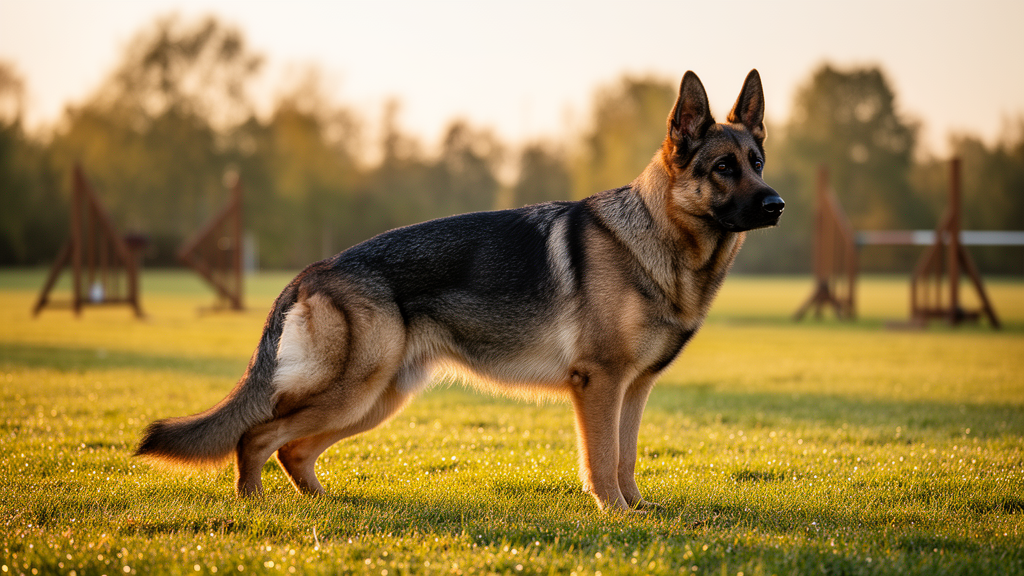
Selective breeding in German Shepherd dogs has produced distinct behavioral and genetic differences between dogs bred for functional working roles and those bred primarily for show appearance, according to a new observational study led by researchers from Uppsala University and the Swedish University of Agricultural Sciences. Published in the journal Animal Genetics, the investigation combined large-scale behavioral evaluation records with targeted genomic sequencing to examine how behavioral tendencies are reflected in the breed’s genetic architecture. The researchers established that working German Shepherds consistently demonstrate greater curiosity and lower neuroticism than their show-bred counterparts, differences that manifest clearly at both behavioral and DNA levels.
German Shepherds fulfill critical functional roles across society, serving widely in police departments and national defence forces where specific behavioral profiles are essential. Breeding dogs with the necessary working traits has historically presented significant logistical difficulties and substantial financial costs. Understanding the underlying genetic mechanisms that drive these behavioral traits offers a clearer framework for improving selective breeding strategies, ensuring dogs selected for demanding public service roles possess the psychological resilience and focus required for functional community tasks.
To assess behavior across a broad population, ethologists and geneticists analyzed standardized behavioral evaluations from approximately 23,000 German Shepherd dogs across Sweden. The assessments utilized the Dog Mentality Assessment, a standardized protocol administered to the majority of German Shepherds in the country. During this test, dogs encounter a sequence of unfamiliar scenarios designed to measure their reactions to structured environmental challenges, including an invitation to play, unexpected encounters with threatening ghost-like figures, and handling by an unfamiliar person.
Analysis of the behavioral dataset revealed that the Swedish German Shepherd population is distinctly partitioned into two separate groups: one line selected primarily for physical appearance and confirmation in show rings, and another selected specifically for functional working capabilities. On average, dogs from working lineages displayed significantly less fear, higher levels of curiosity, and an enhanced capacity to socialize effectively with human handlers compared to dogs bred for show competitions.
Following the behavioral analysis, the research team collected blood samples from 373 German Shepherd dogs that had undergone the standardized Dog Mentality Assessment in order to map and analyze their genomes. By comparing genetic profiles with individual behavioral scores, the investigators successfully identified specific genomic regions where variation directly correlated with how curious or playful an individual dog was during behavioral testing.
The genomic analysis enabled the researchers to pinpoint specific genes in working dogs linked directly to curiosity and playfulness. Breeders of working lineages have historically selected dogs showing strong enthusiasm for task-oriented activity, often approaching assigned tasks as interactive games. The genetic findings confirm that this sustained selective pressure has established measurable genomic divergence between the working and show lineages within the same breed.
The study also highlighted comparative parallels between canine and human genetics. Several of the genes identified as influencing behavior and curiosity in German Shepherds correspond to genes that previous human studies have associated with neuroticism. Because these shared genetic pathways influence behavior across species, researchers noted that studying working dogs could provide long-term insights into the biological underpinnings of diverse behavioral traits in humans.
The authors emphasized that canine behavior is not governed by individual isolated genes, but rather arises from complex interactions among multiple genetic factors across the genome. In collaboration with the Swedish Armed Forces, the researchers are preparing larger follow-up studies to map these behavioral genetics in greater detail. While these insights could ultimately assist in identifying dogs with the highest likelihood of succeeding in rigorous working roles, the scientists stressed that the current findings represent an initial step establishing distinct behavioral and genetic divergences between working and show lines.
Reflecting on the findings, study co-leader Kerstin Lindblad-Toh, Professor of Comparative Genomics at Uppsala University, explained that breeders of working dogs deliberately favored animals that genuinely enjoy their tasks, treating their duties much like a game. Lindblad-Toh noted that this selective breeding led to demonstrable differences between working and show lines at both behavioral and genetic levels. She also emphasized that because several genes influencing behavior in German Shepherds correspond to genes associated with human behavior, studying canine genomes may offer long-term knowledge regarding human behavioral traits.
Highlighting the practical context of canine breeding, Professor Emeritus Åke Hedhammar of the Swedish University of Agricultural Sciences pointed out that working dogs consistently demonstrated reduced fear, elevated curiosity, and an aptitude for socializing effectively with people. According to Hedhammar, these differences emphasize how important it is to prioritize behavior when selecting dogs for functional roles across the community, particularly given that breeding dogs with appropriate traits remains difficult and costly.
However, the researchers stressed that their findings represent only an initial step rather than an immediate selection tool. As Hedhammar explained, while genetic insights could eventually help determine which dogs have the best prospects for working service and breeding, practical applications remain in the future. Because behavior is governed by complex interactions among many genes rather than single factors, the investigators are now undertaking larger studies in collaboration with the Swedish Armed Forces to map these genetic mechanisms more fully.
Subject of Research: Genetic and behavioral divergence between working and show German Shepherds
Article Title: Curiosity and fearlessness apparent in German Shepherd genes
Article References: Curiosity and fearlessness apparent in German Shepherd genes. Original publication (Bibliographic details unavailable.)
Image Credits: AI Generated
DOI: Not provided
Keywords: German Shepherd, canine genetics, Uppsala University, Swedish University of Agricultural Sciences, Animal Genetics, Dog Mentality Assessment, working dogs, show dogs, dog behavior, comparative genomics, neuroticism, curiosity, playfulness, selective breeding, behavioral genetics, Swedish Armed Forces
News Source: Juliet Wilcox. (November 12, 2026). Study Links German Shepherd Working Line Traits to Distinct Genetic Differences. Scienmag.