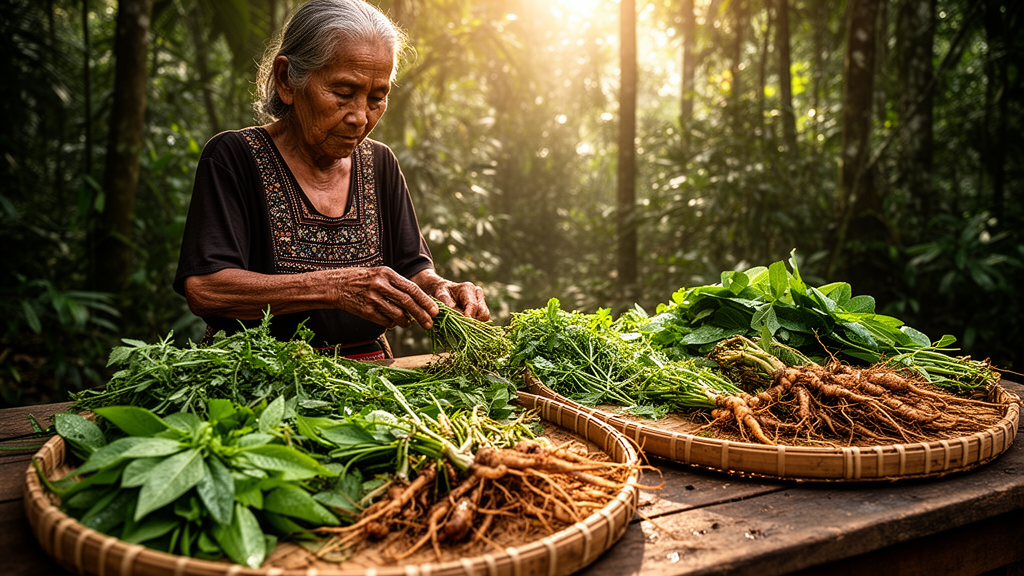
Researchers documented 157 species of wild edible plants used by the Loi community in Phayeng village, Manipur, India, revealing a complex traditional food system deeply intertwined with local biodiversity and cultural practices. Published in the journal Discover Plants, this ethnobotanical study provides a quantitative analysis of the diversity, culinary applications, and cultural significance of these plants, highlighting their critical role in the nutrition and livelihoods of rural communities in the northeastern region of India.
The study was conducted in Phayeng village, located in the Imphal West District of Manipur, a state characterized by its unique bowl-shaped central plain surrounded by multiple hill ranges. Phayeng is one of the oldest settlements in the state, situated at the foothills of the Kangchup Hill Range with an elevation of approximately 780 meters. The village is predominantly inhabited by the Loi community, also known as Chakpa, which constitutes the largest Scheduled Caste group in Manipur. The Lois are a sub-group of the Meitei ethnic community and speak the Manipuri language, a Sino-Tibetan language, albeit with a distinct dialectal variation.
Data collection for the study was carried out over a period of one year, from January to December 2021, to capture the seasonal availability of different wild edible plants. The research team collected ethnobotanical data from 39 informants, including 27 females and 12 males, using semi-structured interviews, field observations, and participatory interactions. Female informants were better represented and were actively involved in ethnobotanical activities such as culinary preparation, the collection of wild edible plants, and the selling of vegetables in local markets. Most informants belonged to the middle-aged group, accounting for 51.3% of the participants, while lower participation was observed among younger informants.
The study identified a total of 157 wild edible plant species belonging to 129 genera and 60 families, including three species of fungi. Herbs constituted the dominant life form with 59 species, followed by trees with 38 species and shrubs with 30 species. Fabaceae was the most represented family with 15 species, followed by Lamiaceae with 10 species and Zingiberaceae with 9 species. Fruits represented the most frequently utilized plant part, accounting for 34.2% of citations, and were incorporated into 15 categories of traditional cuisine. Leaves ranked second with 18.5% of citations and were used in 13 cuisine categories.
Quantitative ethnobotanical indices were employed to evaluate the cultural significance and novelty patterns of the documented plants. The use value, relative frequency of citation, and cultural importance index were calculated to assess informant consensus regarding wild edible plant utilization. Parkia timoriana emerged as the most culturally significant species, with the highest citation frequency among informants. The species is utilized across four major cuisine categories, including Athongba, Eromba, Singju, and Chagem, indicating its broad acceptance in traditional food preparation. Benincasa hispida ranked second in cultural importance and was commonly used in Champhut, Eromba, Athongba, and Ooti preparations.
The documented wild edible plants are utilized in diverse forms, including boiled, cooked, fried, raw, condiment-based, spice-based, and snack preparations. A total of 17 traditional cuisine categories were identified, with Eromba, a boiled and mashed vegetable preparation with fermented fish, being the most frequently consumed cuisine. Eromba accounted for 18.1% of use reports, followed by Singju, a herb salad, at 13%, and Athongba, vegetables lightly fried with turmeric powder, at 11.9%. These cuisines reflect the rich culinary heritage and cultural significance of wild edible plants within the Loi community.
To understand the novelty pattern of the documented species, the researchers performed a Jaccard similarity index and chi-square goodness-of-fit test. The Jaccard similarity index ranged from 0.032 to 0.178, with the highest similarity recorded with Assam. Overall, the relatively low Jaccard similarity values reflected low similarity in wild edible plant utilization patterns among the compared northeastern communities. The chi-square analysis indicated that 61 species were categorized as exclusively novel, exceeding the expected uniform value, while another 77 species exhibited low overlap with previous reports.
The study also highlighted the medicinal relevance of the documented wild edible plants. Beyond supplementing food security, these plants serve as important sources of medicinal and therapeutic compounds that contribute to traditional healthcare systems. Fabaceae represented the dominant family among the documented taxa, which is noteworthy because legumes contribute substantially to global nutrition. Several culturally important wild edible plants possess scientifically reported pharmacological properties, such as Artemisia species containing artemisinin, a potent antimalarial bioactive compound. Methanolic extracts of Lysimachia candida have demonstrated potential in reducing insulin resistance and fatty liver conditions.
Approximately 65% of the documented wild edible plant species were found to be traded in local markets and by street vendors, indicating their substantial contribution to household economies and local food systems. The market prices of these species ranged from 10 to 200 Indian Rupees depending on species availability, seasonal demand, and cultural preferences. Seasonal trade of wild edible plants serves as an important supplementary source of income for many rural families, thereby contributing to livelihood security and household food sustainability. Value-added products derived from wild plant resources, such as rosary-making, possess potential for strengthening local cottage industries.
The findings of the study emphasize the urgent need for conservation, sustainable utilization, and preservation of traditional food knowledge systems in Manipur. The high cultural dependence on a limited number of preferred species may increase harvesting pressure, emphasizing the need for sustainable utilization and conservation strategies. The authors highlight the potential importance of wild edible plants for future domestication and sustainable utilization programs, particularly for species possessing high market value, nutritional significance, and cultural importance.
Limitations of the study include its confinement to a single community and geographical location, which may not fully represent the broader ethnobotanical diversity and utilization patterns across Manipur. Additionally, the seasonal availability of certain wild edible plant species may have influenced species documentation and use report frequencies during field investigations. The study provides valuable quantitative information regarding species utilization, traditional cuisine diversity, and the cultural significance of wild edible plants among the Loi community, contributing to the understanding of indigenous food systems in northeastern India.
Future multidisciplinary studies integrating ethnobotany, nutrition, pharmacology, and conservation biology would provide deeper insights into the sustainable utilization, conservation, and long-term preservation of wild edible plants and the associated traditional knowledge systems. Greater involvement of governmental sectors including agriculture, forestry, and horticulture departments may further support trial-based domestication, conservation, and sustainable management of valuable wild edible plant resources in the region.
Methodological protocols and botanical verification formed a central component of the field investigation. The research team secured access permissions from the Phayeng Apunba Umang Committee and conducted all fieldwork under the International Society of Ethnobiology Code of Ethics, conducting monthly surveys throughout 2021 to account for seasonal availability. Botanical vouchers were gathered, pressed using standard herbarium procedures, and permanently deposited at the Regional Ayurveda Research Centre in Dimapur, Nagaland. Taxonomic classifications were confirmed through the Flora of Manipur, comparative inspections at the Botanical Survey of India in Shillong, and nomenclature checks against the World Flora Online and Plants of the World Online databases. Geographically, Phayeng encompasses ten square kilometers across four localities: Umang Leikai, Mamang Leikai, Awang Leikai, and Makha Leikai, where the Maklang River flows past community forests, open woodlands, and sacred groves.
Informant demographics displayed a distinctive educational distribution, with illiterate participants and individuals holding tertiary university degrees each comprising 35.9 percent of the sample, alongside 17.9 percent with secondary education and 10.3 percent with primary schooling. Ethnobotanical traditions within the community extend well beyond simple sustenance into ceremonial customs and spiritual beliefs. For example, the first fruits harvested each season are ritually presented to Lainingthou, the supreme deity in Sanamahism, before household consumption. During the annual Ningol Chakouba festival celebrating family bonds, married daughters customarily carry wild herbs and vegetables to their maternal homes for ceremonial feasts. Furthermore, species such as Nelumbo nucifera and Coix lachryma-jobi are gathered to construct sacred rosaries used in prayer and healing, while plants including Alocasia indica, Bambusa species, and Ficus species serve in cultural forecasting and traditional ecological interpretation. Local proverbs likewise emphasize preventative health, including sayings that urge the consumption of winter greens like Hangam to ward off future ailments.
Across the 1,265 documented consumption claims, culinary practices spanned specialized food formats, preservation techniques, and nutritional profiles. While boiled dishes dominated, other culinary categories featured prominently, including Ngamok snacks representing 11.5 percent of use reports, Kangsoi herb stews boiled with fermented fish representing 7.6 percent, fresh Hei fruits at 7 percent, and turmeric seasoned Kanghou at 5.3 percent. Aromatic herbs classified as Maru marang contributed 4.6 percent of use reports as seasoning agents, while fermented soybean preparations known as Hawaijar were combined with greens in Chagem porridges. Traditional food processing also encompassed fermented bamboo shoot preparations, known locally as Soibum, and the customary distillation of Phayeng Yu rice wine using gathered plants. Laboratory findings cited in the study highlight that Parkia timoriana pods offer notable nutritional density, containing seven grams of protein and 17.8 grams of dietary fiber per 100 grams. Pharmacological evaluations further document that Parkia species exhibit antimicrobial efficacy against bacterial pathogens including Streptococcus faecalis and Vibrio cholerae, corroborating their traditional use for gastrointestinal ailments.
Subject of Research: Ethnobotanical documentation of wild edible plants and traditional cuisines among the Loi community in Manipur, India
Article Title: Ethnobotanical study of wild edible plants used by the Loi community of Manipur, India
Article References: Singh, A. G., Devi, S. U., Basumatary, B., & Chanu, L. M. (2026). Ethnobotanical study of wild edible plants used by the Loi community of Manipur, India. Discover Plants, 3(1), Article 533. https://doi.org/10.1007/s44372-026-01013-0
Image Credits: AI Generated
DOI: 10.1007/s44372-026-01013-0
Keywords: ethnobotany, wild edible plants, Loi community, Manipur, traditional cuisine, food security, biodiversity, cultural significance, quantitative analysis, Jaccard similarity, chi-square test, medicinal plants, local markets, conservation, sustainable utilization, northeastern India, herbarium specimens, semi-structured interviews, use value, relative frequency of citation
News Source: Margaret Porter. (November 12, 2026). Study documents 157 wild edible plants used by Loi community. Scienmag.