• HOME
  • NEWS
  • EXPLORE
    • CAREER
      • Companies
      • Jobs
    • EVENTS
    • iGEM
      • News
      • Team
    • PHOTOS
    • VIDEO
    • WIKI
  • BLOG
  • COMMUNITY
    • FACEBOOK
    • INSTAGRAM
    • TWITTER
Saturday, February 7, 2026
BIOENGINEER.ORG
No Result
View All Result
  • Login
  • HOME
  • NEWS
  • EXPLORE
    • CAREER
      • Companies
      • Jobs
        • Lecturer
        • PhD Studentship
        • Postdoc
        • Research Assistant
    • EVENTS
    • iGEM
      • News
      • Team
    • PHOTOS
    • VIDEO
    • WIKI
  • BLOG
  • COMMUNITY
    • FACEBOOK
    • INSTAGRAM
    • TWITTER
  • HOME
  • NEWS
  • EXPLORE
    • CAREER
      • Companies
      • Jobs
        • Lecturer
        • PhD Studentship
        • Postdoc
        • Research Assistant
    • EVENTS
    • iGEM
      • News
      • Team
    • PHOTOS
    • VIDEO
    • WIKI
  • BLOG
  • COMMUNITY
    • FACEBOOK
    • INSTAGRAM
    • TWITTER
No Result
View All Result
Bioengineer.org
No Result
View All Result
Home NEWS Science News Biology

UBC study finds optimal walking and cycling speeds to reduce air pollution inhalation

Bioengineer by Bioengineer
January 24, 2018
in Biology, Science News
Reading Time: 2 mins read
0
Share on FacebookShare on TwitterShare on LinkedinShare on RedditShare on Telegram
IMAGE

Credit: University of British Columbia

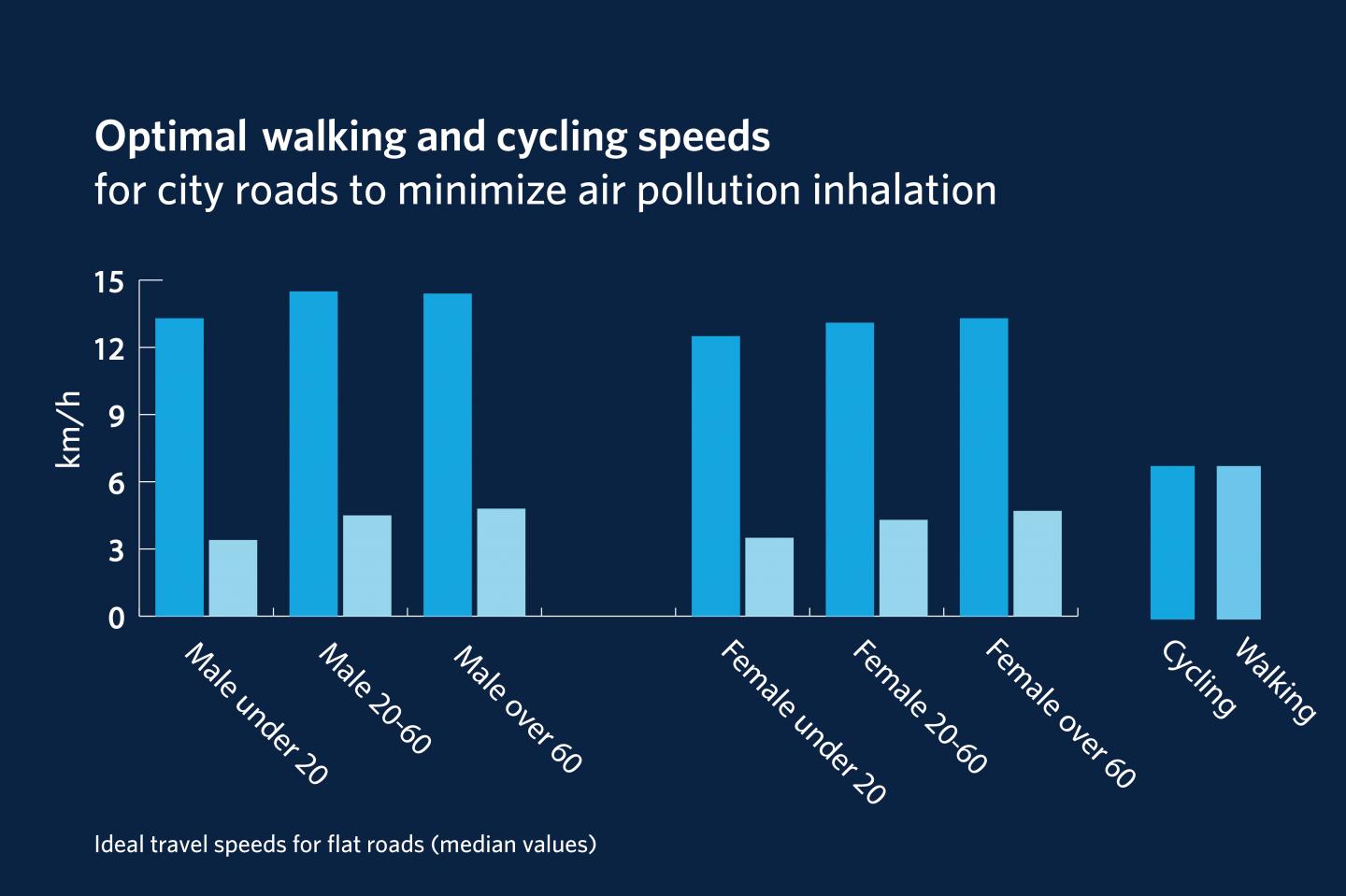
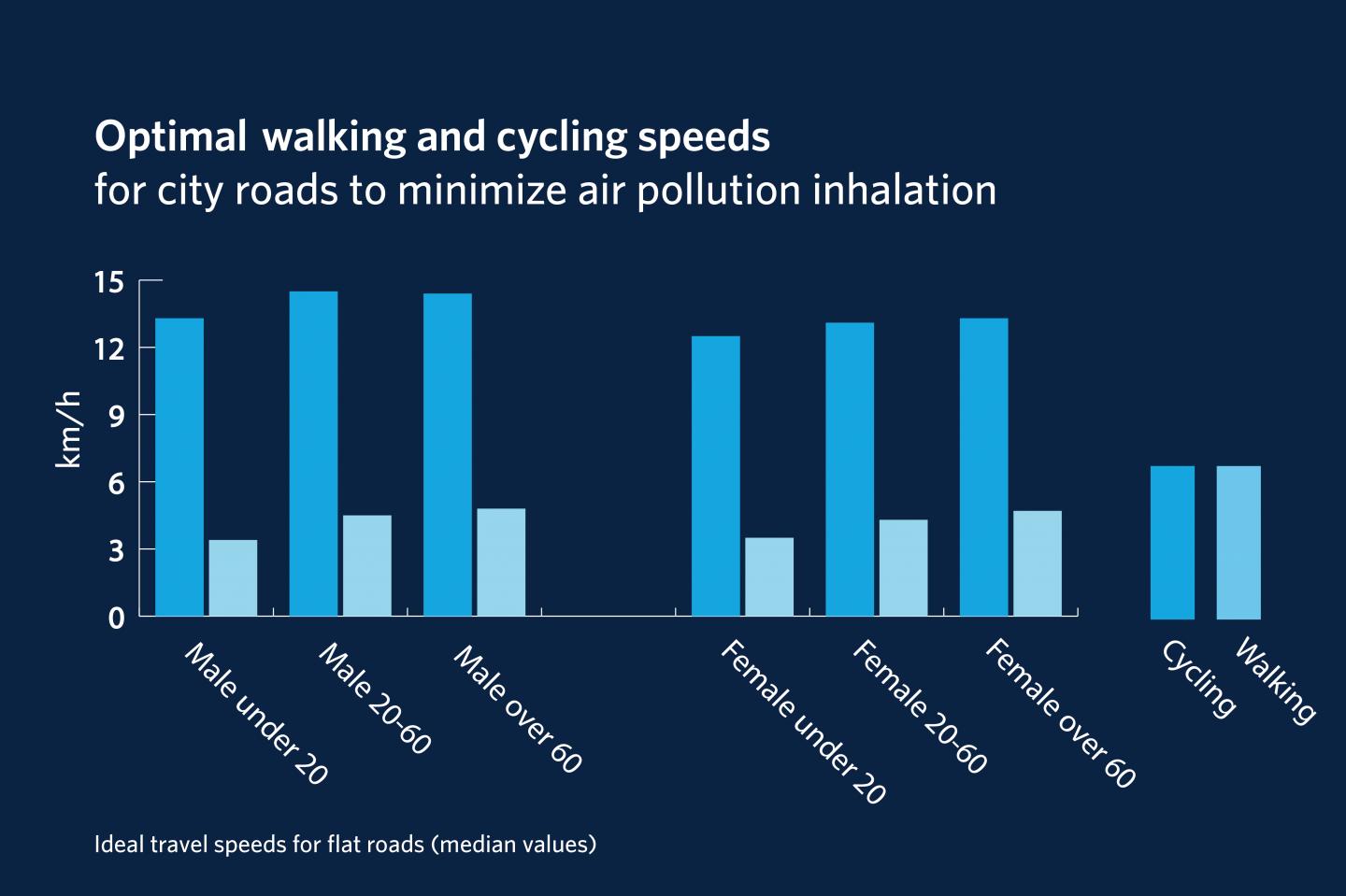
Cyclists should be riding at speeds between 12 and 20 kilometres per hour on city roads, while pedestrians should be moving at two to six kilometres per hour to minimize their inhalation of air pollution while still getting the health benefits of exercise, according to new UBC research.

"The faster you move, the harder you breathe and the more pollution you could potentially inhale, but you also are exposed to traffic for a shorter period of time. This analysis shows where the sweet spot is," said Alex Bigazzi, a UBC transportation expert in the department of civil engineering and school of community and regional planning who conducted this analysis.

Using a U.S. Census-based computer model of 10,000 people, Bigazzi calculated ideal travel speeds that he calls the minimum-dose speeds (MDS) for different age and sex groups. For female cyclists under 20, the ideal speed linked to the least pollution risk is 12.5 kilometres per hour on average on a flat road. For male cyclists in the same age group, it's 13.3 kilometres per hour. Ideal travel speeds were at 13 and 15 kilometres per hour for female and male cyclists in the 20-60 age group.

Female and male pedestrians under 20 years old should be walking at speeds around three kilometres per hour, while their older counterparts should look at reaching at least four kilometres per hour, to breathe in the least amount of pollution over a trip. Bigazzi also computed these ideal travel speeds for other road grades.

"If you move at much faster speeds than the MDS–say, cycling around 10 kilometres faster than the optimal range–your inhalation of air pollution is significantly higher," said Bigazzi. "The good news is, the MDS numbers align pretty closely with how fast most people actually travel."

The findings, which build on Bigazzi's recent research on the high amounts of toxic chemicals absorbed by cyclists on busy city streets, are described in a paper published recently in the International Journal of Sustainable Transportation.

Future research will validate the minimum-dose speed estimates with on-road data.

###

Media Contact

Lou Corpuz-Bosshart
[email protected]
604-999-0473
@UBCnews

http://www.ubc.ca

Share12Tweet8Share2ShareShareShare2

Related Posts

Evaluating Pediatric Emergency Care Quality in Ethiopia

February 7, 2026

TPMT Expression Predictions Linked to Azathioprine Side Effects

February 7, 2026

Improving Dementia Care with Enhanced Activity Kits

February 7, 2026

Decoding Prostate Cancer Origins via snFLARE-seq, mxFRIZNGRND

February 7, 2026
Please login to join discussion

POPULAR NEWS

  • Robotic Ureteral Reconstruction: A Novel Approach

    Robotic Ureteral Reconstruction: A Novel Approach

    82 shares
    Share 33 Tweet 21
  • Digital Privacy: Health Data Control in Incarceration

    63 shares
    Share 25 Tweet 16
  • Study Reveals Lipid Accumulation in ME/CFS Cells

    57 shares
    Share 23 Tweet 14
  • Breakthrough in RNA Research Accelerates Medical Innovations Timeline

    53 shares
    Share 21 Tweet 13

About

We bring you the latest biotechnology news from best research centers and universities around the world. Check our website.

Follow us

Recent News

Evaluating Pediatric Emergency Care Quality in Ethiopia

TPMT Expression Predictions Linked to Azathioprine Side Effects

Improving Dementia Care with Enhanced Activity Kits

Subscribe to Blog via Email

Success! An email was just sent to confirm your subscription. Please find the email now and click 'Confirm' to start subscribing.

Join 73 other subscribers
  • Contact Us

Bioengineer.org © Copyright 2023 All Rights Reserved.

Welcome Back!

Login to your account below

Forgotten Password?

Retrieve your password

Please enter your username or email address to reset your password.

Log In
No Result
View All Result
  • Homepages
    • Home Page 1
    • Home Page 2
  • News
  • National
  • Business
  • Health
  • Lifestyle
  • Science

Bioengineer.org © Copyright 2023 All Rights Reserved.