• HOME
  • NEWS
  • EXPLORE
    • CAREER
      • Companies
      • Jobs
    • EVENTS
    • iGEM
      • News
      • Team
    • PHOTOS
    • VIDEO
    • WIKI
  • BLOG
  • COMMUNITY
    • FACEBOOK
    • INSTAGRAM
    • TWITTER
Saturday, February 7, 2026
BIOENGINEER.ORG
No Result
View All Result
  • Login
  • HOME
  • NEWS
  • EXPLORE
    • CAREER
      • Companies
      • Jobs
        • Lecturer
        • PhD Studentship
        • Postdoc
        • Research Assistant
    • EVENTS
    • iGEM
      • News
      • Team
    • PHOTOS
    • VIDEO
    • WIKI
  • BLOG
  • COMMUNITY
    • FACEBOOK
    • INSTAGRAM
    • TWITTER
  • HOME
  • NEWS
  • EXPLORE
    • CAREER
      • Companies
      • Jobs
        • Lecturer
        • PhD Studentship
        • Postdoc
        • Research Assistant
    • EVENTS
    • iGEM
      • News
      • Team
    • PHOTOS
    • VIDEO
    • WIKI
  • BLOG
  • COMMUNITY
    • FACEBOOK
    • INSTAGRAM
    • TWITTER
No Result
View All Result
Bioengineer.org
No Result
View All Result
Home NEWS Science News Biology

University of Kentucky researchers discover three new primate species

Bioengineer by Bioengineer
January 23, 2018
in Biology, Science News
Reading Time: 2 mins read
0
Share on FacebookShare on TwitterShare on LinkedinShare on RedditShare on Telegram
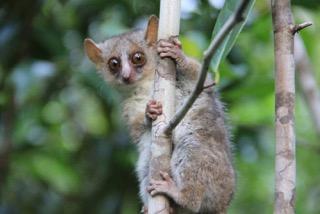
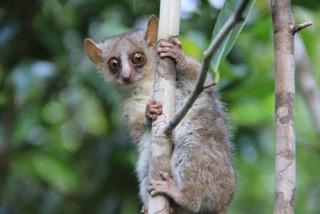
IMAGE

LEXINGTON, Ky. (May 3, 2016) – Three new species of mouse lemurs – the smallest primates in the world – have been discovered by scientists at the University of Kentucky, along with collaborators at the German Primate Center and Duke Lemur Center.

"We didn't go into this work looking for a new species, but there was no real way to get around the fact that there are three new species here to describe," said Scott Hotaling, lead author on the Molecular Ecology paper and a PhD candidate in the UK Department of Biology.

Twenty years ago, there were only two species of mouse lemurs. Today, including the newly-discovered species Microcebus ganzhorni, Microcebus manitatra and Microcebus boraha, mouse lemurs comprise 24 species, which are only found in the highly biodiverse island of Madagascar.

Microcebus ganzhorni was named after the ecologist Professor Jörg Ganzhorn from Hamburg University, who has been engaged in research and protection of lemurs for decades. Microcebus manitatra's name symbolizes the expansion of the range of a subgroup from western Madagascar. The third new species, Microcebus boraha, is named after its location on the Island of Sainte Marie, also known as Nosy Boraha.

"From a conservation perspective, knowing what's there is important," Hotaling said. "These animals are facing diminishing habitats and tremendous pressures."

According to the International Union for Conservation of Nature's Red List, 94 percent of lemurs are threatened with extinction. Of the 101 surviving lemur species, 22 are critically endangered, 48 are endangered and 20 are vulnerable – making them one of the most threatened groups of vertebrates on Earth.

But almost as important as the species discovered is how they were discovered – using recently developed methods that allowed researchers to statistically model the evolutionary process, which meant logging hundreds of hours of processing time on UK's supercomputer. This objective approach to assessing genetic differences between individuals has significant potential for clarifying diversity in other species.

"We're trying to get across this idea that the uncovering of cryptic species needs to be done not with subjective interpretations, but in a statistical framework so that people can judge the validity of these things," said Associate Professor of Biology David Weisrock, who is a senior author of the study.

In addition to Hotaling and Weisrock, three former UK undergraduates contributed to the research and are co-authors on the study, a rare feat for undergraduates. Mary Foley and Jose Bocanegra generated the sequence data and Nicolette Lawrence was vital to the computational work.

###

Media Contact

Whitney Harder
[email protected]
859-323-2396
@universityofky

http://www.uky.edu

Share13Tweet7Share2ShareShareShare1

Related Posts

Inflammasome Protein ASC Drives Pancreatic Cancer Metabolism

February 7, 2026

Phage-Antibiotic Combo Beats Resistant Peritoneal Infection

February 7, 2026

Boosting Remote Healthcare: Stepped-Wedge Trial Insights

February 7, 2026

Barriers and Boosters of Seniors’ Physical Activity in Karachi

February 7, 2026
Please login to join discussion

POPULAR NEWS

  • Robotic Ureteral Reconstruction: A Novel Approach

    Robotic Ureteral Reconstruction: A Novel Approach

    82 shares
    Share 33 Tweet 21
  • Digital Privacy: Health Data Control in Incarceration

    63 shares
    Share 25 Tweet 16
  • Study Reveals Lipid Accumulation in ME/CFS Cells

    57 shares
    Share 23 Tweet 14
  • Breakthrough in RNA Research Accelerates Medical Innovations Timeline

    53 shares
    Share 21 Tweet 13

About

We bring you the latest biotechnology news from best research centers and universities around the world. Check our website.

Follow us

Recent News

Inflammasome Protein ASC Drives Pancreatic Cancer Metabolism

Phage-Antibiotic Combo Beats Resistant Peritoneal Infection

Boosting Remote Healthcare: Stepped-Wedge Trial Insights

Subscribe to Blog via Email

Enter your email address to subscribe to this blog and receive notifications of new posts by email.

Join 73 other subscribers
  • Contact Us

Bioengineer.org © Copyright 2023 All Rights Reserved.

Welcome Back!

Login to your account below

Forgotten Password?

Retrieve your password

Please enter your username or email address to reset your password.

Log In
No Result
View All Result
  • Homepages
    • Home Page 1
    • Home Page 2
  • News
  • National
  • Business
  • Health
  • Lifestyle
  • Science

Bioengineer.org © Copyright 2023 All Rights Reserved.