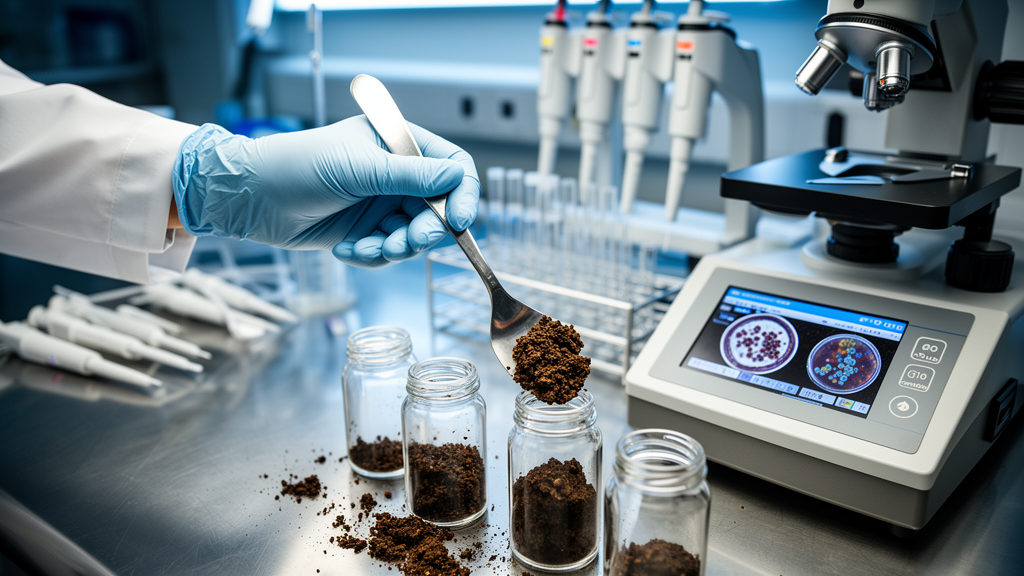
A comprehensive systematic review of forensic soil science demonstrates that combining classical physicochemical profiling with next-generation microbial DNA sequencing significantly enhances the capacity of investigators to link suspects, victims, and evidence to geographic locations. Published in the Egyptian Journal of Forensic Sciences, the investigation systematically appraised peer-reviewed literature spanning from 2002 through 2025 across major electronic databases, including Scopus, Web of Science Core Collection, Google Scholar, and ScienceDirect. Following rigorous screening under Preferred Reporting Items for Systematic Reviews and Meta-Analyses guidelines, the authors identified 486 initial records, screened 382 records after duplicate removal, and evaluated 151 full-text articles to retain exactly 75 studies for qualitative synthesis.
Forensic soil analysis fundamentally relies on the dynamic transferability and pronounced geographic heterogeneity of terrestrial sediment, which adheres mechanically to fabrics, footwear, vehicle tires, tools, and human skin. Soil transfer occurs through both primary contact between a donor source and recipient and secondary mechanisms mediated through intermediate surfaces, with deposition volume and retention dictated by moisture level, recipient texture, and contact duration. Wet, sticky sediments transfer far more readily than loose, dry grains, though particles embedded deeply within shoe treads persist substantially longer than superficial deposits on upper shoe fabrics. Presumptive physical examinations historically concentrated on macroscopic traits such as structure, texture, and coloration, standardizing color classifications against the Munsell soil color chart to capture variations driven by mineralogy, organic matter, and moisture. Physical differentiation extends further through particle size grading and density gradient distribution, although density gradient methods remain vulnerable to analyst skill variability and particle aggregation during forensic testing.
Underlying parent geology and environmental weathering define the inorganic profile of soil, embedding distinct mineral assemblages and trace elemental concentrations that reflect localized rock decay. Investigators evaluate these inorganic signatures, including heavy metals and elemental ratios, alongside organic constituents such as humic and fulvic acids to reconstruct biogeographical deposition histories. Advanced chemical instrumentation, particularly gas chromatography-mass spectrometry, infrared spectroscopy, and thermal stability assessments such as thermogravimetry, enables precise characterization of complex organic fractions. Moreover, the detection of specific plant-wax markers within the organic matter provides fine-scale discrimination among environments sharing similar broad mineral traits. Because anthropogenic interventions, including industrial contamination, agricultural land use, and localized pollution, introduce durable chemical alterations to native soil profiles, chemical profiling establishes stable geographic markers capable of corroborating physical evidence and distinguishing between ostensibly similar geological terrains across narrow geographic boundaries during complex criminal investigations and comparative evidence evaluations within judicial legal proceedings.
Beyond physical and chemical signatures, biological constituents offer exceptionally dynamic and localized environmental indicators. Natural soil represents an extraordinarily complex biological matrix, wherein a single tablespoon can harbor approximately one billion microorganisms spanning diverse bacterial, archaeal, and eukaryotic lineages. However, conventional culture-based microbiological techniques capture only about one percent of this vast living assemblage, rendering classical culture methods largely inadequate for comprehensive forensic characterization. Environmental conditions, vegetative canopy, root structures, macroinvertebrate activity, and microtopography shape microhabitats that differ across remarkably small spatial scales, even across separate elevations of a single slope or hilltop. Consequently, modern forensic soil microbiology focuses on extracting total environmental genomic information directly from evidence matrices, transforming uncultivated microbial communities into objective trace evidence that can either corroborate or refute alibis by establishing fine-scale spatial and ecological concordance with specific crime scenes, physical exhibits, and contested geographic territories during active criminal casework and judicial scene reconstructions.
Molecular characterization of soil microbiota centers on targeted amplicon sequencing of conserved phylogenetic marker genes that display sufficient internal sequence variation to resolve taxonomic identities down to genus and species levels. Bacterial and archaeal diversity is routinely profiled through 16S ribosomal RNA gene sequencing, whereas fungal populations are primarily characterized by amplifying the 18S ribosomal RNA gene and internal transcribed spacer regions, including the ITS1 locus. The systematic review underscores that while bacterial communities yield highly sensitive, site-specific DNA profiles responsive to soil moisture, pH, and vegetation, fungal communities frequently provide superior forensic discrimination. Fungal DNA profiles demonstrate greater structural stability and resilience against environmental disturbances such as sample desiccation, while exhibiting lower susceptibility to handling contamination.
The transition toward next-generation sequencing and high-throughput sequencing platforms has transformed soil metagenomic analysis from labor-intensive targeted assays to comprehensive genomic surveys. High-throughput platforms, initially driven by parallel sequencing technologies such as Illumina and Ion Torrent, enable simultaneous sequencing of millions of DNA fragments without the selective biases inherent to culturing. The literature documents an ongoing technological progression toward third- and fourth-generation long-read sequencing systems, specifically Pacific Biosciences single-molecule real-time sequencing and Oxford Nanopore technologies. These long-read platforms expand the resolution of soil microbiome investigations by reading extended continuous sequences, facilitating the taxonomic profiling of complex microbial mixtures and whole metagenomes. Additionally, the integration of environmental DNA metabarcoding captures multi-taxa traces from microbes, fungi, and surrounding plant communities simultaneously, allowing investigators to reconstruct broad ecological properties, vertical soil profiles, and habitat associations from microscopic residues recovered from clothing, tools, and contested forensic crime scenes during active criminal investigations.
Interpreting the massive, highly multivariate datasets generated by next-generation sequencing necessitates sophisticated computational architectures and advanced machine-learning algorithms. Modern forensic workflows apply computational techniques, including support vector machines, artificial neural networks, deep neural networks, and convolutional neural networks, to model high-dimensional taxonomic and functional abundance profiles. By learning intricate non-linear relationships among microbial distributions and environmental variables, these machine-learning frameworks have demonstrated high predictive accuracy in determining the geographic provenance of questioned soil samples. Computational models identify distinct digital signatures comprising specific taxonomic markers, functional metabolic genes, and metabolic pathways that characterize discrete collection sites. Nevertheless, systematic review findings caution that small sample sizes, unevenly distributed training labels, and disparate experimental procedures across published studies currently constrain the generalizability of algorithmic models, emphasizing the necessity of standardized computational pipelines before deploying predictive artificial intelligence within formal legal frameworks, investigative casework protocols, and judicial evidence admissibility court proceedings.
Empirical case studies and controlled field experiments confirm that forensic soil microbiology provides robust corroborative evidence when establishing direct associative linkages between physical exhibits and geographic crime scenes.
Beyond spatial geolocation, the soil microbiome functions as an effective biological clock for estimating post-mortem intervals and locating clandestine graves. During mammalian decomposition, the release of nutrient-rich fluids and organic matter triggers structured, predictable successions within surrounding gravesoil microbial communities. Controlled decomposition trials utilizing animal models, including swine, mice, and rats, alongside validation studies involving human cadavers reveal that specific bacterial and fungal taxa experience predictable proliferation and decline across distinct decomposition phases. These microbial succession pathways remain discernible within gravesoil for months, years, and even decades following skeletonization.
Realizing the full investigative potential of soil trace evidence requires overcoming critical methodological and legal bottlenecks, including the lack of standardized sampling protocols, limited georeferenced databases, and PCR inhibition caused by humic acids and clay. Repositories such as NCBI, RefSoil, and MG-RAST remain fragmented, restricting automated geolocation, while judicial admissibility demands established error rates, validated workflows, and standardized likelihood ratio calculations. To resolve these challenges, the review proposes an integrated multidisciplinary framework combining physical macroscopic screening, chemical trace element profiling, and high-throughput metagenomic analysis. Supported by advanced bioinformatics, long-read sequencing platforms like Oxford Nanopore and PacBio SMRT, environmental DNA analysis, and specialized practitioner training, this convergent analytical strategy produces mutually reinforcing layers of evidence.
Subject of Research: Systematic review of physicochemical and microbial soil analysis in forensic investigations
Article Title: A systematic review of soil in forensic investigations: from physicochemical characterization to microbial fingerprinting
Article References: Sagav, D. B., & Kumar, A. (2026). A systematic review of soil in forensic investigations: from physicochemical characterization to microbial fingerprinting. Egyptian Journal of Forensic Sciences, 16(1), Article 98. https://doi.org/10.1186/s41935-026-00602-0
Image Credits: AI Generated
DOI: 10.1186/s41935-026-00602-0
Keywords: forensic soil science, soil microbiome, microbial fingerprinting, next-generation sequencing, post-mortem interval, physicochemical characterization, 16S rRNA sequencing, 18S rRNA sequencing, internal transcribed spacer, shotgun metagenomics, environmental DNA, geographic provenance, Munsell color chart, machine learning algorithms, gravesoil decomposition, trace evidence analysis, suspect scene linkage, judicial admissibility
News Source: Morgan Morrow. (November 12, 2026). Integrated Soil Physicochemical and Microbial Profiling Enhances Forensic Crime Scene Linkage. Scienmag.