• HOME
  • NEWS
  • EXPLORE
    • CAREER
      • Companies
      • Jobs
    • EVENTS
    • iGEM
      • News
      • Team
    • PHOTOS
    • VIDEO
    • WIKI
  • BLOG
  • COMMUNITY
    • FACEBOOK
    • INSTAGRAM
    • TWITTER
Thursday, August 20, 2026
BIOENGINEER.ORG
No Result
View All Result
  • Login
  • HOME
  • NEWS
  • EXPLORE
    • CAREER
      • Companies
      • Jobs
        • Lecturer
        • PhD Studentship
        • Postdoc
        • Research Assistant
    • EVENTS
    • iGEM
      • News
      • Team
    • PHOTOS
    • VIDEO
    • WIKI
  • BLOG
  • COMMUNITY
    • FACEBOOK
    • INSTAGRAM
    • TWITTER
  • HOME
  • NEWS
  • EXPLORE
    • CAREER
      • Companies
      • Jobs
        • Lecturer
        • PhD Studentship
        • Postdoc
        • Research Assistant
    • EVENTS
    • iGEM
      • News
      • Team
    • PHOTOS
    • VIDEO
    • WIKI
  • BLOG
  • COMMUNITY
    • FACEBOOK
    • INSTAGRAM
    • TWITTER
No Result
View All Result
Bioengineer.org
No Result
View All Result
Home Headlines

What is high lipoprotein(a), and should I be concerned?

Bioengineer.org by Bioengineer.org
January 23, 2018
in Headlines, Health, Science News
Reading Time: 1 min read
0
Share on FacebookShare on TwitterShare on LinkedinShare on RedditShare on Telegram
IMAGE

Credit: McGill University Health Center

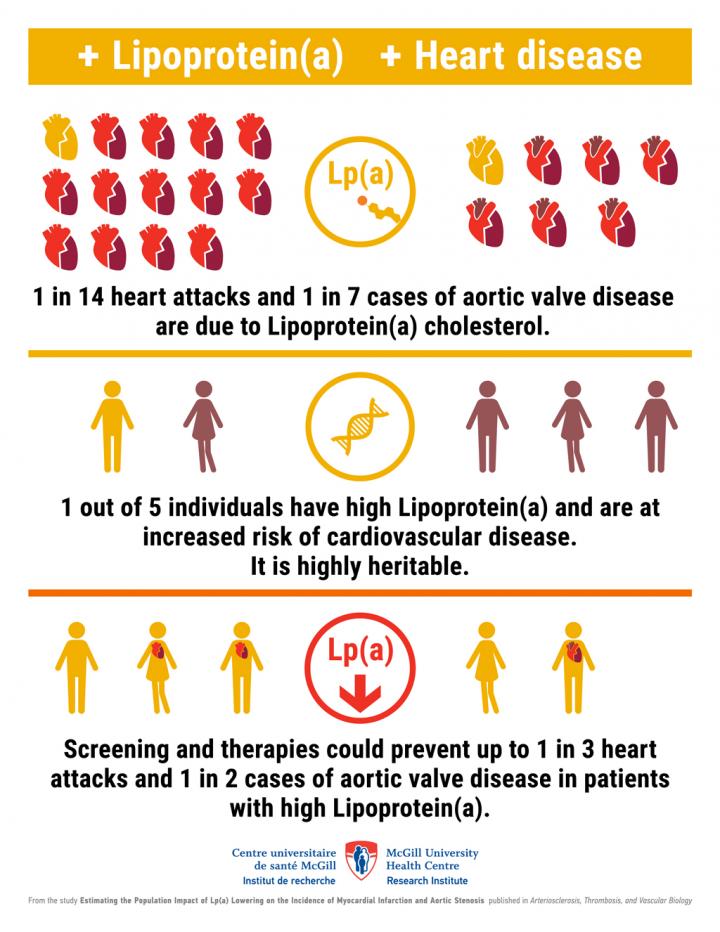
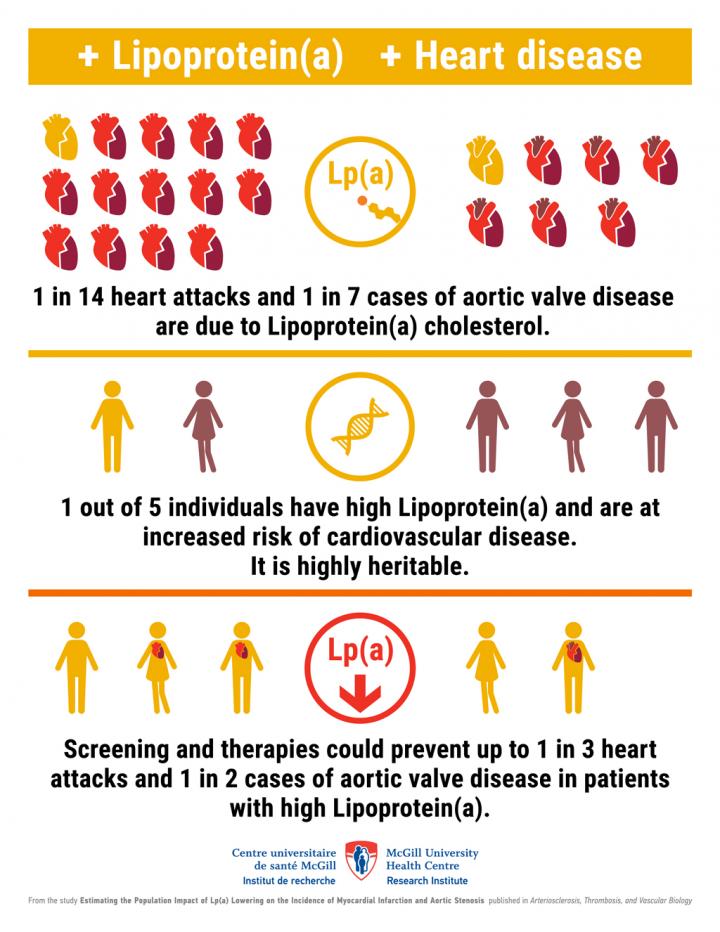
Montreal, Feb. 22, 2017 – A team of researchers from the Research Institute of the McGill University Health Center (RI-MUHC) found that elevations in a unusual form of cholesterol, called Lipoprotein(a) or Lp(a), as responsible for 1 in 14 heart attacks and 1 in 7 cases of aortic valve disease. This form of cholesterol is not commonly screened for in Canada, so most people do not even know they are at risk. Although no specific treatments exist to lower Lp(a), new therapies are being developed, and in addition to this study, the researchers hope to demonstrate how lowering this form of cholesterol could have an important impact on the population."Approximately 20 per cent of individuals have high Lp (a), a form of cholesterol that is highly heritable and runs in families," says Dr. George Thanassoulis, who is a researcher at the RI-MUHC and principal author of the study "We hope that our work will raise awareness that individuals with high Lp(a) are at high risk of heart disease and hopefully stimulate the development and testing of new therapies."

###

About the study

The study Estimating the Population Impact of Lp(a) Lowering on the Incidence of Myocardial Infarction and Aortic Stenosis was co-written by Mehdi Afshar, Pia R. Kamstrup, Ken Williams, Allan D. Sniderman, Børge G. Nordestgaard and George Thanassoulis, and is published in the journal Arteriosclerosis, Thrombosis, and Vascular Biology.

Media Contact

Valerie Harvey
[email protected]
51-493-419-347-1381
@cusm_muhc

http://www.muhc.ca/

Share12Tweet8Share2ShareShareShare2

Related Posts

Jet engines can’t tell coconut-blend fuel from jet fuel—but the environment can

Jet engines can’t tell coconut-blend fuel from jet fuel—but the environment can

August 20, 2026
Engineers Develop Self-Powered Pacemaker 恒一

Engineers Develop Self-Powered Pacemaker 恒一

August 20, 2026

CD39+CD103+CD8+ T Cells Boost Neoadjuvant Chemoimmunotherapy in Head and Neck Cancer

August 20, 2026

Most AI medical devices cleared for use lacked testing on patient outcomes

August 20, 2026
Please login to join discussion

POPULAR NEWS

  • Jet engines can’t tell coconut-blend fuel from jet fuel—but the environment can

    29 shares
    Share 12 Tweet 7
  • Engineers Develop Self-Powered Pacemaker 恒一

    29 shares
    Share 12 Tweet 7
  • CD39+CD103+CD8+ T Cells Boost Neoadjuvant Chemoimmunotherapy in Head and Neck Cancer

    29 shares
    Share 12 Tweet 7
  • Most AI medical devices cleared for use lacked testing on patient outcomes

    29 shares
    Share 12 Tweet 7

About

We bring you the latest biotechnology news from best research centers and universities around the world. Check our website.

Follow us

Recent News

Jet engines can’t tell coconut-blend fuel from jet fuel—but the environment can

Engineers Develop Self-Powered Pacemaker 恒一

CD39+CD103+CD8+ T Cells Boost Neoadjuvant Chemoimmunotherapy in Head and Neck Cancer

Subscribe to Blog via Email

Enter your email address to subscribe to this blog and receive notifications of new posts by email.

Join 85 other subscribers
  • Contact Us

Bioengineer.org © Copyright 2023 All Rights Reserved.

Welcome Back!

Login to your account below

Forgotten Password?

Retrieve your password

Please enter your username or email address to reset your password.

Log In
No Result
View All Result
  • Homepages
    • Home Page 1
    • Home Page 2
  • News
  • National
  • Business
  • Health
  • Lifestyle
  • Science

Bioengineer.org © Copyright 2023 All Rights Reserved.