• HOME
  • NEWS
  • EXPLORE
    • CAREER
      • Companies
      • Jobs
    • EVENTS
    • iGEM
      • News
      • Team
    • PHOTOS
    • VIDEO
    • WIKI
  • BLOG
  • COMMUNITY
    • FACEBOOK
    • INSTAGRAM
    • TWITTER
Saturday, February 7, 2026
BIOENGINEER.ORG
No Result
View All Result
  • Login
  • HOME
  • NEWS
  • EXPLORE
    • CAREER
      • Companies
      • Jobs
        • Lecturer
        • PhD Studentship
        • Postdoc
        • Research Assistant
    • EVENTS
    • iGEM
      • News
      • Team
    • PHOTOS
    • VIDEO
    • WIKI
  • BLOG
  • COMMUNITY
    • FACEBOOK
    • INSTAGRAM
    • TWITTER
  • HOME
  • NEWS
  • EXPLORE
    • CAREER
      • Companies
      • Jobs
        • Lecturer
        • PhD Studentship
        • Postdoc
        • Research Assistant
    • EVENTS
    • iGEM
      • News
      • Team
    • PHOTOS
    • VIDEO
    • WIKI
  • BLOG
  • COMMUNITY
    • FACEBOOK
    • INSTAGRAM
    • TWITTER
No Result
View All Result
Bioengineer.org
No Result
View All Result
Home NEWS Science News Biology

Discovery of a unique subcellular structure determining the orientation of cell division

Bioengineer by Bioengineer
January 23, 2018
in Biology, Science News
Reading Time: 2 mins read
0
Share on FacebookShare on TwitterShare on LinkedinShare on RedditShare on Telegram
IMAGE

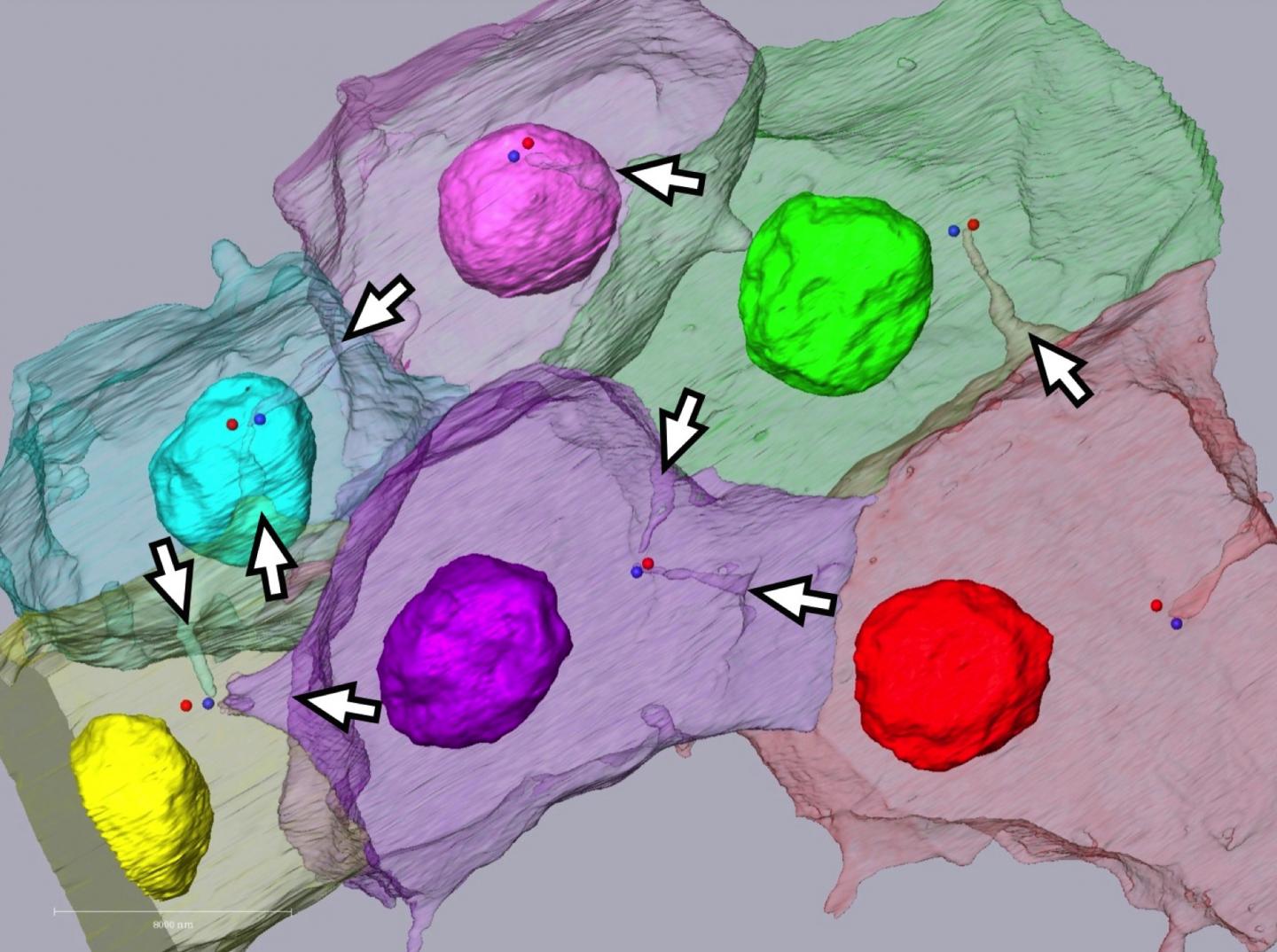
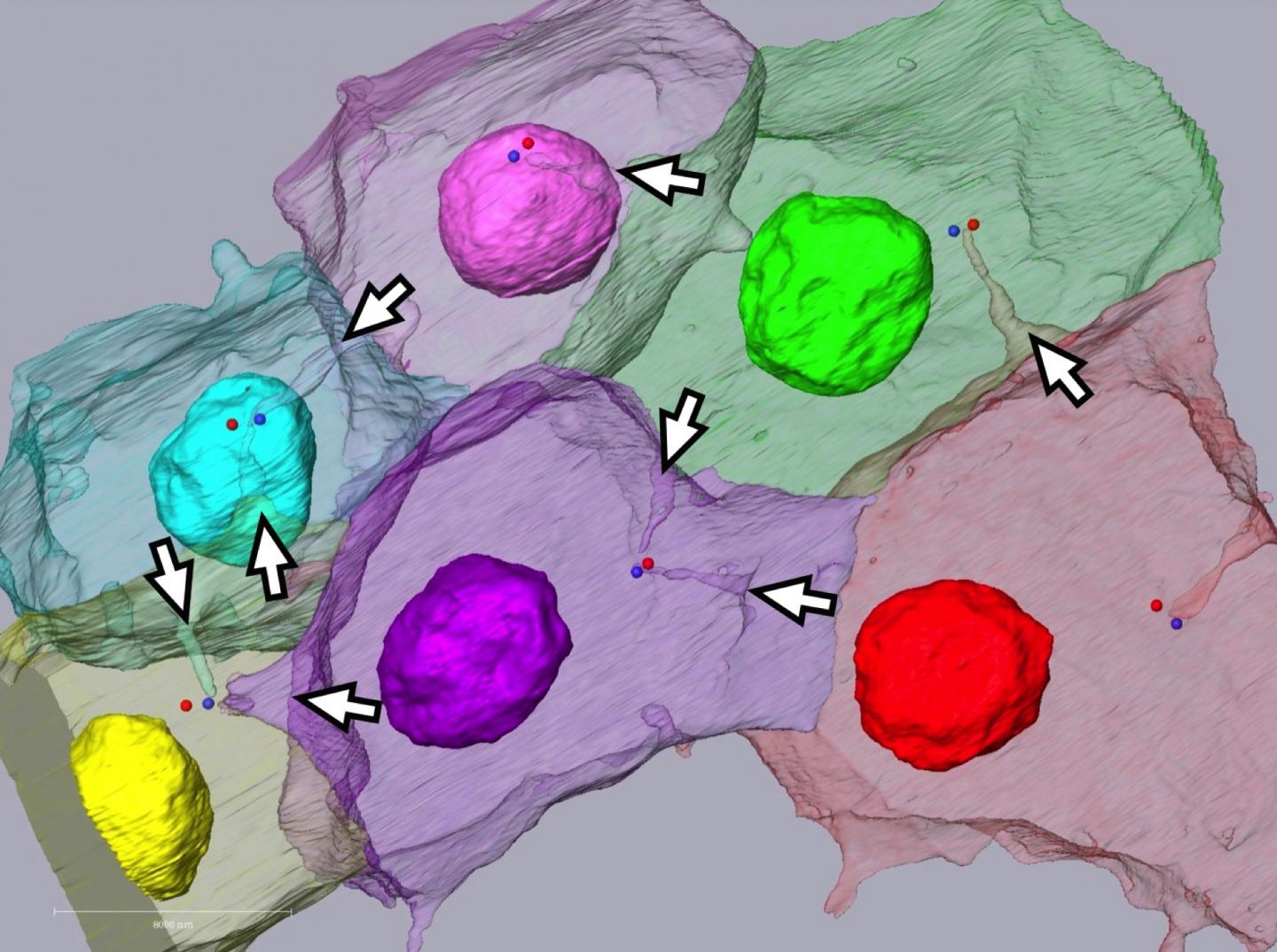
Cell division is a fundamental process of life, producing two cells from one single cell at each cell division. During animal development, a fertilized egg divides many times, increasing the number of cells, which are precisely organized within the animal's body. How many times a cell undergoes cell division and how the two daughter cells are positioned after the division can be critical for shaping the animal. Although the machinery essential for cell division is well characterized and evolutionarily conserved, it remains unknown in most animals how a cell division can become oriented relative to the animal's body axis. The work by Negishi et al., published recently in the electronic journal eLife, has revealed that in the sea squirt (Ciona intestinalis) embryo, the orientation of the cell division machinery in epithelial cells is controlled by a unique cell membrane structure, which we call an "invagination".

The first author, Dr. Takefumi Negishi, recalls "When I observed this structure dynamically moving and extending within the cell, I immediately thought this might be playing an essential role for cellular function."

Live imaging by fluorescence microscopy revealed that the invaginations originate from the posterior (tail) side of each epithelial cell and grows intracellularly toward the centrosome, an essential component of the cell division machinery. Using a specialized electron microscopy called "SBF-SEM", the authors demonstrated that the tip of invagination associates closely with the centrosome. Furthermore, laser cutting of the invagination resulted in immediate recoil of both cut ends to opposite directions, highlighting that this polarized membrane structure is under tension. Based on these findings, the authors propose an entirely new model for controlling cell division orientation, which involves the polarized membrane structure repositioning the cell division machinery to one end of the cell, thus orientating the subsequent cell division. Professor Naoto Ueno, who co-supervised the current study, states "We hope our findings facilitates studies on similar membrane structures in other animals that might have diverse biological functions."

###

This study was conducted in collaboration between the National Institute for Basic Biology (Japan), the National Institute for Physiological Sciences (Japan) and The National Center for Scientific Research (France).

eLife
"Physical association between a novel plasma-membrane structure and centrosome orients cell division"
Takefumi Negishi, Naoyuki Miyazaki, Kazuyoshi Murata, Hitoyoshi Yasuo, Naoto Ueno
DOI: 10.7554/eLife.16550

Media Contact

NIBB PR Office
[email protected]

http://www.nins.jp/english/

Share15Tweet8Share2ShareShareShare2

Related Posts

Urinary Clusterin: Tracking Kidney Disease and Treatment Response

February 7, 2026

Personalized Guide to Understanding and Reducing Chemicals

February 7, 2026

Inflammasome Protein ASC Drives Pancreatic Cancer Metabolism

February 7, 2026

Phage-Antibiotic Combo Beats Resistant Peritoneal Infection

February 7, 2026
Please login to join discussion

POPULAR NEWS

  • Robotic Ureteral Reconstruction: A Novel Approach

    Robotic Ureteral Reconstruction: A Novel Approach

    82 shares
    Share 33 Tweet 21
  • Digital Privacy: Health Data Control in Incarceration

    63 shares
    Share 25 Tweet 16
  • Study Reveals Lipid Accumulation in ME/CFS Cells

    57 shares
    Share 23 Tweet 14
  • Breakthrough in RNA Research Accelerates Medical Innovations Timeline

    53 shares
    Share 21 Tweet 13

About

We bring you the latest biotechnology news from best research centers and universities around the world. Check our website.

Follow us

Recent News

Urinary Clusterin: Tracking Kidney Disease and Treatment Response

Personalized Guide to Understanding and Reducing Chemicals

Inflammasome Protein ASC Drives Pancreatic Cancer Metabolism

Subscribe to Blog via Email

Enter your email address to subscribe to this blog and receive notifications of new posts by email.

Join 73 other subscribers
  • Contact Us

Bioengineer.org © Copyright 2023 All Rights Reserved.

Welcome Back!

Login to your account below

Forgotten Password?

Retrieve your password

Please enter your username or email address to reset your password.

Log In
No Result
View All Result
  • Homepages
    • Home Page 1
    • Home Page 2
  • News
  • National
  • Business
  • Health
  • Lifestyle
  • Science

Bioengineer.org © Copyright 2023 All Rights Reserved.