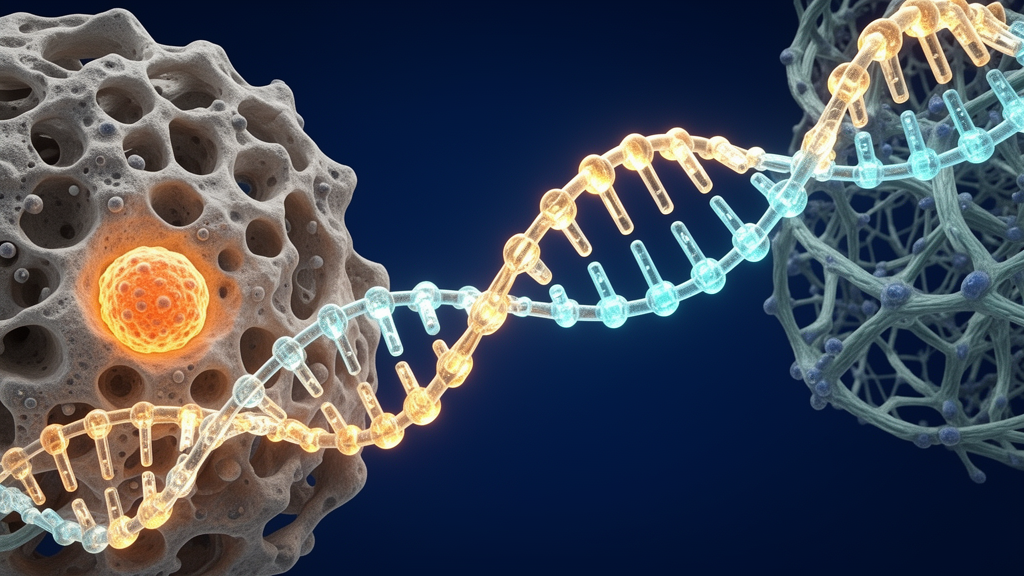
A newly developed computational framework named Fuzzy-OS integrates DNA methylation profiles from tumor tissue and circulating tumor DNA to perform early prognostic risk stratification in osteosarcoma. In a retrospective evaluation across 30 repeated, leakage-free stratified test splits, the framework demonstrated a pooled prognostic accuracy of 0.63, outperforming both conventional machine learning algorithms and clinical expert assessments.
Osteosarcoma remains a highly aggressive malignant bone tumor marked by poor survival outcomes, especially among individuals who experience metastatic or recurrent disease. Standard clinical prognostic assessment has historically depended upon clinicopathological features and radiographic findings, which provide limited molecular-level resolution for personalized clinical evaluation.
Although aberrant DNA methylation is recognized as a key contributor to osteosarcoma progression and can be monitored noninvasively in circulating tumor DNA from blood plasma, constructing predictive models from these data presents substantial computational difficulties. Methylation sequencing profiles typically exhibit high dimensionality, technical measurement variability, and biological heterogeneity across patient samples.
To develop the framework, researchers analyzed retrospective data from two independent patient cohorts treated at a single medical center. The analysis included 89 tumor tissue samples profiled via the Illumina MethylationEPIC array and 11 pre-treatment plasma circulating tumor DNA samples analyzed through whole-genome bisulfite sequencing. Because the two patient cohorts contained no overlapping individuals and lacked paired tissue and blood samples, integration was executed at the feature level across the 189,177 CpG sites shared between the two analytical platforms.
The underlying architecture of Fuzzy-OS relies on a multi-view Takagi–Sugeno–Kang fuzzy system governed by Dirichlet distributions, structured to handle high-dimensional inputs while retaining interpretability. The system incorporates variational inference to estimate model uncertainty, tensor factorization to achieve dimensionality reduction, and an attention-based fusion module to merge data from multiple views.
Across 300 held-out test predictions accumulated over the repeated splits, Fuzzy-OS yielded a pooled accuracy of 0.63 with a 95 percent confidence interval of 0.57 to 0.68. This performance was statistically comparable to a tissue-only version of the model, which reached an accuracy of 0.65 with a 95 percent confidence interval of 0.60 to 0.69 (P = 0.66). However, the integrated model significantly exceeded the performance of clinical expert evaluation, which averaged 0.46 with a standard deviation of 0.08, as well as four standard machine learning models that scored between 0.40 and 0.42 (P < 0.0001).
In one retrospective case study analyzed by the authors, Fuzzy-OS identified a patient as high risk more than ten months prior to the radiological detection of metastatic lesions. This preliminary observation does not establish prospective clinical utility and requires external validation.
Subject of Research: Interpretable fuzzy deep learning integration of multi-source DNA methylation for osteosarcoma risk stratification
Article Title: A fuzzy-intelligence framework integrating tissue and liquid biopsy methylation profiling to empower early-risk stratification in osteosarcoma
Article References: Zhao, B., Wang, H., Tao, Y., Dong, H., Cui, Z., Mu, H., Wang, J., Jiang, Y., Huang, Z., Lv, Y., Wang, Z., Liu, K., Liu, Z., Zhao, G., Shen, J., Wang, H., Cai, Z., Hua, Y., Sun, W., … Yang, L. (2026). A fuzzy-intelligence framework integrating tissue and liquid biopsy methylation profiling to empower early-risk stratification in osteosarcoma. Journal of Translational Medicine. https://doi.org/10.1186/s12967-026-09104-y
Image Credits: AI Generated
DOI: 10.1186/s12967-026-09104-y
Keywords: osteosarcoma, Fuzzy-OS, DNA methylation, liquid biopsy, circulating tumor DNA, tumor tissue profiling, Takagi-Sugeno-Kang fuzzy system, epigenetic biomarkers, CpG sites, whole-genome bisulfite sequencing, Illumina MethylationEPIC array, variational inference, tensor factorization, attention-based fusion, risk stratification, prognostic modeling, Dirichlet distribution, bone cancer prognosis
News Source: Juliet Wilcox. (November 12, 2026). Fuzzy Learning Framework Integrates Epigenetic Biopsies to Predict Osteosarcoma Risk. Scienmag.