Researchers analyzing the alpine moth Thitarodes xiaojinensis have identified a specific genetic variant in the HSP60A gene that distinguishes high-elevation and low-elevation populations of the species. Published in Ecology and Evolution, the study combines population genomics, transcriptomics, and thermal-tolerance phenotyping to explore how this endemic moth adapts to the steep climatic gradients of the Qinghai–Tibet Plateau. The findings suggest that despite ongoing gene flow between the two ecotypes, divergent selection has maintained distinct thermal performance strategies linked to a coding mutation in a heat-shock protein gene.
The Thitarodes xiaojinensis moth occupies alpine meadows ranging from 3,000 to 4,800 meters in elevation across the eastern plateau. It serves as the primary host for the medicinal fungus Ophiocordyceps sinensis, meaning the moth’s thermal limits directly influence the elevational range where the fungus can complete its life cycle. As the plateau warms at approximately 2.5 times the global average rate, understanding how these species adapt to temperature changes is critical for forecasting their persistence. The study focuses on two distinct ecotypes: a Low ecotype collected at 3,193 meters and a High ecotype collected at 4,285 meters in Xiaojin County, Sichuan Province, China.
To characterize the genetic structure of these populations, the team developed genome-wide molecular markers using SLAF-seq technology in 35 individuals. This approach yielded 3,903,703 single nucleotide polymorphisms (SNPs) distributed across all chromosomes. Population structure analysis using ADMIXTURE revealed weak genome-wide structure, with the best fit occurring at K=1, indicating a single-population model. However, at K=2, individuals partitioned bimodally by elevational origin, capturing an ecological signal superimposed on the otherwise weakly structured genome. This pattern is characteristic of early-stage ecotypic differentiation rather than speciation-level divergence, suggesting that the populations are diverging along the elevational gradient while gene flow continues.
Genome-wide differentiation analysis identified the HSP60A locus as a standout candidate for selection. In 100-kilobase sliding windows, the window containing HSP60A on chromosome 4 reached an FST value of 0.391. This value exceeded the 95th percentile of the genome-wide distribution and, after excluding low-information windows, surpassed the 99th percentile threshold. The differentiation at this locus was further supported by a 37% reduction in nucleotide diversity in the High ecotype compared to the Low ecotype, a pattern confined to the specific locus against the genome-wide background. These statistical outliers suggest that the HSP60A region is resistant to homogenization by gene flow, a hallmark of loci under divergent selection.
Sequencing of the HSP60A gene revealed a G to T transversion in exon 7, designated c.1132G>T. This mutation changes codon 378 from GAG to TAG, creating a premature stop codon that truncates the protein from 571 to 377 residues. The derived allele, which results in a loss-of-function variant, was found in twelve of the 19 Low-ecotype individuals but was absent in all High-ecotype individuals with sufficient read coverage. Orthogonal validation using PCR and Sanger sequencing confirmed this allele frequency, detecting the derived variant in four of five Low-ecotype individuals and none of the High-ecotype individuals. Parsimony analysis against outgroup sequences identified glutamate as the ancestral state, conserved in all lepidopteran orthologues examined, indicating that the truncation is a derived trait specific to the Low ecotype.
Transcriptomic analysis of larvae reared at 8°C, 12°C, and 16°C revealed distinct regulatory responses between the ecotypes. Weighted gene co-expression network analysis (WGCNA) separated the chaperone complement into two systems with opposed thermal behaviors: a strongly heat-inducible small heat-shock protein (sHSP) arm and a non-inducible classical chaperone arm. HSP60A, a chaperonin, co-expressed with the non-inducible classical arm rather than the inducible one. The Low ecotype exhibited lower baseline expression of HSP60A across all temperatures compared to the High ecotype. Conversely, the Low ecotype showed a stronger inducible response, with small HSPs running 3.8-fold higher and inducing 2.6-fold more strongly at 16°C than in the High ecotype.
Survival assays demonstrated that the Low ecotype survived better than the High ecotype at 16°C, with a statistically significant difference in mortality rates. This result aligns with the transcriptomic data, suggesting that the Low ecotype’s strategy involves a constitutively reduced chaperonin capacity paired with a heightened inducible defense. The study proposes that this combination represents an elevated heat-shock threshold, a strategy that may be favored because maintaining high levels of chaperonin activity is energetically costly. The genetic contrast observed in the common-garden rearing conditions indicates that these differences are heritable rather than plastic responses to the environment.
The study highlights the complex interplay between gene flow and divergent selection in shaping local adaptation. Although the genome is weakly structured overall, the HSP60A locus stands out as a clear signal of selection-driven differentiation. The authors caution that with only two ecotype samples, it is difficult to definitively separate stochastic drift from selection-driven outliers. Furthermore, the fitness cost of the HSP60A truncation remains unmeasured, and a linked regulatory variant could also contribute to the observed expression differences. The elevated differentiation at HSP60A is therefore treated as a candidate locus rather than a confirmed target of selection.
From a conservation perspective, the intraspecific variation harbored by these ecotypes constitutes the evolutionary raw material enabling the species to cope with plateau warming. The study suggests that preserving the full range of thermal-tolerance variation, including both allele classes, is a prudent strategy. As high-elevation habitats warm, locally adapted low-expression variants may be swamped, or gene flow may carry alleles uphill to raise fitness. The robust posture for conservation is to maintain the adaptive continuum of the species, ensuring that both morphotypes and allelic classes are retained to facilitate future adaptation.
This research provides a framework for assessing how alpine endemics may respond to climate change by linking sequence variation at specific loci to regulatory networks. By combining population genomics with functional phenotyping, the study offers insights into the mechanisms of thermal adaptation in non-model species. The findings underscore the importance of maintaining genetic diversity in endemic populations as they face the intensifying thermal selection pressures of a warming world.
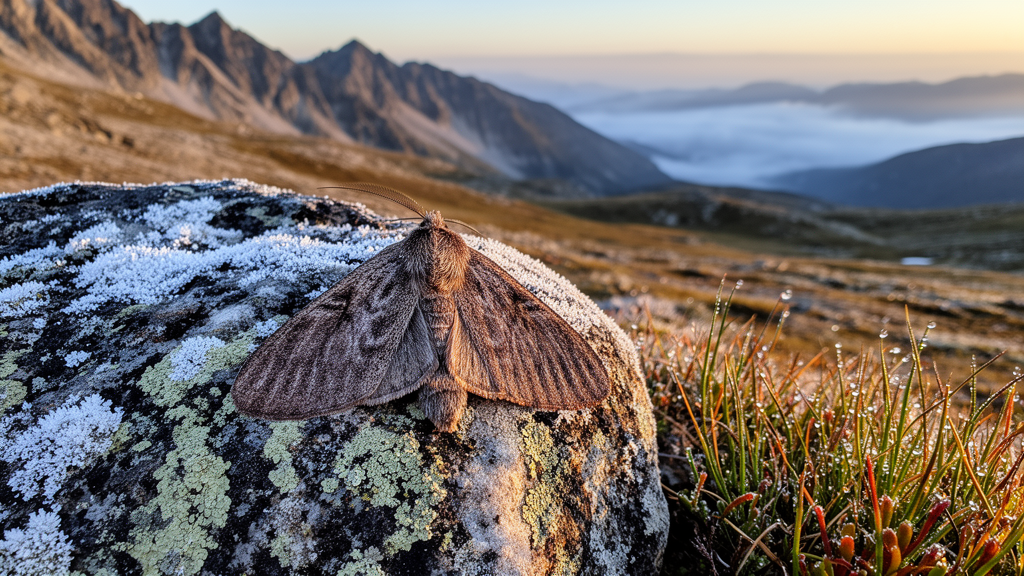
Beyond molecular signatures, the two ecotypes display marked morphological differences in adult forewing coloration that mirror their field origins. Individuals from the high-elevation population possess tawny forewings marked by diffuse, darkened patterns, whereas their low-elevation counterparts display a distinctly darker ground color set against contrasting pale markings. These phenotypic contrasts persisted despite decades of changing environmental pressures across the plateau, where the lower geographic boundary of Ophiocordyceps sinensis has shifted upward by roughly 400 meters since the late twentieth century while Thitarodes xiaojinensis has maintained a stable elevational distribution. To rule out transient plastic adjustments or maternal effects, the researchers maintained both ecotypes under identical baseline laboratory conditions across at least two generations at a constant temperature of 8°C, seventy-five percent relative humidity, and continuous darkness. Newly hatched second-generation larvae were subsequently isolated into individual glass jars and fed a standardized pre-treatment ration of Polygonum viviparum rhizome and Potentilla anserina root across a four-month acclimation period prior to temperature challenges.
Prior to conducting genomic scans, the investigators confirmed species assignments through mitochondrial cytochrome c oxidase subunit I sequencing across representative larvae from each collecting site. Across a conserved 298-base-pair coding fragment, the analysis resolved twelve variable sites that formed three distinct, ecotype-specific haplotypes without haplotype sharing. Larvae from the low elevation site shared a single haplotype, whereas two distinct haplotypes characterized high-elevation individuals. Pairwise divergence between the ecotypes averaged 3.58 percent uncorrected sequence distance and 3.67 percent under the Kimura two-parameter model, while within-ecotype divergence remained at zero percent for low-elevation larvae and 0.89 percent for high-elevation specimens. Although divergence from a conspecific reference sequence reached 5.29 percent, these distances remained well below the 9.98 percent mean divergence measured across congeneric taxa. This pattern indicates deep intraspecific mitochondrial structure with reciprocal monophyly, reflecting a sufficiently recent evolutionary split where mitochondrial lineages have sorted rapidly while nuclear gene flow continues at an estimated migration rate of approximately 1.4 migrants per generation.
At the structural level, comparative alignments against ten lepidopteran orthologues spanning seven families revealed that the glutamate residue at position 378 is invariant, positioned beside a conserved YEKEK motif. The derived nonsense mutation in low-elevation moths eliminates the carboxyl-terminal portion of the discontinuous equatorial domain and the adjacent intermediate region. Because these deleted segments form the oligomeric contact interfaces required for chaperonin assembly, their loss compromises complex formation while sparing the amino-terminal adenosine triphosphate-binding pocket. Transcripts carrying this premature stop codon also face nonsense-mediated decay, providing a direct mechanism for reduced baseline expression. Additionally, a binomial assessment of the validation cohort established a one-sided ninety-five percent upper confidence limit of twenty-six percent for the derived allele frequency in the high-elevation population, confirming that the variant remains absent or exceedingly rare at high elevations.
Co-expression network analysis also revealed important technical nuances in how these transcriptional shifts are quantified. Constructing the signed network across 11,046 expressed genes yielded 35 modules, with the largest module showing high intramodular connectivity relative to the genome-wide median. Crucially, statistical support for reduced baseline HSP60A expression in low-elevation larvae proved sensitive to analytical scaling, attaining significance under transcripts-per-million normalization but not under counts-per-million or variance-stabilizing transformations. In contrast, the heightened induction of small heat-shock proteins in low-elevation larvae remained robust across every normalization framework, affirming that their intensified inducible response represents an enduring physiological divergence.
Subject of Research: Genetic and transcriptomic analysis of thermal adaptation in Thitarodes xiaojinensis ecotypes
Article Title: Elevational Adaptation in the Moth Thitarodes xiaojinensis: HSP60A‐Mediated Thermal Tolerance Evolution Under Gene Flow
Article References: Wei, Q., He, Y., Pang, S., & Chen, S. (2026). Elevational Adaptation in the Moth Thitarodes xiaojinensis : HSP60A ‐Mediated Thermal Tolerance Evolution Under Gene Flow. Ecology and Evolution, 16(11), Article e74635. https://doi.org/10.1002/ece3.74635
Image Credits: AI Generated
DOI: 10.1002/ece3.74635
Keywords: Thitarodes xiaojinensis, HSP60A, Thermal tolerance, Elevational adaptation, Population genomics, Transcriptomics, Qinghai-Tibet Plateau, Gene flow, Ecotypic divergence, Heat-shock proteins, SLAF-seq, WGCNA, Chaperonin, Local adaptation, Climate change, Alpine ecology, Nonsense mutation, Ophiocordyceps sinensis, Genome-wide differentiation, Thermal stress response
News Source: Juliet Wilcox. (November 12, 2026). Moth Gene Variant Links Elevation to Thermal Tolerance. Scienmag.