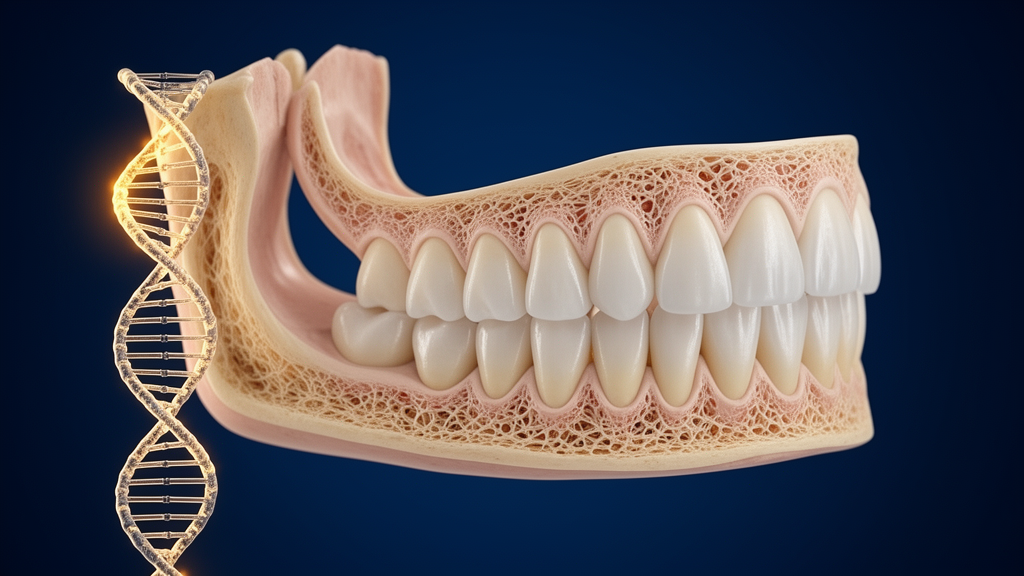
A case-control study published in the Egyptian Journal of Medical Human Genetics reports that a specific variant in the AXIN2 gene is associated with a significantly reduced risk of hypodontia in an Iranian population. The study found that individuals carrying the G allele of this variant were less likely to exhibit congenital tooth agenesis compared to those without the allele. This finding suggests a potential protective role for this genetic marker in the development of the permanent dentition, offering new insights into the complex genetic architecture of dental anomalies.
Hypodontia is a common dental condition characterized by the congenital absence of one or more permanent teeth, excluding third molars. The prevalence of this condition varies widely across different populations, with global estimates ranging from 1.6% to 7.8%, and some ethnic groups reporting rates as high as 19% to 36%. The condition can significantly impact an individual’s aesthetics, oral function, and psychological well-being, often leading to difficulties in chewing, speech, and self-esteem. Clinical management is typically challenging and requires a multidisciplinary approach involving orthodontics, prosthodontics, and sometimes surgical interventions, highlighting the importance of understanding its etiology.
The etiology of hypodontia is multifactorial, with genetic factors playing a central role in its pathogenesis. Over 300 genes are involved in tooth development, and at least 20 have been implicated in the development of hypodontia. Key genes identified in previous research include MSX1, PAX9, LRP6, and AXIN2. These genes regulate critical processes in odontogenesis, the biological process of tooth formation. Disruptions in the expression or function of these genes can lead to tooth agenesis, underscoring the need for detailed investigation into specific genetic variants that may influence susceptibility to this condition.
AXIN2, located on chromosome 17q24, is a crucial negative regulator of the Wingless/Int (Wnt) signaling pathway, which is essential for cell proliferation, differentiation, and craniofacial morphogenesis. During tooth development, AXIN2 is expressed in the enamel knot and mesenchymal odontoblasts, highlighting its importance in odontogenesis. As an intracellular inhibitor of the Wnt/β-catenin pathway, AXIN2 regulates T cell factor activity by facilitating β-catenin translocation to the cytoplasm. Mutations in AXIN2 have been associated not only with tooth agenesis but also with various human carcinomas and ectodermal dysplasia, indicating its broad role in developmental biology.
The specific polymorphism investigated in this study, rs7224837 A/G, has drawn research attention due to its potential to alter gene product function. Intronic variants like rs7224837 may influence gene function by altering splicing patterns, modifying regulatory element activity, or affecting mRNA stability, ultimately impacting protein expression and downstream signaling pathways. Previous studies have reported associations between AXIN2 rs7224837 and various conditions, including non-syndromic oral clefts, oral cancer, and oligodontia-colorectal cancer syndrome. However, studies investigating its association with non-syndromic hypodontia have yielded inconsistent results, and no prior study had examined this polymorphism in an Iranian population.
The study included 96 participants, comprising 41 hypodontia cases and 55 healthy controls. The case group consisted of patients aged 18 to 50 years, selected to minimize age-related confounding factors. A board-certified dentist performed a comprehensive clinical examination to record missing teeth, excluding third molars, and panoramic radiographs were evaluated by an oral radiologist to confirm the absence of permanent teeth. Only patients with non-syndromic hypodontia were included, while those with syndromic conditions associated with hypodontia, such as ectodermal dysplasia or cleft lip/palate, were excluded. The control group consisted of individuals with full permanent dentition, confirmed by intraoral photographs and panoramic radiographs, with no family history of hypodontia.
Genotyping for the rs7224837 A/G polymorphism was performed using the polymerase chain reaction-restriction fragment length polymorphism (PCR-RFLP) method. This technique was selected for its cost-effectiveness, accessibility, and reliability, particularly in resource-limited settings. PCR-RFLP remains a valuable tool for specific SNP genotyping when the target mutation creates a natural restriction site, offering visual confirmation via gel electrophoresis. The amplified PCR products were digested with the Hin1II restriction enzyme, and the resulting fragments were separated by electrophoresis on a 3% agarose gel. Three distinct genotypic patterns were identified: the wild-type genotype (AA) showed two bands, the heterozygous genotype (AG) displayed three bands, and the homozygous mutant genotype (GG) exhibited a single fragment.
Statistical analyses were performed using SPSS version 28, with binary logistic regression analysis used to evaluate the association between genetic variants and hypodontia risk under different genetic models. Given the significant age difference observed between the hypodontia patients and controls, age was included as a covariate in the multivariable logistic regression model to control for its potential confounding effect. To account for multiple comparisons arising from the simultaneous testing of five genetic models, a Bonferroni correction was applied, adjusting the significance threshold to P < 0.01. Only P-values below this adjusted threshold were considered statistically significant for the genetic model analyses.
The results revealed that the G allele of AXIN2 rs7224837 was significantly less frequent in hypodontia patients compared to controls, with frequencies of 8.5% and 30.0%, respectively. Under the allelic model, the G allele was associated with a reduced risk of hypodontia, with an odds ratio of 0.25 and a 95% confidence interval of 0.11 to 0.58, and a P-value of 0.001. This association remained statistically significant after Bonferroni correction. Similarly, under the dominant model, individuals carrying the G allele had a significantly reduced risk of hypodontia compared to those with the AA genotype, with an odds ratio of 0.25, a 95% confidence interval of 0.08 to 0.59, and a P-value of 0.008.
For the codominant models, the AG and GG genotypes showed protective associations before correction, but these did not reach statistical significance after Bonferroni correction. The overdominant model suggested a protective effect, but this finding also did not remain significant after multiple comparison correction. The recessive model did not show a statistically significant association with hypodontia, either before or after correction. These findings indicate that the protective effect of the G allele is most robust under the allelic and dominant models, suggesting that the presence of at least one G allele may be sufficient to confer a reduced risk of hypodontia.
The study’s findings contrast with those of a 2020 study by Al-Ani et al., which examined the relationship between AXIN2 variants and non-syndromic hypodontia in a New Zealand population and found no significant association. This discrepancy may be attributed to differences in genetic background and ethnic composition between the studied populations. The Iranian population, with its distinct genetic admixture, may exhibit different susceptibility patterns compared to New Zealanders. The results are also partially consistent with a 2021 meta-analysis by Motahari, which found a significant association between AXIN2 rs7224837 and non-syndromic oral clefts in Asian populations, suggesting that ethnic-specific genetic factors may modulate the role of AXIN2 in craniofacial development.
Despite these significant findings, the study has several limitations. The relatively small cohort may limit the generalizability of the results, and larger, multi-center studies are needed to validate the association. The borderline Hardy-Weinberg equilibrium P-value of 0.050 in the control group warrants careful consideration, as the possibility of genotyping error, population stratification, or sampling bias cannot be entirely excluded. Additionally, the lack of external validation using a more definitive method, such as Sanger sequencing, represents a limitation. Future investigations should incorporate Sanger sequencing validation and include larger, more diverse populations to confirm and expand upon these results.
The findings of this study support the potential role of genetic factors in the etiology of hypodontia and highlight the importance of genetic screening in early diagnosis and personalized dental management. The protective role of the G allele of rs7224837 A/G suggests that genetic testing for AXIN2 variations could help identify individuals who are less likely to develop hypodontia, potentially allowing for earlier intervention and tailored treatment planning. Further research is necessary to explore the precise molecular mechanisms by which AXIN2 influences odontogenesis and to investigate other polymorphisms within the gene and their interactions with environmental factors.
Subject of Research: The role of AXIN2 gene variant in hypodontia: a case-control study
Article Title: The role of AXIN2 gene variant in hypodontia: a case-control study
Article References: Qalandarzehi, B., Arabshahi, A., Tehrani, P., Piroozan, Y., Faqih, M., Alijani, E., Farshad, M. M., Akhtar, R., & Shahriari, H. (2026). The role of AXIN2 gene variant in hypodontia: a case-control study. Egyptian Journal of Medical Human Genetics, 27(1), Article 55. https://doi.org/10.1186/s43042-026-00889-7
Image Credits: AI Generated
DOI: 10.1186/s43042-026-00889-7
Keywords: role, AXIN2, gene, variant, hypodontia, case-control, scientific research
News Source: Juliet Wilcox. (November 12, 2026). AXIN2 Gene Variant Linked to Reduced Hypodontia Risk. Scienmag.