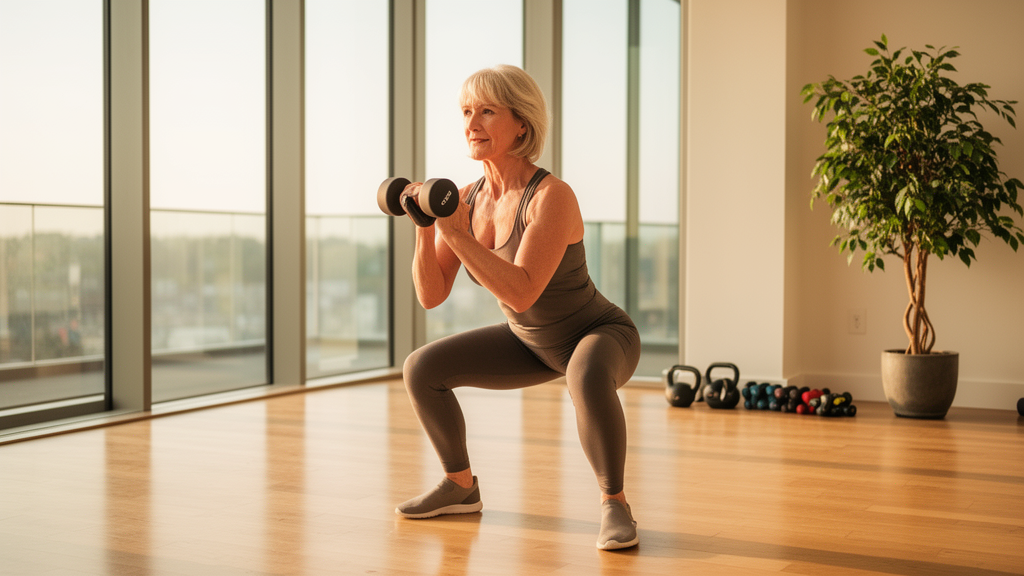
A systematic review and network meta-analysis evaluating physical activity interventions has demonstrated that exercise significantly improves bone mineral density in postmenopausal women with osteopenia or osteoporosis, with therapeutic efficacy depending directly on the anatomical site evaluated. The investigation, published in Frontiers in Public Health by researchers at Nanjing University of Chinese Medicine, examined the comparative effects of aerobic exercise, resistance training, and combined exercise protocols relative to control conditions. By analyzing changes across primary skeletal locations, the authors sought to identify optimal exercise modalities and key training characteristics capable of counteracting bone loss in naturally postmenopausal populations.
The systematic review adhered to PRISMA reporting guidelines and was registered in PROSPERO under registration identifier CRD42023404292. Across the thirty identified studies meeting all eligibility criteria, the meta-analysis encompassed a total pooled sample of 2,149 participants.
The researchers quantified statistical heterogeneity using the I-squared statistic, evaluated treatment hierarchy using the surface under the cumulative ranking curve, assessed consistency between direct and indirect evidence through node-splitting models, and appraised evidence certainty using the GRADE approach.
For lumbar spine bone mineral density, all three examined exercise modalities yielded statistically significant improvements relative to control conditions. Aerobic exercise achieved the highest ranking in the network meta-analysis, registering a mean difference of 0.042 grams per square centimeter (95 percent confidence interval: 0.016 to 0.069) and a surface under the cumulative ranking curve score of 0.854. Resistance exercise ranked second, producing a statistically significant mean difference of 0.034 grams per square centimeter (95 percent confidence interval: 0.019 to 0.049, SUCRA = 0.692). Combined aerobic and resistance exercise ranked third, generating a mean difference of 0.024 grams per square centimeter (95 percent confidence interval: 0.001 to 0.046, SUCRA = 0.447).
Skeletal responses at the femoral neck and total hip revealed pronounced site-specific divergence among the exercise regimens. At the femoral neck, both aerobic exercise and resistance exercise demonstrated statistically significant benefits, whereas combined exercise failed to achieve statistical significance. Aerobic exercise produced a mean difference of 0.042 grams per square centimeter (95 percent confidence interval: 0.004 to 0.080, SUCRA = 0.722), and resistance exercise achieved a mean difference of 0.039 grams per square centimeter (95 percent confidence interval: 0.016 to 0.062, SUCRA = 0.678). Combined exercise yielded a mean difference of 0.033 grams per square centimeter that did not reach statistical significance (95 percent confidence interval: minus 0.013 to 0.078, p = 0.157). At the total hip, resistance exercise emerged as the only modality capable of significantly increasing bone mineral density, generating a mean difference of 0.062 grams per square centimeter (95 percent confidence interval: 0.029 to 0.096, SUCRA = 0.959).
Subgroup analyses demonstrated that specific exercise parameters substantially modified statistical heterogeneity across the different measurement sites. For lumbar spine bone mineral density, heterogeneity was substantially reduced to an I-squared value of 8.2 percent in high-frequency subgroups characterized by more than three exercise sessions per week. At the femoral neck, heterogeneity was reduced to zero percent within both blank-control cohorts and osteopenia-specific subgroups. For total hip bone mineral density, moderate-to-high intensity training subgroups maintained reduced heterogeneity with I-squared values of 21.4 percent or less. Conversely, subgroups receiving routine treatment supplemented with anti-osteoporotic pharmacotherapy consistently exhibited the greatest heterogeneity across all three evaluated skeletal sites, with I-squared values ranging from 82.0 percent to 94.8 percent.
Synthesizing these findings, the authors concluded that physical exercise significantly improves bone mineral density in postmenopausal women with osteopenia or osteoporosis, but emphasized that clinical prescriptions must be site-directed. Aerobic exercise represents the preferred approach when targeting lumbar spine bone mineral density, resistance training is optimal for the total hip, and either modality is effective for the femoral neck. Furthermore, training frequency serves as a critical determinant of consistency for lumbar spine outcomes, whereas training intensity governs gains at the total hip.
Subject of Research: Comparative effects of exercise modalities on site-specific bone mineral density in postmenopausal women
Article Title: Effects of aerobic, resistance, and combined exercise on postmenopausal women with osteopenia or osteoporosis: a systematic review and network meta-analysis
Article References: Hao, X., Jiang, C., Wu, J., Chen, J., Ma, J., Zhao, Y., Zhang, D., Liu, R., Liu, W., Xu, G., & Wang, Q. (2026). Effects of aerobic, resistance, and combined exercise on postmenopausal women with osteopenia or osteoporosis: a systematic review and network meta-analysis. Frontiers in Public Health, 14, 1948094. https://doi.org/10.3389/fpubh.2026.1948094
Image Credits: AI Generated
DOI: 10.3389/fpubh.2026.1948094
Keywords: aerobic exercise, resistance exercise, combined exercise, postmenopausal osteopenia, postmenopausal osteoporosis, bone mineral density, lumbar spine BMD, femoral neck BMD, total hip BMD, network meta-analysis, randomized controlled trials, exercise frequency, exercise intensity, visual analogue scale, procollagen type 1 N-terminal propeptide, alkaline phosphatase, serum calcium, serum phosphorus
News Source: Ophelia Keating. (November 12, 2026). Targeted Exercise Modalities Improve Bone Mineral Density in Postmenopausal Women. Scienmag.