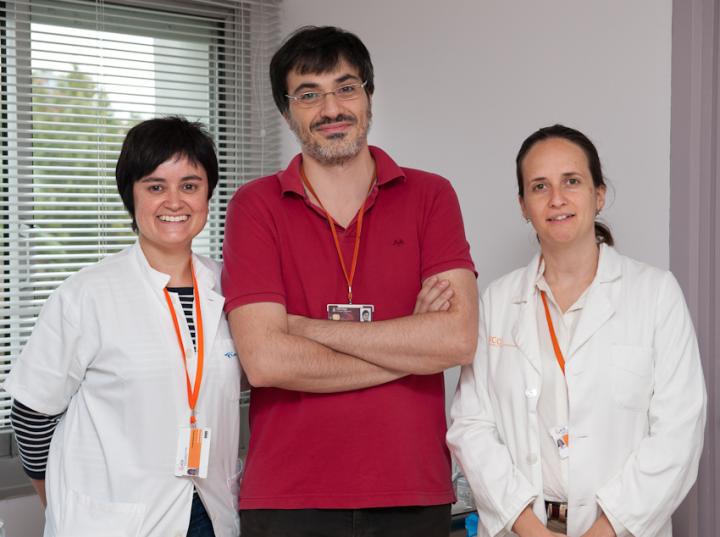
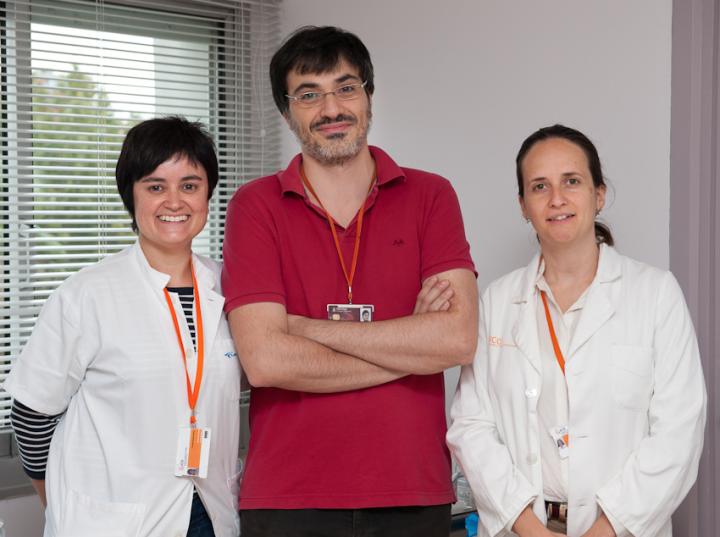
Credit: IDIBELL
IDIBELL Researchers of the Neuro-Oncology Unit of Bellvitge University Hospital – Catalan Institute of Oncology, led by Dr. Jordi Bruna, have successfully tested a new molecule capable of preventing the development of peripheral neuropathy induced by chemotherapy in cancer patients, especially in colon cancer cases, the third most common neoplasm in the world. The molecule, which has a completely novel mechanism of action, would be the first treatment against this neurological complication, for which no effective treatment has yet been approved.
One of the main adverse effects of certain chemotherapeutics used in the treatment of cancers is peripheral neuropathy, which can cause tingling, numbness, pain or alterations in the functionality of patients, among others. This complication, so far, has been regarded as a "price to pay" despite having a demonstrated negative impact on the quality of life of the patient, increasing their care expenses and often preventing the complete and effective administration of the cytostatic treatment, with the potential decrease of survival chances that entails.
Researchers at the HUB-ICO-IDIBELL Unit identified a new molecule – developed by the Catalan laboratory Esteve – as a candidate to prevent the onset of this adverse effect. "Through a public-private partnership, we have been able to design a Phase 2b clinical trial (randomized with placebo), which has allowed us to get a great deal of scientific information – effect on pain, pathophysiology – and draw conclusions as to the potential of the drug in the prevention of neuropathies during cytostatic treatment", explains Dr. Bruna, who led the trial.
The results of the study prove a decrease in the appearance of disorders associated with nerve dysfunction in those cancer patients who took the new drug. "When the trial was designed, safety data from the previous trials limited the duration of treatment with the new molecule and this meant that we had to work at low doses in relation to the duration of the chemotherapy treatment, but we have nevertheless obtained positive results and now we have enough information to be able to extend the duration of the treatment. Therefore, we hope to obtain even more satisfactory results" the IDIBELL researcher comments.
"Given the usual pace of clinical trials and drug agencies following fast-track approval processes in severe or orphan pathologies, this new drug could potentially reach the market soon, since it would be the first available treatment to avoid this type of neuropathy. In addition, it has other medical uses as a non-opioid analgesic", adds Bruna. In any case, improving pain control and reducing the occurrence of severe neuropathy is undoubtedly the most prominent benefit of the development of this novel drug.
###
Media Contact
Gemma Fornons
[email protected]
0034-638-685-074
@idibell_en
Original Source
http://www.idibell.cat/modul/news/en/1024/researchers-prove-the-effectiveness-of-a-new-drug-to-prevent-the-onset-and-the-pain-of-chemotherapy-induced-neuropathy http://dx.doi.org/10.1007/s13311-017-0572-5