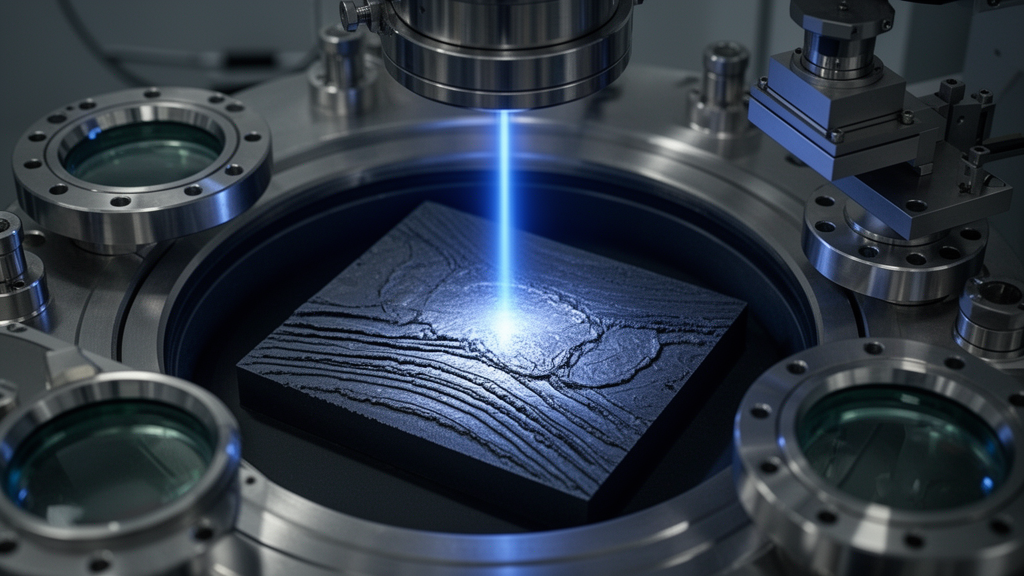
In an extensive scientific review published in EPJ Techniques and Instrumentation, researchers evaluated how accelerator-based ion beam analysis methods quantify wall material erosion, material migration, co-deposition, and fuel retention across magnetic confinement fusion devices, while underscoring substantial gaps in experimental nuclear data required for precise material characterization. The investigation focuses on the central role of particle accelerators in examining materials retrieved from vacuum vessels, simulating neutron radiation effects, and providing essential atomic and nuclear interaction data. Quantitative characterization of plasma-facing materials relies on robust nuclear data sets, specifically stopping powers and reaction cross-sections. Consequently, current research centers on three foundational strands: evaluating fuel inventory alongside wall composition changes caused by erosion and deposition; developing cutting-edge analytical instrumentation; and systematically measuring nuclear data across selected ion-target combinations. The authors emphasize that post-campaign investigations require access to specialized radiological infrastructure, noting that only a restricted number of international laboratories maintain the certifications necessary to handle and analyze toxic beryllium-contaminated and radioactive tritium-bearing components retrieved after experimental fusion campaigns.
Controlled thermonuclear fusion seeks to harness stellar energy through reactions of light nuclei characterized by reaction energies of several megaelectronvolts. In current experimental devices, deuterium fuel reactions proceed along two primary branches with a branching ratio near unity, producing either tritium at 1.01 megaelectronvolts plus a proton at 3.03 megaelectronvolts, or helium-3 at 0.82 megaelectronvolts plus a neutron at 2.45 megaelectronvolts. However, future power stations prioritize the deuterium-tritium reaction due to its total energy release of 17.58 megaelectronvolts and high cross-section, yielding an alpha particle at 3.52 megaelectronvolts and a neutron at 14.06 megaelectronvolts. Conversely, deuterium-helium-3 reactions yield an alpha particle at 3.67 megaelectronvolts and a proton at 14.69 megaelectronvolts, but feature a much lower cross-section and remain constrained by scarce helium-3 availability. Across magnetic confinement concepts including tokamaks and stellarators, twenty percent of fusion energy carried by alpha particles is absorbed by plasma-facing wall structures, whereas the eighty percent carried by neutrons transfers to a lithium-6 enriched blanket for tritium breeding.
Because particle energy confinement times reach only 1.0 to 1.5 seconds, which is shorter than plasma discharge durations, escaping particles strike the surrounding vessel walls. This escaping flux includes electrons, ions at varying ionization stages, charge exchange neutrals, fusion neutrons, and broad electromagnetic radiation from radio frequencies down to hard X-rays and gamma rays. These impingements trigger dynamic plasma-wall interactions comprising physical sputtering, chemical erosion, reflection, implantation, gas retention, desorption, melting, arcing, compound formation, and activation. Eroded wall species ionize immediately in the plasma edge and migrate along magnetic field lines until redepositing in adjacent or shadowed areas. This transport causes simultaneous co-deposition of eroded elements with hydrogen isotopes, creating mixed-material layers whose physical and thermo-mechanical properties differ markedly from the substrate. Mismatch between the substrate and co-deposits leads to flaking and spalling, generating in-vessel dust that poses operational and safety risks when containing radioactive tritium or activation products.
Selecting plasma-facing materials requires balancing strict criteria: vacuum and magnetic compatibility, thermal conductivity exceeding 150 watts per meter-kelvin, thermal shock resilience, low erosion yield, minimal hydrogen sorption, high melting points, and low atomic numbers. Although graphite and carbon-fiber composites offered exceptional power handling since the 1970s, deuterium-tritium campaigns in TFTR and JET revealed severe fuel retention: nearly thirty percent of injected tritium was trapped in-vessel, predominantly in shadowed divertor regions shielded from plasma lines of sight where cleaning is difficult. Because no efficient removal methods existed, carbon components were reconsidered for reactors. In 2011, JET commenced operation with an all-metal ITER-like wall, replacing carbon with bulk beryllium limiters, beryllium main wall coatings, and tungsten divertor tiles. This change dramatically reduced fuel retention and dust formation, prompting the ITER Organization to eliminate carbon divertor tiles in favor of beryllium wall panels and tungsten divertors.
More than fifty characterization methods have been applied to plasma-facing components, but ion beam analysis provides unique lateral mapping and depth profiling capabilities. Analytical needs span hydrogen isotopes, helium, injected cooling or marker gases, light elements like beryllium, boron, carbon, nitrogen, and oxygen, medium elements including aluminum, silicon, chromium, iron, and nickel, and heavy metals such as tungsten, rhenium, and gold. Primary techniques include Rutherford Backscattering Spectrometry using 1.5 to 3 megaelectronvolt helium-4 beams, Elastic Backscattering Spectroscopy employing 3 to 5 megaelectronvolt helium-4 with enhanced cross-sections for carbon and oxygen, and Non-Rutherford Enhanced Proton Scattering with 0.5 to 2.5 megaelectronvolt protons. Complementary methods include Nuclear Reaction Analysis using low-energy helium-3, protons, deuterons, carbon-12, nitrogen-15, and oxygen-16; Particle Induced X-ray and Gamma-ray Emission at 1.5 to 4 megaelectronvolts; Time-of-Flight Elastic Recoil Detection Analysis; Accelerator Mass Spectrometry for tritium, boron-10, and carbon-14; and Medium Energy Ion Scattering at 50 to 400 kiloelectronvolts.
Standard ion beam analysis maintains lateral resolutions between 0.6 and 1.2 millimeters, while micro-beams using quadrupole optics resolve surface features between 1 and 30 micrometers during micro-RBS, micro-NRA, and micro-PIXE analyses. In recoil spectrometry, shallow 22.5-degree irradiation yields elongated 1 by 4 millimeter spots, probing depths from 300 nanometers in metals up to 800 nanometers in low-Z materials. For light isotopes, helium-3-based Nuclear Reaction Analysis is the only method to quantitatively determine deuterium depth profiles down to tens of micrometers in light substrates and single dust grains. These measurements complement global gas balance and thermal desorption data while providing reference targets for laser-induced spectroscopy. Additionally, Time-of-Flight Heavy Ion Elastic Recoil Detection Analysis using gas ionization chambers enables simultaneous quantification of hydrogen, deuterium, helium-3, and helium-4. Its high mass resolution separates isotopic tracers like carbon-13, nitrogen-15, and oxygen-18, as verified using 42 megaelectronvolt iodine-127 beams on TEXTOR tokamak limiter tiles.
Accelerators also simulate neutron-induced displacement damage and transmutation effects in materials. Radiation damage in surface structures strongly influences fuel retention in plasma-facing components and degrades optical reflectivity in diagnostic first mirrors, which serve as optical plasma-facing elements in ITER. Experimental studies examined polycrystalline molybdenum mirrors irradiated with 2 kiloelectronvolt protons and helium-4 ions alongside heavy ions to alter the 20-nanometer optically active surface layer. Time-of-Flight Heavy Ion Elastic Recoil Detection Analysis showed that helium-induced damage significantly modifies subsequent hydrogen retention and distribution. When mirrors received helium irradiation prior to hydrogen exposure, hydrogen penetrated deeper into the lattice than under proton irradiation alone. Furthermore, helium pre-implantation doubled total hydrogen retention from 2 atomic percent to 4 atomic percent in comparison to single proton irradiation, demonstrating that radiation defect generation strongly influences fuel trapping behavior in plasma-facing diagnostic components.
Advanced accelerator research requires specialized facilities capable of beam tuning and radiological material handling. The authors note that only six international laboratories have certified procedures to analyze beryllium- and tritium-contaminated materials from JET, ranging from unsectioned 12 by 20 centimeter tiles to dust particles. At Uppsala University’s Tandem Laboratory, a 5-megavolt Pelletron tandem accelerator with two gas and two sputter sources supplies six beamlines for standard ion beam analysis, nitrogen-15 reaction analysis with gamma detection, accelerator mass spectrometry for beryllium-10 and carbon-14, micro-beams, and ion irradiation. Its sixth beamline hosts the SIGMA apparatus, which enables in-situ analysis with 2 to 50 megaelectronvolt ion beams during thermal annealing up to 1100 degrees Celsius, triple evaporation, and 1 to 5 megaelectronvolt sputter modification. Uppsala also deploys a 350-kilovolt Danfysik implanter for mirror irradiation, Medium Energy Ion Scattering, and a 10-kilovolt system combining Low Energy Ion Scattering, Auger Electron Spectroscopy, and Low Energy Electron Diffraction.
Quantifying composition and depth scales in ion beam analysis requires accurate stopping power values, representing specific energy loss per unit path length divided into electronic and nuclear components. While Bethe’s formulation models high-energy electronic interactions effectively, low ion energies introduce major theoretical complexities due to target electronic structure, electronic density of states, excitation thresholds in metals, band gaps in insulators, phase effects, and chemical disorder in mixed-material layers. Experimentally, transmission stopping power measurements suffer from surface contamination at low energies, while backscattering configurations face plural and multiple scattering. Consequently, the International Atomic Energy Agency electronic stopping database and SRIM codes exhibit significant data gaps and ambiguities at low energies for critical fusion elements. Coordinated actions like the IAEA CRP-F11023 initiative, supported by time-dependent density functional theory and dedicated experiments, are underway to determine stopping powers for hydrogen and helium in beryllium, iron, molybdenum, and tungsten.
Accurate determination of atomic concentrations requires combining stopping powers with measured reaction cross-sections. When projectile energies permit close nuclear interaction, complex nuclear forces produce crowded reaction spectra that can obscure critical analytical signals. For example, in 3 megaelectronvolt helium-3 experiments, proton emissions from the carbon-12 reaction overlap with proton products of the beryllium-9 reaction, making carbon quantification on beryllium surfaces challenging or impossible. Because low-energy reaction cross-sections cannot be derived purely analytically, researchers rely on experimental datasets compiled in IAEA’s IBANDL database and SigmaCalc models, with ongoing measurements expanding cross-section evaluations for reactions like beryllium-9 with helium-3 across diverse angles and megaelectronvolt ranges. Ultimately, accelerator-based material analysis and in-situ systems directly guide plasma-facing material selection, fuel retention limits, and diagnostic engineering for ITER and DEMO, demonstrating that continuous nuclear data acquisition and instrumentation refinement remain vital for future fusion energy reactors.
Subject of Research: Ion beam analysis and nuclear data for fusion reactor plasma-facing materials
Article Title: Accelerator techniques and nuclear data needs for ion beam analysis of wall materials in controlled fusion devices
Article References: Rubel, M., Primetzhofer, D., Petersson, P., Charisopoulos, S., & Widdowson, A. (2023). Accelerator techniques and nuclear data needs for ion beam analysis of wall materials in controlled fusion devices. EPJ Techniques and Instrumentation, 10(1), Article 3. https://doi.org/10.1140/epjti/s40485-023-00092-7
Image Credits: AI Generated
DOI: 10.1140/epjti/s40485-023-00092-7
Keywords: ion beam analysis, nuclear fusion, plasma-facing materials, fuel retention, nuclear reaction analysis, stopping power, tokamaks, accelerator physics, Accelerator, techniques, nuclear, data
News Source: Denise Maddox. (November 12, 2026). Accelerators Map Material Erosion and Fuel Retention in Controlled Fusion Devices. Scienmag.