• HOME
  • NEWS
  • EXPLORE
    • CAREER
      • Companies
      • Jobs
    • EVENTS
    • iGEM
      • News
      • Team
    • PHOTOS
    • VIDEO
    • WIKI
  • BLOG
  • COMMUNITY
    • FACEBOOK
    • INSTAGRAM
    • TWITTER
Saturday, February 7, 2026
BIOENGINEER.ORG
No Result
View All Result
  • Login
  • HOME
  • NEWS
  • EXPLORE
    • CAREER
      • Companies
      • Jobs
        • Lecturer
        • PhD Studentship
        • Postdoc
        • Research Assistant
    • EVENTS
    • iGEM
      • News
      • Team
    • PHOTOS
    • VIDEO
    • WIKI
  • BLOG
  • COMMUNITY
    • FACEBOOK
    • INSTAGRAM
    • TWITTER
  • HOME
  • NEWS
  • EXPLORE
    • CAREER
      • Companies
      • Jobs
        • Lecturer
        • PhD Studentship
        • Postdoc
        • Research Assistant
    • EVENTS
    • iGEM
      • News
      • Team
    • PHOTOS
    • VIDEO
    • WIKI
  • BLOG
  • COMMUNITY
    • FACEBOOK
    • INSTAGRAM
    • TWITTER
No Result
View All Result
Bioengineer.org
No Result
View All Result
Home Headlines

Potential solution for side effect of Alzheimer’s immunotherapy treatment

Bioengineer.org by Bioengineer.org
January 21, 2018
in Headlines, Health, Science News
Reading Time: 2 mins read
0
Share on FacebookShare on TwitterShare on LinkedinShare on RedditShare on Telegram
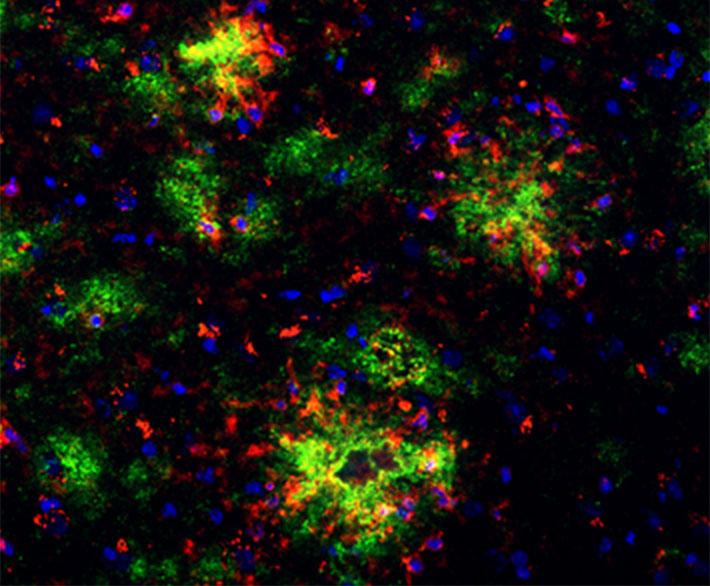
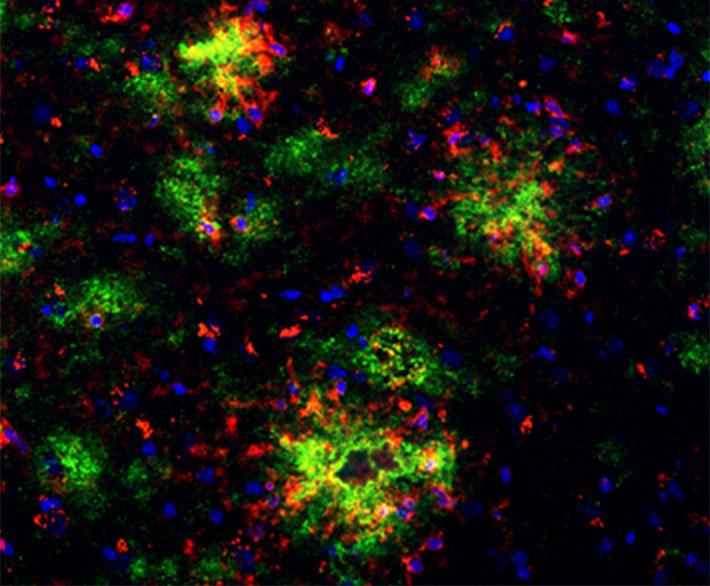
IMAGE

It is estimated that 46.8 million people worldwide are living with dementia, with Alzheimer's disease the most common form.

Now researchers from the University of Southampton have discovered a possible solution for side effects seen in immunotherapy treatment for Alzheimer's.

Immunotherapy is a promising strategy for the treatment of Alzheimer's that uses antibodies to stimulate the immune system to remove pieces of a protein called amyloid beta which accumulates in the brain (in deposits known as plaques) and is thought to be a major factor driving Alzheimer's neurodegenerative effects.

Antibodies directed against amyloid beta have been able to successfully clear plaques and reverse cognitive deficits in mouse models. However, despite this success, clinical trials using these antibodies caused inflammatory side effects in the brain of Alzheimer's patients, in particular amyloid-related imaging abnormalities (ARIA), which results in small bleeds and dangerous brain swelling.

The multidisciplinary Southampton team, led by Dr Jessica Teeling, and in collaboration with Lundbeck (a multinational pharmaceutical company based in Denmark), engineered three antibodies to change the way they engage cells in the immune system. They found that small but precise changes in the anti-amyloid antibodies preserved the immunotherapeutic activity without the inflammatory side effects.

Dr Teeling, Associate Professor in Immunology at The Centre for Biological Sciences, said: "New antibodies are entering the clinic for Alzheimer's disease; therefore, it is important to learn all we can from research into these novel interventions and use antibody engineering technology to optimise their effects."

While these results underline the potential of antibodies to destroy disease-causing plaques in patients and provide possible future treatments, they also indicate that further work is needed to increase antibody potency, but without increasing inflammatory side effects.

Dr Stavenhagen, Head of Biologics at Lundbeck, said: "These studies provide a roadmap of how to apply the advances in antibody engineering to antibody therapeutics that target neurodegenerative diseases. The next generation of antibody drugs to enter the clinic will contain new technologies and enhancements to improve the properties required to clear plaques, while keeping the rest of the brain safe."

The study was published in the journal Acta Neuropathologica and was funded by the Medical Research Council (MRC).

###

Share12Tweet8Share2ShareShareShare2

Related Posts

Evaluating Pediatric Emergency Care Quality in Ethiopia

February 7, 2026

TPMT Expression Predictions Linked to Azathioprine Side Effects

February 7, 2026

Improving Dementia Care with Enhanced Activity Kits

February 7, 2026

Decoding Prostate Cancer Origins via snFLARE-seq, mxFRIZNGRND

February 7, 2026
Please login to join discussion

POPULAR NEWS

  • Robotic Ureteral Reconstruction: A Novel Approach

    Robotic Ureteral Reconstruction: A Novel Approach

    82 shares
    Share 33 Tweet 21
  • Digital Privacy: Health Data Control in Incarceration

    63 shares
    Share 25 Tweet 16
  • Study Reveals Lipid Accumulation in ME/CFS Cells

    57 shares
    Share 23 Tweet 14
  • Breakthrough in RNA Research Accelerates Medical Innovations Timeline

    53 shares
    Share 21 Tweet 13

About

We bring you the latest biotechnology news from best research centers and universities around the world. Check our website.

Follow us

Recent News

Evaluating Pediatric Emergency Care Quality in Ethiopia

TPMT Expression Predictions Linked to Azathioprine Side Effects

Improving Dementia Care with Enhanced Activity Kits

Subscribe to Blog via Email

Success! An email was just sent to confirm your subscription. Please find the email now and click 'Confirm' to start subscribing.

Join 73 other subscribers
  • Contact Us

Bioengineer.org © Copyright 2023 All Rights Reserved.

Welcome Back!

Login to your account below

Forgotten Password?

Retrieve your password

Please enter your username or email address to reset your password.

Log In
No Result
View All Result
  • Homepages
    • Home Page 1
    • Home Page 2
  • News
  • National
  • Business
  • Health
  • Lifestyle
  • Science

Bioengineer.org © Copyright 2023 All Rights Reserved.