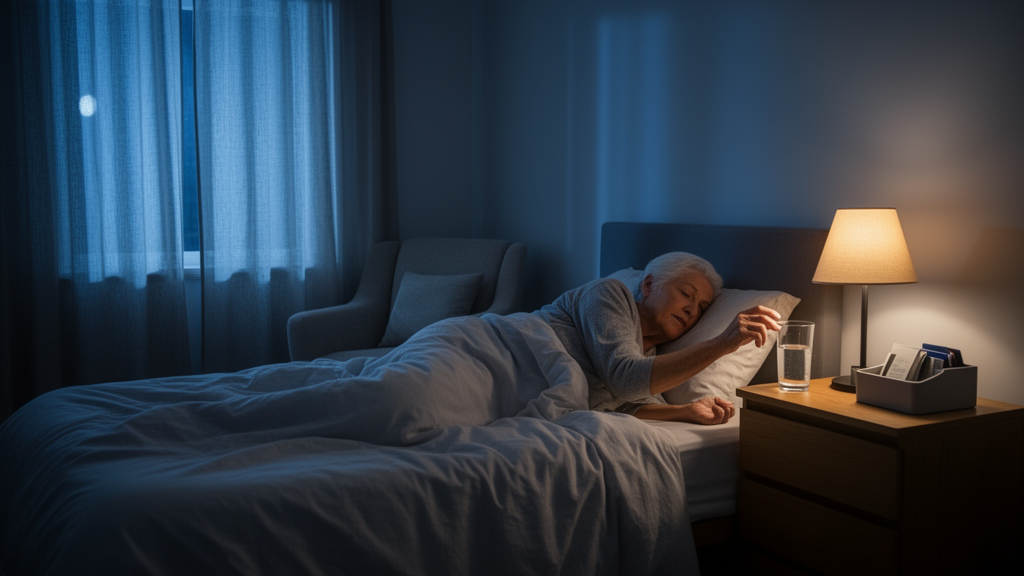
A randomized controlled trial conducted among heart failure patients has demonstrated that participating in a structured sleep hygiene program significantly improves overall self-care behavior.
The physiological and psychological burden of sleep disturbance constitutes a widespread challenge for individuals diagnosed with chronic heart failure. As highlighted in the study background, persistent sleep disorders among this patient population frequently trigger secondary complications, including daytime fatigue, cognitive impairment, and a loss of the physical energy needed to carry out routine daily tasks. Because engaging consistently in daily self-care activities represents a fundamental component of effective heart failure management, directly contributing to symptom reduction and improved quality of life, the investigators examined whether an educational regimen designed specifically to address sleep hygiene could produce measurable benefits in patients’ daily self-care practices.
To evaluate the impact of this behavioral approach, researchers recruited seventy-four heart failure patients presenting with New York Heart Association class II and class III functional limitations from Qaem Hospital in Firoozabad. The study design utilized a parallel-group randomized controlled trial framework, dividing the cohort equally into an intervention group of thirty-seven patients and a control group of thirty-seven patients. Allocation was performed through simple randomization generated by Kitset software in a one-to-one ratio.
The educational intervention evaluated in the trial consisted of five distinct ninety-minute sessions focusing on sleep hygiene principles, delivered on a weekly basis. The study curriculum combined in-person group meetings with virtual educational components to reinforce core behavioral guidelines, supported by a specialized sleep hygiene self-declaration booklet that participants used to track their practices.
Data collection occurred across two planned milestones, capturing participant metrics before the initiation of the program and following the conclusion of the intervention period. The researchers gathered background data using a demographic questionnaire alongside a validated and reliable heart failure self-care behavior scale designed to assess health behaviors. To evaluate the resulting data, the analytical team used SPSS software version 21.0. The statistical analysis plan incorporated independent-sample t-tests, paired-sample t-tests, their non-parametric counterparts—the Wilcoxon signed-rank test and the Mann-Whitney U test—and a one-way analysis of covariance adjusting for participants’ baseline self-care scores.
Prior to the intervention, baseline evaluations revealed no statistically significant differences in self-care behavior scores between the intervention and control cohorts, establishing initial parity across both study arms. Following the completion of the protocol, the intervention group demonstrated a statistically significant improvement in self-care behavior, as confirmed by a Wilcoxon signed-rank test indicating p < 0.001. Conversely, the control group experienced a statistically significant decline in self-care behavior over the same evaluation timeframe, as demonstrated by a paired t-test showing p < 0.001. A direct post-intervention between-group comparison conducted via the Mann-Whitney U test favored the sleep hygiene intervention arm over the control arm at p < 0.001.
To account for pre-existing measurements, researchers conducted a one-way analysis of covariance adjusting for baseline scores, which confirmed a statistically significant main effect of the sleep hygiene intervention with F(1, 70) = 4.110, p = 0.046, and a partial eta squared of 0.055. This adjusted model revealed a statistically significant mean difference of –13.51 between the groups, supported by a 95 percent confidence interval ranging from –15.27 to –11.75 with p < 0.001. When analyzing individual self-care components, the authors reported that most measured self-care items showed statistically significant improvements following the sleep program, whereas changes in daytime rest and flu vaccination practices did not achieve statistical significance with p > 0.05.
Based on these findings, registered in the Iranian Registry of Clinical Trials under identifier IRCT20231030059902N1, the investigators concluded that implementing a structured sleep hygiene program produces tangible improvements in heart failure patients’ self-care behaviors. Given the deterioration observed among the control group alongside the measurable gains documented in the intervention cohort, the study authors suggested that clinical nurses and healthcare managers in medical centers integrate sleep hygiene programs into routine patient care pathways.
Subject of Research: Sleep hygiene program impact on heart failure self-care behavior
Article Title: Impact of implementing sleep hygiene program on self-care behavior of heart failure patients: a randomized clinical trial
Article References: Badiyepeymaiejahromi, Z., Allahyari, H., & Eslami Akbar, R. (2026). Impact of implementing sleep hygiene program on self-care behavior of heart failure patients: a randomized clinical trial. BMC Cardiovascular Disorders. https://doi.org/10.1186/s12872-026-06864-9
Image Credits: AI Generated
DOI: 10.1186/s12872-026-06864-9
Keywords: heart failure, sleep hygiene, self-care behavior, randomized controlled trial, NYHA class II-III, Qaem Hospital, Firoozabad, sleep disorder, cognitive impairment, daytime fatigue, sleep hygiene booklet, ANCOVA, Wilcoxon signed-rank test, Mann-Whitney U test, flu vaccination, IRCT20231030059902N1, BMC Cardiovascular Disorders
News Source: Ophelia Keating. (November 12, 2026). Sleep Hygiene Program Improves Self-Care Behaviors in Heart Failure Trial. Scienmag.