Credit: Washington University School of Medicine
Although 29 states and the District of Columbia allow marijuana use for medical purposes, few medical students are being trained how to prescribe the drug. Researchers at Washington University School of Medicine in St. Louis surveyed medical school deans, residents and fellows, and examined a curriculum database maintained by the Association of American Medical Colleges (AAMC), learning that medical marijuana is not being addressed in medical education.
Their findings are available online in the journal Drug and Alcohol Dependence.
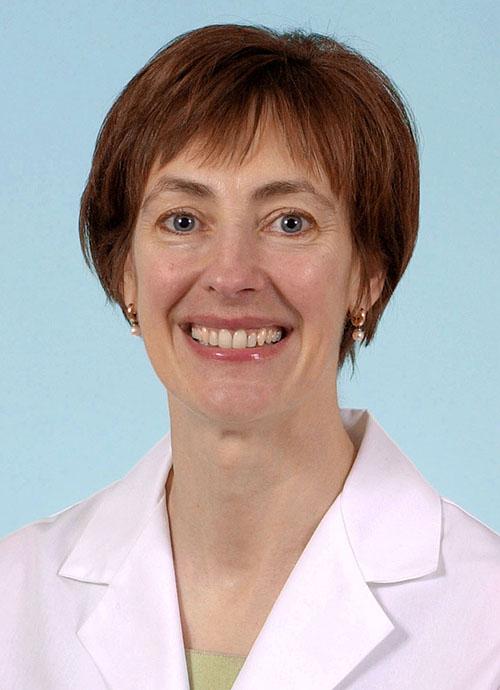
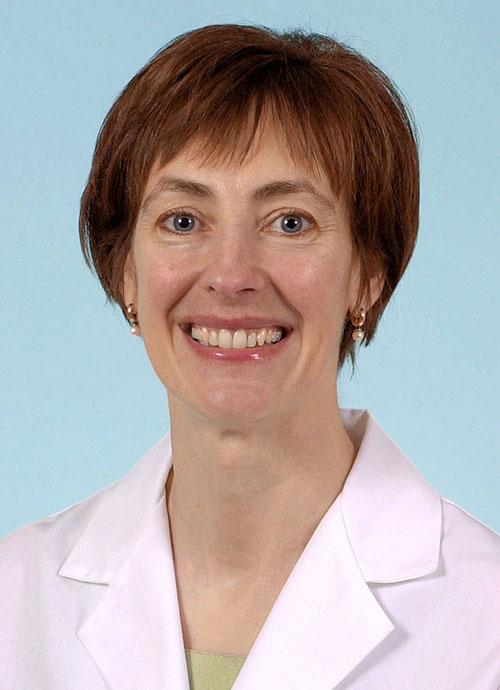
"Medical education needs to catch up to marijuana legislation," said senior author Laura Jean Bierut, MD, the Alumni Endowed Professor of Psychiatry at Washington University and a member of the National Advisory Council on Drug Abuse. "Physicians in training need to know the benefits and drawbacks associated with medical marijuana so they know when or if, and to whom, to prescribe the drug."
Doctors are being asked to guide patients through areas in which most have no training, she explained.
The research team, led by first author Anastasia B. Evanoff, sent surveys to medical school curriculum deans at 172 medical schools in North America, including 31 that specialize in osteopathic medicine, and received 101 replies. Two-thirds (66.7 percent) reported that their graduates were not prepared to prescribe medical marijuana. A quarter of deans said their trainees weren't even equipped to answer questions about medical marijuana.
The researchers also surveyed 258 residents and fellows who earned their medical degrees from schools around the country before coming to Washington University School of Medicine and Barnes-Jewish Hospital in St. Louis to complete their training. Nearly 90 percent felt they weren't prepared to prescribe medical marijuana, and 85 percent said they had not received any education about medical marijuana during their time at medical schools or in residency programs throughout the country.
Using data from the AAMC database, the researchers found that only 9 percent of medical schools had reported teaching their students about medical marijuana.
"As a future physician, it worries me," said Evanoff, a third-year medical student. "We need to know how to answer questions about medical marijuana's risks and benefits, but there is a fundamental mismatch between state laws involving marijuana and the education physicians-in-training receive at medical schools throughout the country."
However, several states — Missouri among them — have not legalized medical marijuana, and published studies about potential risks and benefits of medical marijuana often are contradictory. So what are schools to teach?
"You address the controversy," said co-investigator Carolyn Dufault, PhD, assistant dean for education at Washington University and an instructor in medicine. "You say, 'This is what we know,' and you guide students to the points of controversy. You also point out where there may be research opportunities."
The authors argue that as more states legalize marijuana for medical and recreational use, doctors need to have at least enough training to answer patients' questions.
"More medical students are now getting better training about opioids, for example," said Evanoff. "We talk about how those drugs can affect every organ system in the body, and we learn how to discuss the risks and benefits with patients. But if a patient were to ask about medical marijuana, most medical students wouldn't know what to say."
###
Evanoff, AB, Quan T, Dufault C, Awad M, Bierut LJ. Physicians-in-training are not prepared to prescribe medical marijuana. Drug and Alcohol Dependence, vol 180(11), pp. 151-155, Nov. 1, 2017 (published online Sept. 4, 2017).
This work was supported by the National Center for Advancing Translational Sciences of the National Institutes of Health (NIH) through a grant to the Washington University Institute of Clinical and Translational Sciences, grant number UL1 TR000448.
Washington University School of Medicine's 2,100 employed and volunteer faculty physicians also are the medical staff of Barnes-Jewish and St. Louis Children's hospitals. The School of Medicine is one of the leading medical research, teaching and patient-care institutions in the nation, currently ranked seventh in the nation by U.S. News & World Report. Through its affiliations with Barnes-Jewish and St. Louis Children's hospitals, the School of Medicine is linked to BJC HealthCare.
Media Contact
Jim Dryden
[email protected]
314-286-0110
@WUSTLmed
Home
Related Journal Article
http://dx.doi.org/10.1016/jdrugalcdep.2017.08.010