A laboratory study published in BMC Chemistry demonstrates that preparing acidic deep eutectic solvents from choline chloride and simple carboxylic acids can dramatically amplify the aqueous solubility of curcumin by more than 100,000-fold. The research team systematically investigated three distinct acidic deep eutectic formulations composed of a one-to-two molar mixture of choline chloride paired with propionic acid, acetic acid, or lactic acid. Across experimental temperatures spanning from 298.15 Kelvin to 313.15 Kelvin under an ambient pressure of 866 hectopascals, the presence of these ionic liquids caused an extraordinary, composition-dependent surge in the amount of dissolved phenolic compound. The greatest solubilization efficiency occurred in neat choline chloride and propionic acid at 313.15 Kelvin, where the measured mole fraction solubility reached 2.237 × 10⁻², representing an improvement of more than five orders of magnitude compared to dissolution in pure water. Beyond quantifying phase equilibria, the investigators evaluated the formulations in vitro against MCF-7 human breast cancer cells, establishing that the drug-loaded solvents produce substantial, concentration-dependent antiproliferative activity.
Curcumin, the primary natural phenolic constituent isolated from the rhizomes of turmeric, has attracted extensive scientific attention due to its documented antioxidant, anti-inflammatory, and chemopreventive properties. However, its translation into practical medicinal products and effective oral formulations has historically been impeded by its physical properties. Under the Biopharmaceutics Classification System, curcumin is categorized as a Class II compound, indicating that while it possesses favorable membrane permeability, its rate and extent of systemic absorption are fundamentally bottlenecked by near-total aqueous insolubility. In pure water at room temperature, curcumin exhibits an equilibrium solubility of approximately 11 nanograms per milliliter. Furthermore, curcumin is chemically unstable in water-rich, neutral, or mildly alkaline physiological environments, where it undergoes rapid hydrolytic and oxidative decomposition. Conventional pharmaceutical solubilization strategies—such as synthetic organic co-solvents, surfactant micelles, cyclodextrin inclusion complexes, and solid dispersions—frequently suffer from excipient toxicity, chemical instability, or complex manufacturing burdens, underscoring the ongoing necessity for biocompatible liquid carriers capable of stabilizing the active compound.
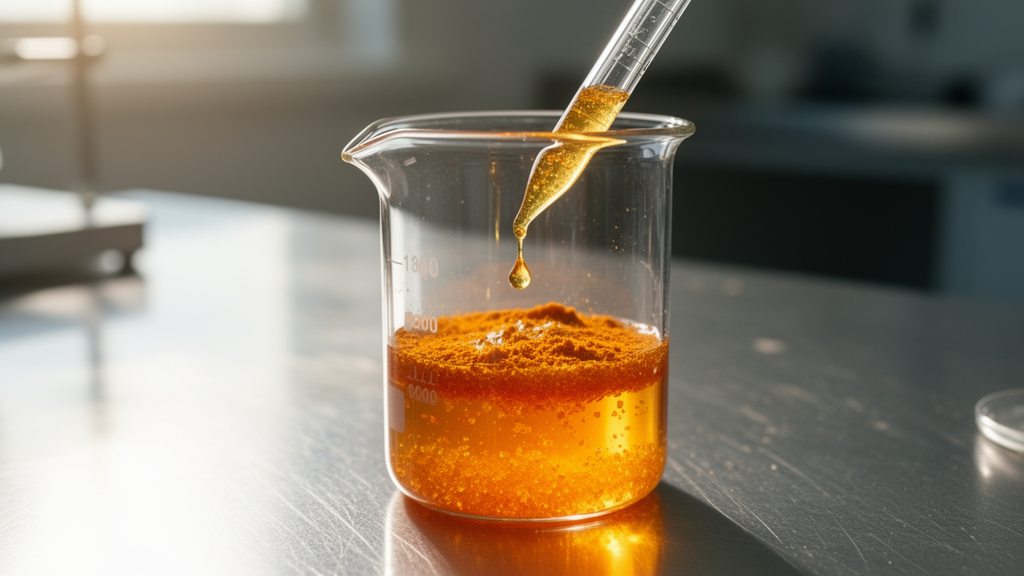
To overcome these longstanding delivery hurdles, the researchers formulated three acidic deep eutectic solvents by pairing the hydrogen bond acceptor choline chloride with three natural, low-molecular-weight carboxylic acids serving as hydrogen bond donors. Specifically, choline chloride was combined with propionic acid, acetic acid, or L-(+)-lactic acid at a precise 1:2 stoichiometric molar ratio. The mixtures were heated with continuous magnetic stirring at approximately 363 Kelvin until transparent, homogeneous, colorless liquids formed, after which they were dried under vacuum at room temperature to eliminate residual moisture. Karl-Fischer titration confirmed the low water content of each synthesized solvent. When these specific components are combined, intense intermolecular hydrogen bonding prevents crystallization and substantially depresses the melting point compared to the pure starting materials, generating stable eutectic liquids at room temperature. The selected carboxylic acids provide distinct microstructural properties, polarities, and side-chain lengths, allowing the researchers to systematically evaluate how structural variations in the hydrogen bond donor dictate the solvation of poorly soluble hydrophobic drugs.
The experimental determination of curcumin solubility was conducted across binary mixtures of water and each acidic eutectic solvent over a complete range of solvent mass fractions and four temperatures: 298.15, 303.15, 308.15, and 313.15 Kelvin. Using the classical shaking-flask method, excess crystalline curcumin was introduced into sealed glass vials containing known masses of the aqueous solvent mixtures and agitated in a thermostated water bath controlled to within ±0.01 Kelvin for at least three full days to ensure true saturation. Following equilibration, undissolved solute was separated by centrifugation, and the clear supernatant was filtered through a 0.22-micrometer polytetrafluoroethylene syringe membrane. The dissolved drug concentration was measured using ultraviolet-visible spectrophotometry at the maximum absorption wavelength of 311 nanometers, following dilution with an ethanol-water matrix. Control spectra confirmed that the eutectic components did not interfere with the spectrophotometric absorbance of curcumin. Because prolonged exposure to water causes hydrolytic degradation, the authors noted that solubility values recorded in pure water represent apparent equilibrium concentrations, whereas eutectic-rich environments shield curcumin from decomposition.
The resulting solubility measurements demonstrated a pronounced, monotonic rise in dissolved curcumin with both increasing temperature and increasing mass fraction of the eutectic mixture. The overall solubilization capacity followed a consistent hierarchy across all conditions: choline chloride/propionic acid outperformed choline chloride/acetic acid, which in turn surpassed choline chloride/lactic acid. While conventional co-solvents like ethanol or surfactant systems typically increase curcumin solubility by 1,000-fold to 10,000-fold, the neat propionic acid system achieved an enhancement exceeding 100,000-fold. Water in the system played a complex, dual role. While moderate amounts of water reduced bulk liquid viscosity and facilitated mass transfer during dissolution, higher water fractions disrupted the hydrogen-bonded eutectic network, progressively diminishing the specific solute-solvent interactions responsible for high solubilizing power. Consequently, maximizing the eutectic mass fraction preserved a structured, interactive microenvironment that lowered the activity coefficient of the solute and allowed exceptionally high equilibrium concentrations of dissolved curcumin to persist without immediate chemical degradation.
The authors explained that the superior performance of the acidic eutectic systems arises from multiple, cooperative molecular interactions that successfully break curcumin’s self-association. In neutral aqueous media, curcumin exists predominantly as an enol tautomer that readily forms face-to-face pi-pi stacked aggregates between its aromatic rings, severely limiting dissolution. In the acidic eutectic media, where local pH is estimated between 3 and 5, the protonation state alters electronic density and induces electrostatic repulsion that suppresses aromatic stacking. Furthermore, the carboxylic acid donors form powerful intermolecular hydrogen bonds with the carbonyl oxygen atoms of the central beta-diketone moiety, breaking its internal intramolecular hydrogen bond. Simultaneously, curcumin’s phenolic hydroxyl groups donate hydrogen bonds to carboxylate oxygens and chloride anions, while the quaternary ammonium head of the choline cation participates in stabilizing cation-pi interactions. Propionic acid exhibited greater solubilization than acetic acid due to its longer ethyl side chain, which provides compatible hydrophobic microdomains for curcumin’s lipophilic regions, whereas lactic acid’s extra hydroxyl group increases polarity and reduces nonpolar solvation volume.
To mathematically represent the experimental phase behavior, the researchers correlated the solubility dataset using three thermodynamic frameworks: the empirical Jouyban-Acree model, the electrolyte Non-Random Two-Liquid model, and the Universal Quasi-Chemical model. Differential scanning calorimetry literature values for the melting temperature and enthalpy of fusion of curcumin served as baseline input parameters. Across all tested solvent compositions and temperatures, the Jouyban-Acree equation yielded the lowest average relative deviation percent, demonstrating superior predictive correlation for these binary solvent mixtures using minimal experimental input data. Meanwhile, the electrolyte Non-Random Two-Liquid and Universal Quasi-Chemical models accounted for local composition effects and molecular size-shape differences, successfully reproducing non-ideal behavior. Both models revealed that the calculated activity coefficient of curcumin declined steadily as the mass fraction of eutectic solvent increased. This marked reduction in the activity coefficient quantitatively confirms that increasing the eutectic content creates a thermodynamically favorable environment that stabilizes dissolved curcumin molecules and reduces their escaping tendency from the liquid mixture.
Thermodynamic functions of dissolution were subsequently derived from the temperature dependence of the solubility data using van ‘t Hoff linear regressions and standard Gibbs equations evaluated at a harmonic mean temperature of 305.55 Kelvin. Across every investigated acidic eutectic system, the standard molar enthalpy of dissolution and the standard molar entropy of dissolution were positive values. The positive enthalpy confirmed that the overall dissolution process is endothermic, requiring net energy input, while the positive entropy reflected an increase in system disorder as structured crystalline curcumin dispersed into the liquid phase. Standard molar Gibbs free energy values became progressively more negative as temperature and eutectic concentration increased, consistent with spontaneous, highly favorable solubilization. Quantitative analysis of the relative enthalpic and entropic contributions demonstrated that the absolute magnitude of the enthalpic term consistently exceeded the entropic term. This thermodynamic signature indicates that curcumin dissolution in these media is predominantly enthalpy-driven, confirming that strong, specific intermolecular bonding between curcumin and the solvent components constitutes the dominant energetic driving force.
Because pharmaceutical carrier design requires balancing solvent performance against biological safety, the researchers evaluated the in vitro cytotoxicity of the formulations against MCF-7 human breast cancer cells using standard MTT viability assays. Cultured cells were exposed to six concentrations of either blank eutectic vehicles or curcumin-loaded eutectic systems for 48 hours, followed by incubation with thiazolyl blue tetrazolium bromide to quantify metabolically active cells. The blank solvent systems exhibited measurable, vehicle-dependent growth inhibition, with half-maximal inhibitory concentration values of 0.49 ± 0.01 milligrams per liter for choline chloride/lactic acid, 0.54 ± 0.01 milligrams per liter for choline chloride/propionic acid, and 0.61 ± 0.01 milligrams per liter for choline chloride/acetic acid. Upon the incorporation of curcumin, the half-maximal inhibitory concentrations dropped significantly to 0.34 ± 0.01, 0.37 ± 0.01, and 0.42 ± 0.02 milligrams per liter, respectively. Cell-free control assays verified that the eutectic components did not generate optical density artifacts during spectrophotometric plate reading at 570 to 630 nanometers.
The biological results demonstrated an enhanced antiproliferative response for the curcumin-loaded formulations, paralleling cytotoxicity ranges previously reported for polymeric nanoparticle carriers against MCF-7 cells. However, because combination index and isobologram analyses were not conducted, the authors stressed that this outcome reflects an intensified antiproliferative effect rather than formal pharmacological synergy. The data also clarify that deep eutectic solvents cannot be assumed to be inherently nontoxic simply because their starting ingredients are common dietary or biological compounds; instead, cellular toxicity depends heavily on the specific hydrogen bond donor and vehicle concentration. Choline chloride/lactic acid produced the strongest cell growth suppression but possessed the highest vehicle toxicity, whereas choline chloride/propionic acid offered the optimal therapeutic window by combining maximum solubility enhancement with moderate vehicle toxicity. The authors concluded that while these acidic eutectic mixtures represent highly promising liquid media for poorly soluble drugs, future evaluations must investigate cellular uptake mechanisms, dilution stability, and in vivo pharmacokinetics before practical clinical translation can proceed.
Subject of Research: Thermodynamic solubility enhancement of curcumin in acidic deep eutectic solvents and MCF-7 cytotoxicity
Article Title: Drug-delivery oriented solubility enhancement of curcumin in choline chloride-based acidic deep eutectic solvents: thermodynamic analysis and MCF-7 cytotoxicity assessment
Article References: Khorsandi, M., Shekaari, H., Gondoghdi, P. A., Abbaspour-Ravasjani, S., & Hamishehkar, H. (2026). Drug-delivery oriented solubility enhancement of curcumin in choline chloride-based acidic deep eutectic solvents: thermodynamic analysis and MCF-7 cytotoxicity assessment. BMC Chemistry, 20(1), Article 191. https://doi.org/10.1186/s13065-026-01921-y
Image Credits: AI Generated
DOI: 10.1186/s13065-026-01921-y
Keywords: curcumin, deep eutectic solvents, choline chloride, propionic acid, acetic acid, lactic acid, solubility enhancement, Jouyban-Acree model, e-NRTL model, UNIQUAC model, van 't Hoff analysis, enthalpy-driven dissolution, MCF-7 cell line, MTT assay, breast cancer cells, drug delivery systems, antiproliferative activity
News Source: Bethany Barker. (November 11, 2026). Acidic Deep Eutectic Solvents Boost Curcumin Solubility by Over 100,000-Fold. Scienmag.