Medical researchers have released the study protocol for a randomized controlled trial assessing the effectiveness of a twelve-week yoga rehabilitation program for middle-aged and older adults experiencing long COVID. The investigation focuses specifically on mature adults aged 40 to 75 years who experience diminished functional status and compromised health-related quality of life. By evaluating a structured, progressive yoga intervention against an active health promotion control group alongside standard medical care, the authors intend to generate rigorous clinical evidence regarding whether accessible mind-body movement therapies can systematically relieve persistent somatic, respiratory, and neuropsychological symptoms among vulnerable patient cohorts recovering from coronavirus disease.
The clinical rationale for the trial is grounded in the immense public health burden created by post-COVID syndrome, which continues to affect millions worldwide over four years following the onset of the pandemic. Epidemiological evidence cited by the authors from the Indian Council of Medical Research demonstrates that over 17 percent of patients with prior COVID-19 infection in India suffered from persistent post-COVID conditions, with senior citizens experiencing an elevated risk of mortality within one year following discharge. Susceptibility to post-COVID complications escalates progressively between 40 and 70 years of age and exhibits a higher observed prevalence among females. Defined formally as the continuation or emergence of new symptoms three months after initial SARS-CoV-2 infection that endure for at least two months with no alternative diagnosis, the condition features more than 200 recognized clinical indicators that substantially undermine physical vitality, workplace productivity, and everyday functional autonomy.
Symptom persistence across long COVID cohorts is characterized by extensive multisystem involvement, with fatigue, dyspnea, and sleep disturbances ranking as the most pervasive complaints in systematic reviews and meta-analyses. The protocol outlines pooled prevalence estimates from prior evidence syntheses, noting fatigue rates spanning from 23 percent (95% confidence interval: 0.17 to 0.30) to 48 percent (95% confidence interval: 0.23 to 0.73, with an I-squared of 100 percent), alongside a 38 percent estimate (95% confidence interval: 0.27 to 0.49, I-squared of 98 percent) in a parallel review. Dyspnea prevalence was pooled at 32 to 39 percent, while sleep disruption affected approximately 44 percent of patients. Furthermore, an evidence synthesis of 24 studies indicated that 36 percent of patients experienced diminished functional capacity, while 52 percent reported compromised health-related quality of life. Pathophysiologically, these chronic manifestations stem from autonomic nervous system imbalance, low-grade systemic inflammation, and neuropsychological sequelae that trigger post-exertional symptom exacerbation.
To counteract these physiological disturbances, the research team identified yoga as an integrative mind-body intervention capable of addressing autonomic dysfunction, chronic fatigue, and psychological stress. Prior literature syntheses examining movement-based mindful exercises, including yoga, qigong, and tai chi, indicate substantial benefits for fatigue alleviation, parasympathetic nervous activation, cortisol reduction, and neurochemical mood stabilization. The authors highlight an intervention study of 86 long COVID participants demonstrating significant declines in perceived stress after 4 and 16 weeks of yoga practice, accompanied by marked reductions in insomnia and anxiety after four weeks. Additionally, focused restorative practices such as daily 20-minute Savasana sessions have been shown to support blood pressure regulation and favorable heart rate variability adaptations. Given the scarcity of primary randomized controlled trials assessing yoga with dedicated control groups in post-COVID cohorts, the team established this protocol to provide definitive empirical evidence supporting clinical rehabilitation guidelines.
The planned trial implements a two-phase research methodology consisting of an initial Phase I feasibility and pilot study followed by a definitive Phase II randomized controlled trial. The preliminary feasibility phase will recruit a purposive sample of 30 participants per arm, totaling 60 individuals aged 40 to 75 years across diverse functional impairment levels, specifically to detect operational barriers, evaluate intervention acceptability, and refine participant adherence strategies before Phase II execution. Participant recruitment will take place across prospective clinical settings, including public and private hospitals as well as outpatient clinics situated in Ahmedabad and Gandhinagar in Gujarat, India. Clinical facilities will be selected based on formal data-sharing agreements granting access to anonymized medical records of patients with confirmed COVID-19 histories and practical study feasibility, with participant identification assisted by treating physicians and community healthcare workers conducting outreach to enroll eligible older adults.
For the Phase II trial, investigators calculated a target enrollment of 154 participants, randomized in an equal 1:1 allocation to either the Yoga Intervention Group (n = 77) or the active Health Promotion Intervention Group (n = 77). In the absence of published empirical effect sizes for yoga in long COVID cohorts, statistical power calculations were derived from meta-analytic estimates of yoga-based interventions on health-related quality of life among middle-aged and older populations. The investigators determined that 77 participants per group would provide approximately 80 percent statistical power at a two-tailed significance threshold of alpha equals 0.05 to detect a moderate Cohen’s d effect size of 0.51 and a 5.1-point difference in mean primary outcome scores. This statistical calculation incorporates an expected 20 percent dropout rate over the twelve-week intervention period. Eligible individuals must possess laboratory-confirmed histories of SARS-CoV-2 infection documented by RT-PCR, TruNAAT, or recognized diagnostics, accompanied by clinician-confirmed long COVID diagnoses.
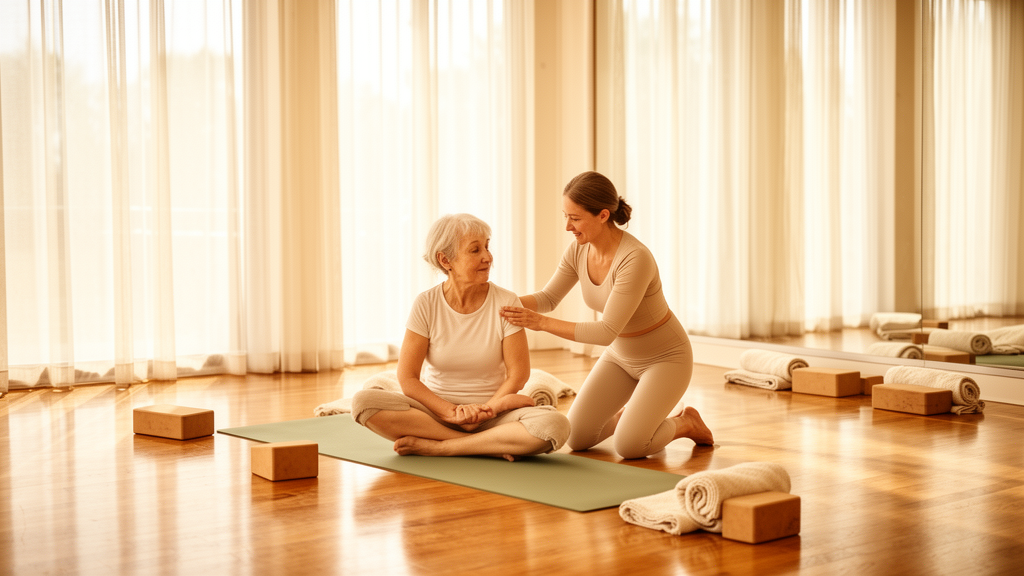
Participants assigned to the Yoga Intervention Group will complete a twelve-week structured program adapted from the Ministry of AYUSH, Government of India, and clinical frameworks by Singh. The exercise regimen was customized through focus group discussions involving certified yoga instructors, public health specialists, and trial investigators to optimize pose feasibility, session timings, and safety for older adults. The protocol establishes 45 minutes of daily practice scheduled five days weekly, structured as a 30-minute morning session and a 15-minute evening session, while permitting participants to complete the full 45 minutes in a single continuous session based on individual preference. Supervised sessions will be conducted by certified trainers at designated yoga centers situated within a three-kilometer radius of recruitment clinics. To accommodate participants facing travel constraints or physical limitations, pre-recorded video modules in Hindi and Gujarati will be supplied for home practice, with instructors encouraging a minimum practice frequency of three weekly sessions.
To maintain rigorous experimental controls without withholding clinical support, the active control arm will receive a twelve-week structured Health Promotion Intervention Group program alongside usual medical care. Participants will be organized into anonymized WhatsApp broadcast groups containing at least 15 participants, receiving three to five curated health promotion texts and educational video links weekly centered around rotating themes. The curriculum addresses balanced nutrition, healthy recipes, active living to reduce sedentary time, social connection, and mental well-being, as well as evidence-based strategies for managing persistent fatigue, dyspnea, and cognitive brain fog. Usual care comprises any ongoing medical treatment, specialist referrals, or advice prescribed by participants’ personal physicians. To prevent experimental contamination and preserve internal validity, control participants are strictly prohibited from engaging in structured physical regimens such as yoga or tai chi during the twelve-week trial window, with immediate study withdrawal mandated should contamination occur.
The primary study outcome is Health-Related Quality of Life, evaluated using the self-administered 36-Item Short Form Health Survey with a four-week recall period administered at baseline and week 12. The SF-36 evaluates eight multidimensional health domains: physical functioning, measuring physical limitations; physical role functioning, assessing role restrictions caused by physical health problems; bodily pain, rating pain intensity and occupational disruption; and general health perceptions, capturing subjective well-being and health outlook. The remaining four domains measure vitality, reflecting energy versus fatigue; social role functioning, tracking health impacts on social life; emotional role functioning, capturing limitations stemming from emotional distress; and mental health, quantifying psychological well-being. Each domain generates a score from 0 to 100, where higher scores signify superior functioning, synthesized into physical and mental component summaries. Secondary somatic outcomes include breathlessness measured via the twelve-item Dyspnea-12 scale and psychological morbidity evaluated through the 14-item Hospital Anxiety and Depression Scale.
Cognitive trajectory and sleep disturbance will be evaluated using the 26-item Informant Questionnaire on Cognitive Decline in the Elderly and the 19-item Pittsburgh Sleep Quality Index. Primary data analysis will follow intention-to-treat principles utilizing repeated-measures analysis of variance to test Time-by-Group interaction effects across continuous measures, with Chi-square tests analyzing categorical distributions at a two-tailed alpha of 0.05. Adherence tracking, reminder calls, peer support, and adverse event protocols will support participant retention. Registered under the Clinical Trials Registry of India as CTRI/2022/10/046151, the trial protocol establishes a rigorous template to evaluate scalable, non-pharmacological rehabilitation strategies for older adults managing long COVID.
Subject of Research: Randomized controlled trial protocol evaluating a yoga-based rehabilitation program for middle-aged and older adults with long COVID
Article Title: Yoga based rehabilitation for improving health-related quality of life in middle aged and older adults with long COVID a protocol of a randomized controlled trial
Article References: Shah, K., Jain, N., Shukla, A., Hallgren, M., Diwan, V., Mavalankar, D., & Saxena, D. (2026). Yoga based rehabilitation for improving health-related quality of life in middle aged and older adults with long COVID a protocol of a randomized controlled trial. Discover Public Health, 23(1), Article 1709. https://doi.org/10.1186/s12982-026-02957-0
Image Credits: AI Generated
DOI: 10.1186/s12982-026-02957-0
Keywords: long COVID, post-COVID syndrome, randomized controlled trial, study protocol, yoga intervention, health-related quality of life, SF-36, older adults, rehabilitation, dyspnea, fatigue, sleep quality, Hospital Anxiety and Depression Scale, Dyspnea-12, Pittsburgh Sleep Quality Index, IQCODE, active control, health promotion
News Source: Glenn Wilkins. (November 11, 2026). Randomized Trial Protocol Evaluates Yoga for Older Adults With Long COVID. Scienmag.