This finding comes from a simulation-based study published in the journal City and Built Environment, which evaluated the effectiveness of these advanced stormwater management tools in densely built-up residential areas. The study, led by Jiajing Lin, Hiroyuki Taguchi, and Hitoshi Nakamura, utilized the PySWMM model to assess how smart rain barrels, or SRBs, perform during continuous rainfall events. The primary goal was to determine if integrating smart technology into traditional rain barrels could overcome the limitations of fixed-capacity storage systems in high-density urban environments.
Traditional rain barrels, often ranging from 100 to 500 liters in capacity, have been widely promoted as low-impact development solutions for mitigating urban pluvial flooding. However, previous research by the same team in Saitama City indicated that these conventional barrels performed poorly in densely populated residential areas compared to other strategies like rain gardens. The inefficiency of traditional barrels stems from their limited storage capacity, which is often inadequate for significant rainfall events. Once these small barrels reach full capacity, they overflow, resulting in water wastage and a failure to reduce runoff effectively during prolonged rain.
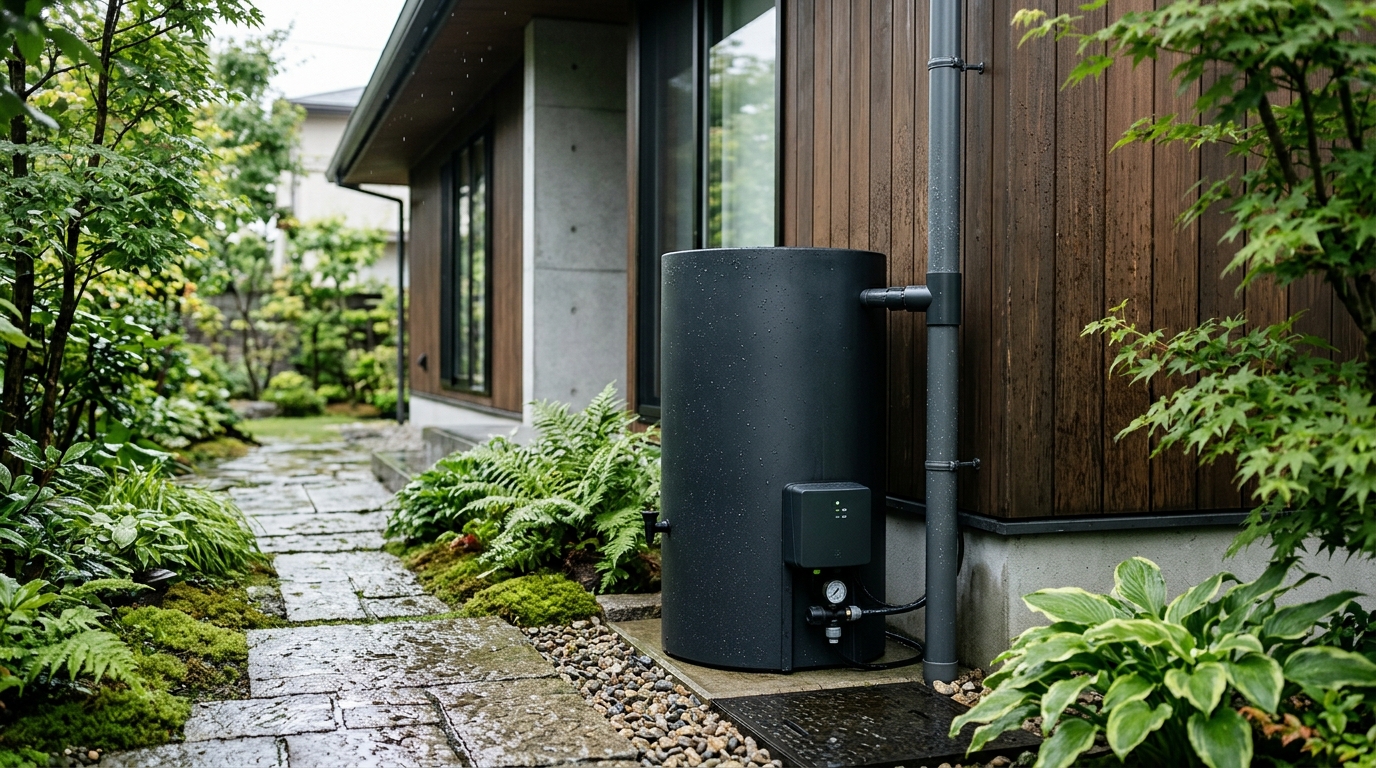
To address this limitation, the study introduced the concept of smart rain barrels, which integrate water pumps controlled by smart switches. These switches rely on local weather forecasts to ensure that the barrels are emptied before expected rainfall. This proactive approach allows the barrels to maintain maximum storage capacity when rain arrives. The smart switches can be operated by householders or centrally integrated via the Internet of Things to control SRBs across an entire area. By linking the barrels to weather forecasting systems, the system can preemptively drain stored water, optimizing the available storage for incoming precipitation.
The study focused on three densely populated residential areas in Saitama City: Miyahara-Cho in Kita Ward, Higashimiyashita in Minuma Ward, and Motobuto in Urawa Ward. These areas were selected based on specific criteria, including lower elevation than surrounding areas, susceptibility to flood damage, high ground infiltration, and the presence of a diverted sewer system. Miyahara-Cho spans 2.4 square kilometers with 13,192 households, while Higashimiyashita covers 0.55 square kilometers with 1,981 households. Motobuto encompasses a larger area of 25.7 square kilometers with 8,932 households.
The researchers used PySWMM, a Python library that provides a programmable interface to the Environmental Protection Agency’s storm water management model, to simulate the performance of the smart rain barrels. Unlike conventional SWMM software, which does not allow for changes to rain barrel parameters during rainfall simulations, PySWMM facilitates modeling rainfall time nodes in seconds. This capability enables precise control over the system’s behavior. The study varied the drainage values of the barrels in the simulations to control the activation of the smart switches. Specifically, the SRBs were programmed to begin discharging water two hours prior to forecasted rainfall, a timing chosen to balance flood prevention with water conservation based on the reliability of short-term weather forecasts.
Three different rain barrel capacities were utilized in the simulations: 200, 300, and 400 liters. These sizes were chosen based on an investigation into standard dimensions and prices of household rain barrels available from local suppliers in Japan. The precipitation scenarios for the study were derived from data provided by the Japan Meteorological Agency’s AMeDAS for the past ten years. The team selected rainfall data from May 2023 as the primary scenario, as this period is characterized by diverse rainfall patterns typical of Japan’s prerainy season. This month often experiences both brief but intense rain and extended periods of rainfall, making it a critical period for testing the capabilities of smart stormwater management systems.
The results showed that smart rain barrels enhanced total water storage capacity by 60% to 150% over regular rain barrels. The growth rate of total water storage was greater with smaller-capacity SRBs, as their compact size allowed them to capture and store water more efficiently from each precipitation event. The simulations indicated that SRBs reduced total runoff volume by an average of 5% compared to traditional rain barrels of the same capacity, with a minimum reduction of 2%. In the Motobuto area, the total runoff volume decreased by 10% with the use of a 400-liter SRB, attributed to the region’s sloped topography which accelerates stormwater runoff.
A key finding of the study was that the effectiveness of smart rain barrels increased proportionally with their capacity. In contrast to traditional rain barrels, where increasing capacity did not significantly affect runoff reduction, SRBs demonstrated improved performance as size increased. The effects of using a 400-liter SRB surpassed those of a 200-liter barrel by over 50%, regardless of the study site. This scalability suggests that smart rain barrels offer a more efficient solution for urban stormwater management, particularly in areas where larger storage volumes can be accommodated. The intelligent control system allows for dynamic adjustment of water storage strategies, making larger capacities more operationally efficient.
The study highlights the importance of real-time control in stormwater management. Traditional systems often fail to respond promptly to changing weather conditions, leading to suboptimal performance. By integrating smart switches and weather forecast-based automation, the SRBs ensure optimal emptying before rainfall events. The use of PySWMM allowed for a dynamic simulation of SRB performance under continuous rainfall conditions, a topic that has not been extensively analyzed in existing literature. This numerical validation method offers a scalable approach to assessing the effectiveness of smart stormwater infrastructure in Japanese urban settings.
Despite the promising results, the study acknowledges several limitations. The effectiveness of smart rain barrels depends heavily on the accuracy of weather forecasts. An inaccurate forecast may lead to premature or delayed emptying, which could compromise the system’s performance. Additionally, SRBs require a stable power and Internet connection to function correctly. Instability or unavailability of these resources could undermine their performance in real-world applications. The study also notes that the simulations focused on water quantity parameters and did not account for water quality, which is an important consideration for comprehensive stormwater management.
Future research directions suggested by the authors include the integrated use of SRBs in conjunction with water quality management. Understanding how discharged water affects the sewer system and the surrounding environment, particularly if it contains pollutants, is another important area for investigation. Furthermore, studying the effectiveness of coordinating SRBs with existing urban drainage systems and other low-impact development measures is crucial. If SRBs cannot be effectively integrated with existing systems, their potential benefits may be diminished. This research paves the way for more resilient urban flood management strategies that address both flooding and environmental impacts.
The findings of this study contribute to the development of intelligent stormwater management solutions, enhancing urban resilience to climate-change-induced flooding. As climate change leads to increased rainfall in many regions, the need for effective urban pluvial flood mitigation strategies becomes more urgent. Smart rain barrels offer a flexible and scalable answer to urban flooding, particularly in densely populated areas where conventional systems often struggle to manage rapid rainfall events. By continuing the exploration of storage-based systems and enhancing them through the integration of intelligent control and predictive mechanisms, this research provides a vital contribution to sustainable urban development in Japan and potentially other regions with similar climatic and urban characteristics.
Subject of Research: Simulation of smart rain barrel effectiveness for urban flood mitigation in Saitama City
Article Title: Effectiveness of smart rain barrels for urban pluvial flood mitigation in densely built-up residential areas: a case study of Saitama City near Tokyo
Article References: Lin, J., Taguchi, H., & Nakamura, H. (2025). Effectiveness of smart rain barrels for urban pluvial flood mitigation in densely built-up residential areas: a case study of Saitama City near Tokyo. City and Built Environment, 3(1), Article 12. https://doi.org/10.1007/s44213-025-00053-8
Image Credits: AI Generated
DOI: 10.1007/s44213-025-00053-8
Keywords: smart rain barrels, urban flooding, stormwater management, Saitama City, PySWMM, low-impact development, climate change, water conservation, urban resilience, simulation study, Effectiveness, smart
News Source: Denise Maddox. (November 11, 2026). Smart Rain Barrels Cut Urban Runoff in Saitama Study. Scienmag.