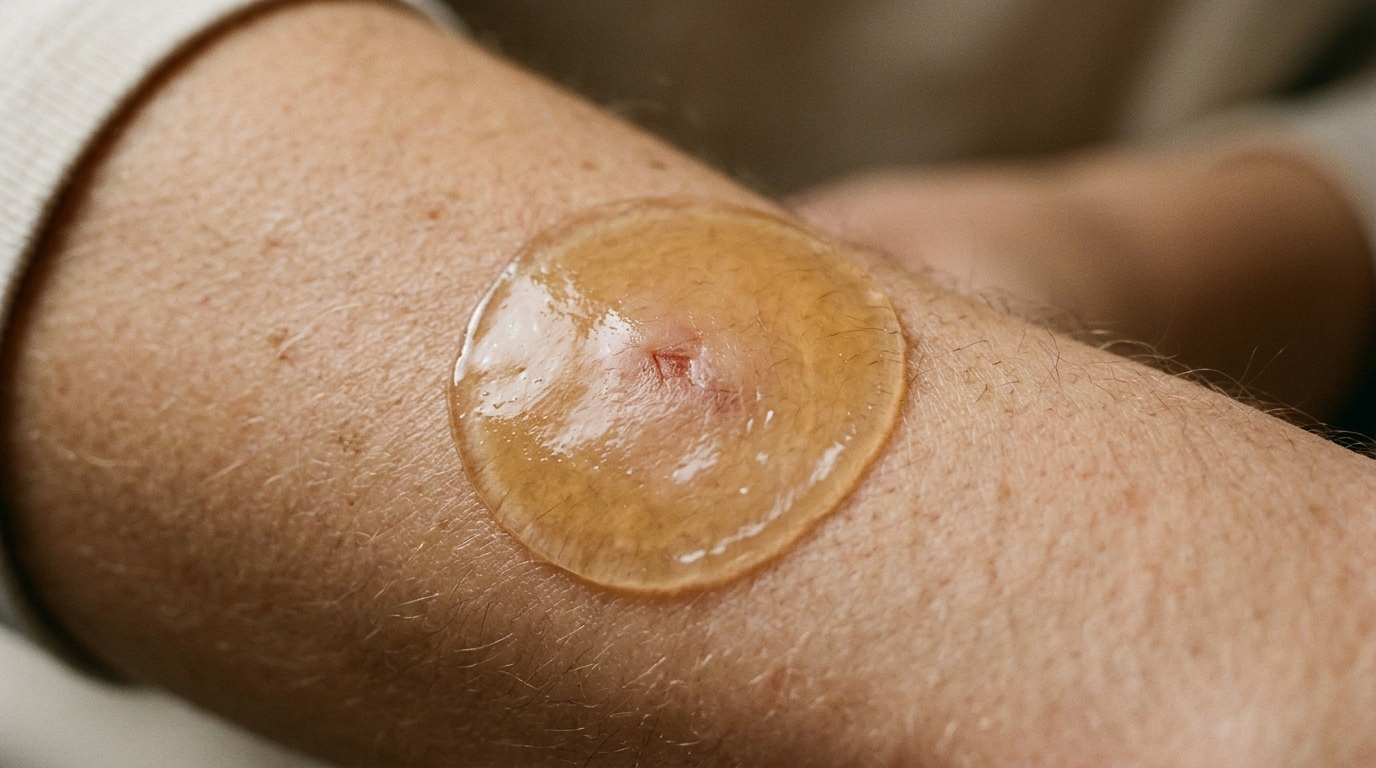
A comprehensive scientific review published in Collagen and Leather evaluates the role of tannic acid, a naturally occurring plant polyphenol, in the design and engineering of multifunctional hydrogels for wound repair. The human skin functions as the body’s largest organ, covering an surface area of approximately 1.5 to 2.0 square meters and accounting for roughly 15 percent of total body weight. It comprises three specialized anatomical layers: the protective epidermis, the collagen-rich dermis that provides mechanical strength and vascular support, and the underlying subcutaneous cushion that aids metabolic regulation. When trauma, thermal injury, deep surgical incisions, or systemic conditions like diabetes compromise this barrier, natural repair mechanisms are frequently disrupted. Wounds can subsequently transition into chronic states sustained by pathologically high concentrations of reactive oxygen species, persistent inflammation, microbial colonization, and deficient vascularization.
Traditional wound care dressings such as conventional dry gauzes, absorbent foams, hydrocolloid matrices, and protective thin films primarily operate as passive physical barriers intended to absorb excess wound exudate and prevent external contamination. However, these conventional barrier materials lack intrinsic biochemical functionalities capable of actively directing cellular processes or altering the microenvironment of complicated wounds. In contrast, hydrogels mimic the natural hydration and three-dimensional architecture of the mammalian extracellular matrix. The incorporation of tannic acid into these polymeric matrices transforms standard structural dressings into biologically active systems capable of simultaneously mitigating oxidative stress, curbing bacterial proliferation, downregulating inflammatory cascades, and encouraging coordinated cellular migration.
The biochemical efficacy of tannic acid stems directly from its unique polyphenolic architecture, most commonly represented as a poly(galloyl glucose) complex with the chemical formula C76H52O46. Historically applied in traditional leather tanning to stabilize collagen against enzymatic decomposition and microbial degradation, tannic acid contains an abundance of phenolic hydroxyl groups that act simultaneously as hydrogen bond donors and acceptors. In aqueous solutions typically exhibiting an acidic pH between 3 and 4, these functional groups coordinate dynamic noncovalent interactions, including robust hydrogen bonding, aromatic pi-pi stacking, and coordinate bonding with transition metal ions like iron and copper. This versatile coordination chemistry enables tannic acid to act as an effective physical crosslinker across both natural biopolymers—such as gelatin, chitosan, hyaluronic acid, and silk fibroin—and synthetic matrices including poly(vinyl alcohol) and polyethylene glycol diacrylate.
For instance, blending tannic acid with quaternized chitosan establishes networks mediated by hydrogen bonding and electrostatic interactions between phenolic hydroxyls and amine, carboxyl, or hydroxyl groups, conferring notable self-healing capabilities and tissue adherence.
To overcome synthetic challenges where direct addition of tannic acid might prematurely quench free radicals during chain polymerization or induce rapid precipitation, researchers have developed postfabrication immersion protocols. In this two-step fabrication approach, hydrogel frameworks are fully polymerized prior to immersion in aqueous solutions of tannic acid, allowing the bioactive polyphenol to diffuse into the pre-established network. This secondary crosslinking step substantially enhances surface adhesion, mechanical storage modulus, and swelling stability without disrupting the underlying covalent architecture. However, experimental data indicate that immersion parameters must be precisely controlled: excessive hydrogen bonding density can severely restrict polymer chain mobility, thereby decreasing tensile flexibility, while overly concentrated solutions can cause surface aggregation that impedes homogeneous internal distribution.
Functionally, tannic acid acts as a powerful antioxidant by scavenging reactive oxygen species that accumulate in chronic wound beds. Proinflammatory immune cells, notably activated neutrophils and macrophages, produce abundant amounts of superoxide anions, singlet oxygen, and hydroxyl radicals during early inflammatory phases. By functioning as an electron and hydrogen donor, tannic acid directly neutralizes these aggressive radical species, converting reactive singlet oxygen into less harmful triplet forms and generating relatively stable phenoxyl intermediates. Furthermore, by chelating redox-active transition metals like divalent iron and copper, tannic acid suppresses downstream Fenton and Haber-Weiss reactions that drive continuous oxidative damage. These actions work in parallel with the upregulation of endogenous protective enzymes through the Nrf2/HO-1 pathway and downregulate destructive inflammatory cytokines such as interleukin-1beta, interleukin-6, and tumor necrosis factor-alpha.
Beyond oxidative management, tannic acid exhibits pronounced broad-spectrum antibacterial and antibiofilm properties against major wound pathogens, including Staphylococcus aureus, methicillin-resistant strains, Pseudomonas aeruginosa, and Escherichia coli. Tannic acid chelates free iron essential for microbial metabolic pathways, complexes with peptidoglycans and membrane phospholipids to compromise bacterial wall integrity, and inhibits fatty acid synthesis enzymes like beta-ketoacyl-ACP reductase. Concurrently, hydrogels modified with tannic acid accelerate physical wound closure by promoting the directional migration of L929 fibroblasts, keratinocytes, and endothelial cells, while steering phenotypic macrophage differentiation from the proinflammatory M1 state toward the tissue-reparative M2 profile via intracellular cascades such as the PI3K/Akt pathway.
These combined biochemical characteristics provide demonstrated utility across diverse preclinical wound models. In full-thickness incisional and surgical defect studies, supramolecular hydrogels formulated with tannic acid match or exceed conventional suture approximations and commercial polyurethane dressings by sealing moist tissue surfaces while preventing hypertrophic scarring. In chronically infected diabetic wounds characterized by severe biofilm burdens and delayed vascularization, thermosensitive hydrogel composites successfully eradicate local bacterial colonization, stimulate neovascularization, and accelerate tissue contraction. Additionally, composite formulations show clear preclinical efficacy in controlling massive hemorrhages across arterial models, mitigating radiation-induced dermatitis, and sealing fragile internal tissues including pancreatic and colorectal surgical sites to avoid postsurgical fluid leakage and visceral adhesions.
Despite these extensive preclinical capabilities, researchers emphasize that significant mechanistic and clinical hurdles must be resolved prior to widespread patient application. Native tannic acid undergoes gradual oxidative degradation under physiological conditions, necessitating advanced protective encapsulation strategies such as mesoporous silica nanoparticles, metal-organic frameworks, or responsive boronate ester bonds to ensure sustained local release. Biocompatibility profiles also show marked dose dependence; while physiological concentrations accelerate cellular migration, elevated concentrations risk nonspecific protein precipitation, cytotoxic quinone formation, and depletion of vital intracellular metal ions. Finally, standard preclinical rodent models, which heal predominantly through cutaneous contraction rather than human-like re-epithelialization, present clear limitations, highlighting the need for validation in advanced porcine models and clinical trials to establish definitive safety and efficacy parameters.
The historical trajectory of tannic acid highlights an evolution from traditional craft practices to precise molecular design. Centuries before modern polymer chemistry, tannic acid served as a core component of iron gall ink, where oak gall extracts were formulated alongside iron sulfate, gum arabic, and water. Scientific analysis expanded in the early eighteenth century when the French chemist Armand Séguin coined the term tannin, derived from the French word for oak bark, to categorize botanical substances capable of preserving animal hides. Today, plant-derived tannins continue to account for approximately 20 percent of global leather manufacturing. Subsequent structural evaluations throughout the nineteenth and twentieth centuries clarified that tannic acid exists as a complex assembly rather than a single entity, with early researchers like Fischer recognizing it as a variable poly(galloyl glucose) mixture. Clinical exploration of its topical capabilities also dates back to early medical records, including its documented application in burn care starting in 1925.
Recent investigations into synthetic matrices further illustrate how tannic acid modulates physical mechanics and colloidal stability. In zwitterionic networks based on poly(methacryloyl sulfobetaine), doping with tannic acid yielded robust structural properties, achieving a tensile strength of 93.7 kilopascals, a compressive strength of 18.4 megapascals, and tissue adhesive strength of 20.2 kilopascals. To prevent premature phase precipitation when blending with synthetic polymers, researchers have introduced high-molecular-weight DNA to stabilize colloidal mixtures. In severe hemorrhage scenarios, which account for roughly 50 percent of battlefield fatalities and 15 to 25 percent of civilian trauma deaths, noncovalent binding between tannic acid and blood proteins accelerates clotting cascades. Composite hemostatic powders pairing tannic acid with collagen achieve spontaneous adhesion and rapid sealing at challenging, incompressible bleed sites across animal models, including the femoral artery, liver, heart, and tail vein, consistently outperforming traditional chitosan and starch controls in clotting efficiency.
At the cellular level, the biological activity of tannic acid extends into complex signaling pathways and nonbacterial pathogens. Experimental models reveal that tannic acid stimulates the expression of critical reparative growth factors, specifically basic fibroblast growth factor, transforming growth factor-beta, and vascular endothelial growth factor, which collectively accelerate angiogenesis and hair follicle regeneration while activating extracellular signal-regulated kinase cascades. It simultaneously downregulates Toll-like receptor 4 expression following lipopolysaccharide exposure and inhibits p38 mitogen-activated protein kinase pathways, curbing innate inflammatory overactivation. Furthermore, exosomes released by tannic acid-stimulated macrophages promote directional fibroblast movement by downregulating CDKN1b via microRNA-221-3p. Beyond antibacterial defense, tannic acid exhibits antiviral efficacy, suppressing human immunodeficiency virus replication and diminishing the infectivity of herpes simplex and Epstein-Barr viruses, an attribute adapted into Carbopol hydrogels designed for localized antiviral therapy in female reproductive tissues.
Subject of Research: Bioactive tannic acid hydrogels for wound repair and tissue engineering
Article Title: Tannic acid as a bioactive polyphenol for hydrogel engineering in wound healing
Article References: Bei, Z., Ye, L., Tong, Q., Yang, T., He, X., Chu, B., & Qian, Z. (2026). Tannic acid as a bioactive polyphenol for hydrogel engineering in wound healing. Collagen and Leather, 8(1), Article 4. https://doi.org/10.1186/s42825-025-00227-4
Image Credits: AI Generated
DOI: 10.1186/s42825-025-00227-4
Keywords: tannic acid, hydrogels, wound healing, biomaterials, polyphenols, tissue engineering, antimicrobial, antioxidant, Tannic, acid, bioactive, polyphenol
News Source: Denise Maddox. (November 11, 2026). Tannic Acid Advances Hydrogel Engineering for Multifunctional Wound Healing Applications. Scienmag.