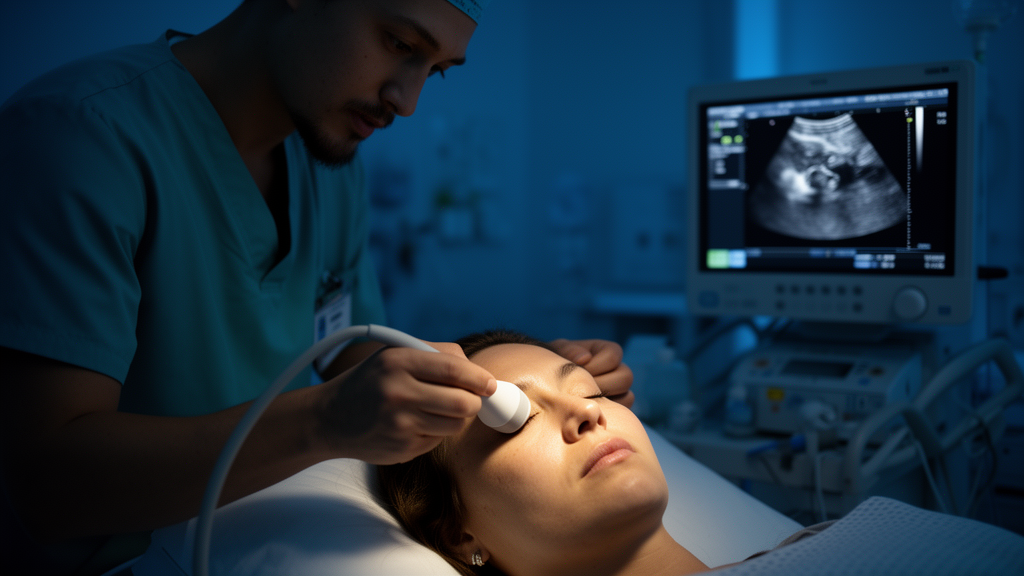
A higher optic nerve sheath diameter is significantly associated with poor neurological outcomes following cardiac arrest, according to a systematic review and meta-analysis published in BMC Emergency Medicine. Researchers Peng Yao Song, Shun Yi Feng, and Yong Li evaluated the prognostic performance of optic nerve sheath diameter by synthesizing findings from 17 clinical studies involving a total of 1,157 patients with cardiac arrest. Across the pooled investigations, the random-effects model revealed that increased sheath diameter was linked to unfavorable neurological recovery with an odds ratio of 8.97, establishing a strong statistical association between the anatomical measurement and patient outcomes after cardiac arrest events.
The investigators noted that accurate prediction of neurological outcomes after cardiac arrest remains clinically challenging for medical practitioners. While optic nerve sheath diameter has emerged in recent clinical research as a promising prognostic tool, its reported predictive performance has varied substantially across diverse patient populations and differing methodological approaches. To address these methodological and population differences, the authors structured their review to formally evaluate the prognostic performance of the measurement, examining specific parameters including area under the curve, sensitivity, specificity, subgroup distributions, and potential publication bias.
The review focused specifically on studies that evaluated optic nerve sheath diameter as a predictor of neurological outcomes following cardiac arrest. Across these comprehensive literature searches, the team screened and selected peer-reviewed investigations that met their eligibility criteria, ultimately assembling a combined cohort of 1,157 patients who had suffered cardiac arrest.
The statistical assessment of prognostic performance centered on the area under the curve, pooled sensitivity, and pooled specificity. Across the included studies, the overall area under the curve was determined to be 0.82, with a 95 percent confidence interval ranging from 0.79 to 0.86, indicating solid discriminative capacity for distinguishing between favorable and poor neurological outcomes. The pooled sensitivity of optic nerve sheath diameter was 72 percent, with a 95 percent confidence interval spanning 63 percent to 79 percent, while the pooled specificity reached 81 percent, with a 95 percent confidence interval extending from 71 percent to 89 percent.
In the primary meta-analysis utilizing a random-effects model, higher optic nerve sheath diameter was strongly associated with poor neurological outcomes, yielding an odds ratio of 8.97, with a 95 percent confidence interval from 5.51 to 14.61 and a P value of less than 0.001. To determine whether specific study characteristics altered this predictive relationship, the researchers performed comprehensive subgroup analyses based on predefined variables. The association between larger sheath diameter and poor neurological recovery maintained statistical significance across all predefined subgroups, with all subgroup comparisons yielding P values below 0.01, confirming consistency across diverse clinical conditions.
The meta-analysis identified moderate between-study heterogeneity in the random-effects model, recording an I-squared statistic of 48.7 percent with a statistically significant P value of 0.013. When analyzing the patterns observed in the subgroup analyses, the investigators determined that differences in study sample size and variations in study design may have contributed to this observed heterogeneity. To test whether any individual dataset exerted disproportionate influence on the pooled results, the authors executed a leave-one-out sensitivity analysis, which consistently supported the robustness and reliability of the overall pooled estimate. Furthermore, while Deeks’ funnel plot asymmetry test indicated evidence of potential publication bias with a P value of 0.01, a subsequent trim-and-fill analysis demonstrated that the pooled effect estimate remained stable despite the detected asymmetry.
Based on their comprehensive meta-analytic findings, Song and colleagues concluded that optic nerve sheath diameter may be a useful adjunctive predictor of neurological outcomes after cardiac arrest.
Subject of Research: Optic nerve sheath diameter as a predictor of neurological outcomes after cardiac arrest
Article Title: Optic nerve sheath diameter for predicting neurological outcomes after cardiac arrest: a systematic review and meta-analysis
Article References: Song, P. Y., Feng, S. Y., & Li, Y. (2026). Optic nerve sheath diameter for predicting neurological outcomes after cardiac arrest: a systematic review and meta-analysis. BMC Emergency Medicine. https://doi.org/10.1186/s12873-026-01790-7
Image Credits: AI Generated
DOI: 10.1186/s12873-026-01790-7
Keywords: optic nerve sheath diameter, cardiac arrest, neurological outcomes, systematic review, meta-analysis, prognostic performance, random-effects model, odds ratio, area under the curve, sensitivity analysis, specificity, subgroup analysis, heterogeneity, publication bias, Deeks funnel plot, trim-and-fill analysis, BMC Emergency Medicine, PROSPERO
News Source: Ophelia Keating. (November 11, 2026). Higher Optic Nerve Sheath Diameter Associated With Poor Cardiac Arrest Outcomes. Scienmag.