Published in Botanical Studies, the study combines transcriptome and two-dimensional gel electrophoresis (2-DE) proteome analyses to reveal that reactive oxygen species (ROS) and associated stress responses are central to the early development of these abnormal plant tissues. The findings suggest that while phytohormones are traditionally viewed as the primary drivers of gall morphogenesis, oxidative stress plays a critical, perhaps initiating, role in reprogramming host plant cells to support the insect larvae.
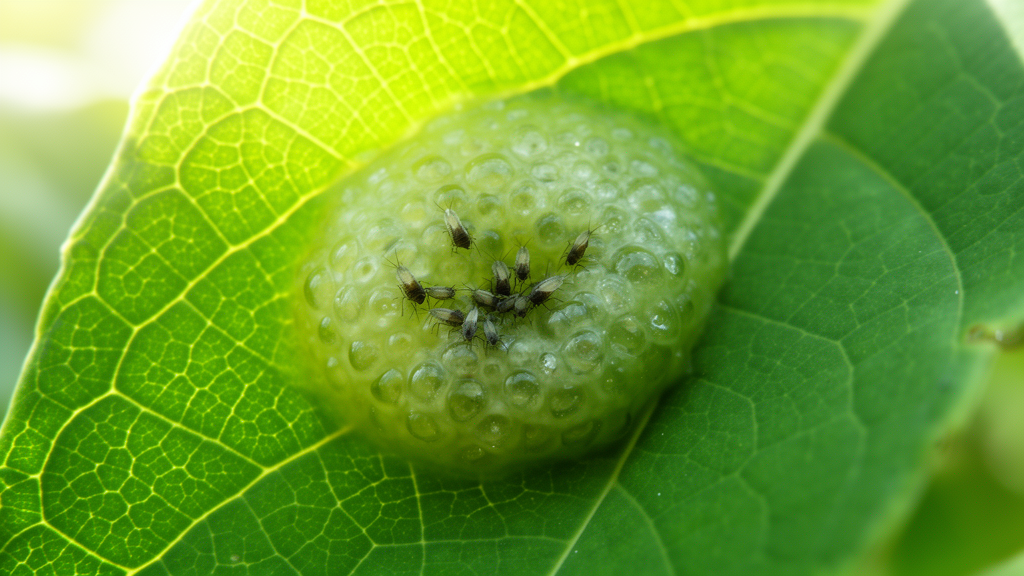
They exhibit a wide range of morphologies and serve as both a habitat and a food source for the inducing organism. The formation of galls involves complex physiological responses, including genetic reprogramming and ectopic cell proliferation. In the case of psyllids, which are a family of insects known for inducing galls ranging from simple leaf curls to complex structures, the interaction with the host plant triggers a cascade of metabolic changes. The specific focus of this study was the globular galls found on the leaves of Machilus japonica var. kusanoi, a species in the Lauraceae family, induced by the psyllid Neotrioza shuiliensis.
To understand the regulatory networks involved, the research team collected leaf galls and corresponding leaves from three different trees in Yangmingshan National Park, Taiwan, between 2019 and 2021. The samples were categorized into early-stage galls, inhabited by second or third instar larvae, and late-stage mature galls, inhabited by fifth instar larvae. For comparison, uninfected normal leaves from adjacent branches were also collected. All samples were frozen in liquid nitrogen immediately after collection to preserve their molecular integrity.
The study employed high-throughput RNA sequencing to analyze the transcriptome of these six sample groups. After de novo assembly of approximately 964 million paired-end reads, the team identified 478,892 contigs, of which 438,906 were annotated against the Arabidopsis reference genome. Differential expression analysis revealed that early-stage galls were significantly enriched in genes related to cell cycle regulation, organization, and microtubule-based movement. In contrast, late-stage galls showed enrichment in genes associated with nutrient catabolic processes, including the breakdown of polysaccharides, lipids, and carbohydrates. This shift suggests a transition from active cell division and structural formation in early galls to a nutrient-providing role in mature galls.
A key finding of the study was the significant role of ROS-related stress responses in early gall development. The researchers observed that early gall tissues were enriched in genes associated with hydrogen peroxide metabolism and ROS detoxification. To validate this transcriptomic evidence, they used 3,3’-diaminobenzidine (DAB) staining to detect the in-situ distribution of hydrogen peroxide. The staining revealed a distinct reddish-brown precipitate on the inner surface of the gall tissues, confirming the accumulation of ROS within the galls. In contrast, the corresponding galled leaves showed no such accumulation, except at the sites of physical injury. This spatial specificity suggests that the plant is actively managing oxidative stress within the gall structure itself.
Proteomic analysis using 2-DE further supported the involvement of stress and defense mechanisms. The team identified 23 proteins with increased abundance in early gall tissues. Half of these proteins, including calmodulin 7 (CAM7), light-sensitive hypocotyls 6 (LSH6), and eukaryotic translation initiation factor 2 beta (eIF2β), were annotated as factors involved in cell cycle regulation or cellular development. The presence of CAM7 is particularly notable, as it is a calcium-binding protein that acts as an upstream regulator of various cellular activities via calcium signaling. The elevation of CAM7, along with other proteins associated with seed and reproductive development, suggests that psyllid infestation may trigger a reproductive-like status in the leaf tissue, redirecting its developmental program to form the gall.
The study also examined the contents of photopigments and polyphenols in the gall and leaf tissues. Chlorophyll a, chlorophyll b, and anthocyanin levels were significantly reduced in gall tissues compared to normal leaves, consistent with the downregulation of photosynthesis-related genes and proteins. However, the content of polyphenols, which are well-known antioxidants, was three times higher in gall tissues than in normal leaves. This increase in polyphenols likely serves as an adaptive plant response to mitigate the oxidative stress caused by the insect feeding. The galled leaves also showed a 17% increase in polyphenol content compared to uninfected leaves, indicating a broader defensive response in the host plant.
While phytohormones such as auxin and cytokinin are known to play a role in gall formation, this study did not find significant enrichment of differentially expressed genes (DEGs) in functional categories related to these hormones. Instead, the enrichment was observed in pathways associated with phenylpropanoid biosynthesis, which is linked to plant defense mechanisms. The researchers noted that auxin and cytokinin concentrations did increase in gall tissues, but the lack of corresponding gene expression changes suggests that ROS may be an upstream factor that crosstalks with phytohormones to promote gall growth. This interaction highlights the complexity of the regulatory network involved in gall morphogenesis.
The downregulation of genes and proteins associated with photosynthesis in gall tissues is a common characteristic of insect leaf galls. The 2-DE analysis identified approximately 70% of the downregulated proteins as being related to photosynthesis, including components of the light reaction and carbon fixation. This photosynthetic deficiency is likely a consequence of the reprogramming of the host plant cells to prioritize gall structure and nutrient production over energy generation. The shift in metabolic priorities is further evidenced by the enrichment of genes involved in the Calvin cycle and sucrose synthesis in late-stage galls, indicating an increased demand for carbohydrates to support the developing insect larvae.
The study provides valuable insights into the mechanisms underlying gall development, emphasizing the importance of oxidative stress in addition to phytohormonal regulation. The findings suggest that future research should explore the impact of ROS modulation on gall tissue development and assess phytohormone content at various psyllid larval and gall stages. The study also highlights the need for further investigation into the role of other metabolites, such as jasmonic acid and salicylic acid, in the defense responses of galled plants.
The molecular reprogramming observed in these galls extends beyond simple stress responses to include a notable shift in reproductive gene expression. The transcriptomic data indicated that early gall tissues were enriched in genes associated with meiotic and mitotic cell cycles, suggesting heightened cell division activity during the initial developmental phase. This was corroborated by the identification of specific proteins in the early-stage galls that are typically linked to reproductive tissues. For instance, actin 4, which is predominantly expressed in developing ovules and pollen, was found at elevated levels in the gall tissues. Similarly, the Rab GTPase RAB1C, a regulator of pollen tube growth, and the SR protein SRZ-22, which interacts with cyclin-dependent kinase G1 to regulate pollen wall formation, were also present.
Concurrently, the study highlighted a significant suppression of pollen-related processes in the early gall tissues. Genes assigned to the biological process terms of pollen recognition and pollen-pistil interaction were found to be downregulated. Since the galls do not produce or adhere to actual pollen, this repression may serve to prevent further pollination or other reproductive processes. This could be a protective mechanism by the host plant or a result of manipulation by the gall inducer. The interplay between the upregulation of cell cycle and reproductive development genes and the downregulation of pollen interaction genes suggests a complex regulatory network where the plant’s normal reproductive signaling is altered to accommodate the insect’s presence.
The metabolic shift in mature galls further supports the idea that these structures serve as a nutrient source for the developing larvae.
Despite the focus on oxidative stress, the study also noted the presence of salicylic acid (SA) in early-stage galls, although not in mature ones. This observation aligns with the broader understanding that SA is often involved in plant defense responses against herbivores. However, in the psyllid galls examined, no enrichment was assigned to jasmonic acid (JA) or SA-related annotations, unlike aphid gall tissue where the expression of JA- and SA-response genes is upregulated.
Additionally, examining the metabolomics differences between leaves and gall tissues could provide deeper insights into the plant’s defense strategies against psyllid infestation.
Subject of Research: Molecular mechanisms of psyllid-induced leaf gall development in Machilus japonica var. kusanoi
Article Title: Transcriptome and 2-DE proteome analyses reveal defense-associated development in the leaf galls induced by psyllids on Machilus japonica var. kusanoi
Article References: Shih, T.-H., Chen, J.-L., & Huang, M.-Y. (2025). Transcriptome and 2-DE proteome analyses reveal defense-associated development in the leaf galls induced by psyllids on Machilus japonica var. kusanoi. Botanical Studies, 66(1), Article 19. https://doi.org/10.1186/s40529-025-00470-2
Image Credits: AI Generated
DOI: 10.1186/s40529-025-00470-2
Keywords: plant galls, psyllids, transcriptomics, proteomics, reactive oxygen species, plant defense, Machilus japonica, insect-plant interaction, oxidative stress, phytohormones, Transcriptome, proteome
News Source: Drew Townsend. (November 11, 2026). Psyllid Leaf Galls Show Strong Oxidative Stress Defense. Scienmag.