A randomised comparative study evaluating prosthodontic residents found that an integrated educational programme combining Modules of Employable Skills and Direct Observation of Procedural Skills significantly improved theoretical knowledge and practical performance compared with traditional apprenticeship training. Residents enrolled in the experimental curriculum achieved significantly higher scores on theoretical examinations (90.2 ± 3.1 versus 82.3 ± 3.8, P < 0.001) and practical examinations (92.5 ± 2.6 versus 84.1 ± 3.3, P < 0.001). Evaluators also recorded higher procedural observation scores for the experimental group (4.3 ± 0.2 versus 3.2 ± 0.4, P < 0.001), and the competency attainment rate was markedly elevated (95.0% versus 70.0%, P = 0.037).
Worldwide, prosthodontics residency training faces two longstanding difficulties: learning content is often not well structured, and trainees rarely receive timely or actionable feedback. The Modules of Employable Skills model structures learning content into discrete modules, whereas Direct Observation of Procedural Skills assesses performance directly after learning to deliver immediate, structured feedback. Although prior investigations assessed these two instructional methods separately, this trial evaluated their combined implementation as a unified educational intervention within China’s Standardised Residency Training programme.
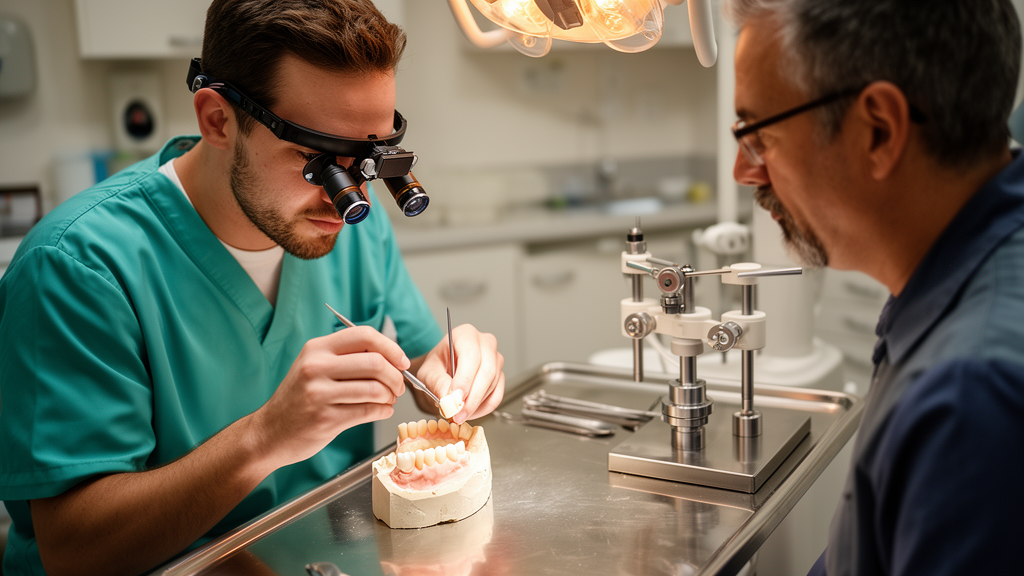
The study enrolled 40 first-year prosthodontic residents who were randomly allocated in equal numbers to an experimental cohort (n = 20) or a control cohort (n = 20). Over a 12-week rotation, the experimental residents participated in six Modules of Employable Skills units and underwent 12 formative Direct Observation of Procedural Skills assessments, while control residents received standard apprenticeship training. Practical performance was measured using a 100-point checklist, with procedural observation scores scored independently from the identical procedure by assessors who were blinded to resident group allocations. Primary outcomes focused on theoretical and practical examination results at rotation completion, while secondary outcomes examined competency attainment rates and teaching satisfaction.
The researchers reported that the integrated curriculum was associated with superior theoretical understanding and practical clinical competence among prosthodontic residents. The authors suggested that combining modular learning with direct procedural assessment may establish a practical framework for organizing clinical curricula and feedback systems in competency-based dental education, though further research is required to evaluate long-term outcomes and adaptability across different clinical settings.
Subject of Research: Evaluation of an integrated MES and DOPS educational programme in prosthodontics residency training
Article Title: Evaluating a comprehensive MES and DOPS educational programme in prosthodontics residency training: a randomized comparative study
Article References: Wang, Z., Zhang, Y., Wang, X., & Zhao, Y. (2026). Evaluating a comprehensive MES and DOPS educational programme in prosthodontics residency training: a randomized comparative study. BMC Medical Education. https://doi.org/10.1186/s12909-026-10719-4
Image Credits: AI Generated
DOI: 10.1186/s12909-026-10719-4
Keywords: prosthodontics, medical education, residency training, Modules of Employable Skills, Direct Observation of Procedural Skills, clinical competency, randomized comparative study, dental training, Evaluating, comprehensive, DOPS, educational
News Source: Courtney Benton. (November 11, 2026). Integrated Training Programme Enhances Prosthodontic Resident Knowledge and Clinical Skills. Scienmag.