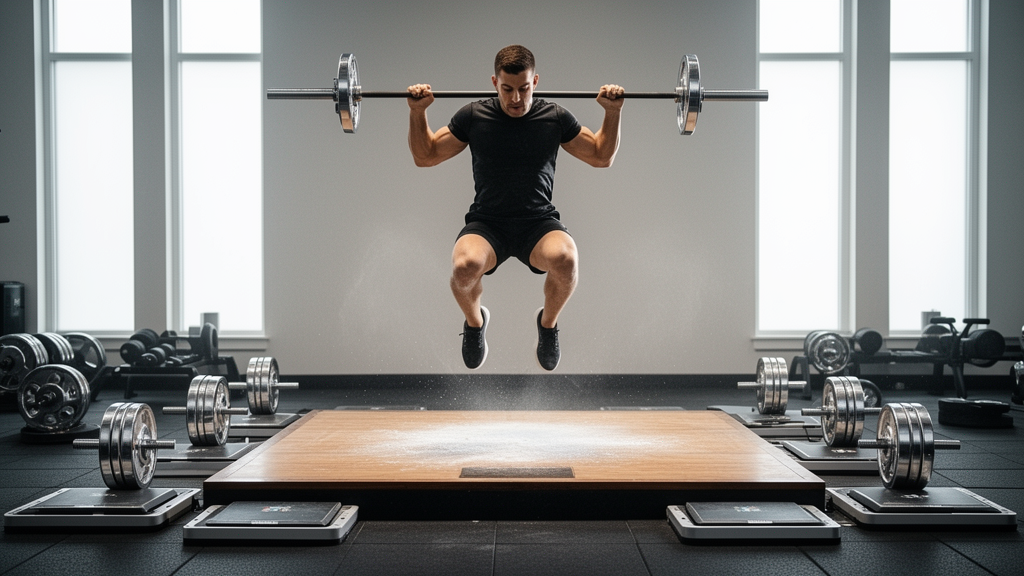
A systematic review and meta-analysis of optimal power load strength training indicates that vertical jump height provides the most consistent positive performance signal, whereas evidence for one-repetition maximum strength is highly sensitive to analytical assumptions, and differences in sprint time and peak power are not statistically established. The meta-analytic findings synthesize the available evidence on whether loading exercises at the specific resistance that maximises mechanical power output translates into measurable kinetic and kinematic gains for athletes.
Optimal power load strength training has been proposed as an effective training strategy designed to integrate force and velocity characteristics to maximise power output. Despite its theoretical advantages, empirical evidence concerning the practical effects of optimal power load protocols on athletic performance has remained inconsistent across published experimental investigations. To address these discrepancies, the authors designed a systematic review and meta-analysis aimed at systematically evaluating the precise effects of optimal power load strength training on four distinct athletic performance indicators: sprint time, jump height, one-repetition maximum, and peak power.
To identify relevant experimental trials, the research team conducted comprehensive literature searches across five scientific databases. Their review protocol was prospectively registered on the PROSPERO international register of systematic reviews under registration identifier CRD42024510488. The systematic search identified seven studies that satisfied all eligibility criteria for the review, with exactly four independent studies contributing experimental data to each of the four designated outcome indicators.
The quantitative synthesis employed random-effects models as the primary analytical framework to calculate pooled effect estimates. To test the stability of these findings against potential dependency among effect sizes, the authors supplemented the primary random-effects analyses with within-study aggregation procedures that applied an assumed correlation coefficient of 0.50. The analytical plan also incorporated sensitivity analyses, influence analyses, small-sample interval analyses, and exploratory subgroup comparisons focused on the methods used to determine optimal power load, the training background of participants, and the overall duration of the training interventions.
The original Comprehensive Meta-Analysis estimates indicated distinct outcomes across the four kinetic and kinematic performance measures. Jump height demonstrated a statistically significant pooled estimate of 0.586, with a 95 percent confidence interval ranging from 0.287 to 0.886. The initial estimate for one-repetition maximum strength was 0.368, with a 95 percent confidence interval from 0.038 to 0.697. In contrast, sprint time yielded an original pooled estimate of −0.162, with a 95 percent confidence interval spanning from −0.441 to 0.117, while peak power produced a pooled estimate of 0.208, with a 95 percent confidence interval from −0.007 to 0.423 and a p-value of 0.058.
When the authors applied within-study aggregation using the assumed 0.50 correlation, the pooled estimates and their corresponding confidence intervals showed notable shifts. The aggregated effect estimate for jump height remained positive and statistically robust at 0.581, with a 95 percent confidence interval extending from 0.192 to 0.971. However, the aggregated estimate for one-repetition maximum was adjusted to 0.355, with its 95 percent confidence interval widening to span from −0.026 to 0.736 and thereby crossing the threshold of statistical significance. The aggregated estimate for sprint time changed to −0.187, with a 95 percent confidence interval of −0.532 to 0.159, and peak power shifted to 0.239, with a 95 percent confidence interval of −0.088 to 0.566, confirming that neither sprint time nor peak power demonstrated a statistically established effect.
Additional statistical evaluations further constrained confidence in the observed findings. Both small-sample interval calculations and influence analyses limited overall confidence in statistical significance across the investigated outcomes. Furthermore, the exploratory comparisons failed to establish any reliable moderator effects related to how the optimal power load was determined, the athletic training background of the cohorts, or the duration of the intervention periods.
In their final conclusions, the study authors emphasized that while jump height showed the most consistent positive response to optimal power load strength training, the evidence supporting improvements in one-repetition maximum strength remains sensitive to specific analytical assumptions. Furthermore, differences in sprint time and peak power were not statistically established by the available data. The researchers highlighted that the overall certainty and generalisability of the evidence base remain limited by the small number of eligible studies, substantial variation in intervention protocols and comparator conditions, and uncertain reporting bias across the published literature.
Subject of Research: Effects of optimal power load strength training on athletic performance indicators
Article Title: Effects of optimal power load strength training on kinetic and kinematic indicators: a systematic review and meta-analysis
Article References: Rong, W., Zhao, F., & Chen, W. (2026). Effects of optimal power load strength training on kinetic and kinematic indicators: a systematic review and meta-analysis. BMC Sports Science, Medicine and Rehabilitation. https://doi.org/10.1186/s13102-026-02181-y
Image Credits: AI Generated
DOI: 10.1186/s13102-026-02181-y
Keywords: optimal power load strength training, systematic review, meta-analysis, jump height, sprint time, one-repetition maximum, peak power, kinetic indicators, kinematic indicators, random-effects analysis, within-study aggregation, athletic performance, sensitivity analysis, moderator analysis, intervention duration, training background, PROSPERO registration, BMC Sports Science Medicine and Rehabilitation
News Source: Ophelia Keating. (November 11, 2026). Meta-Analysis Finds Optimal Power Load Training Most Consistently Improves Jump Height. Scienmag.