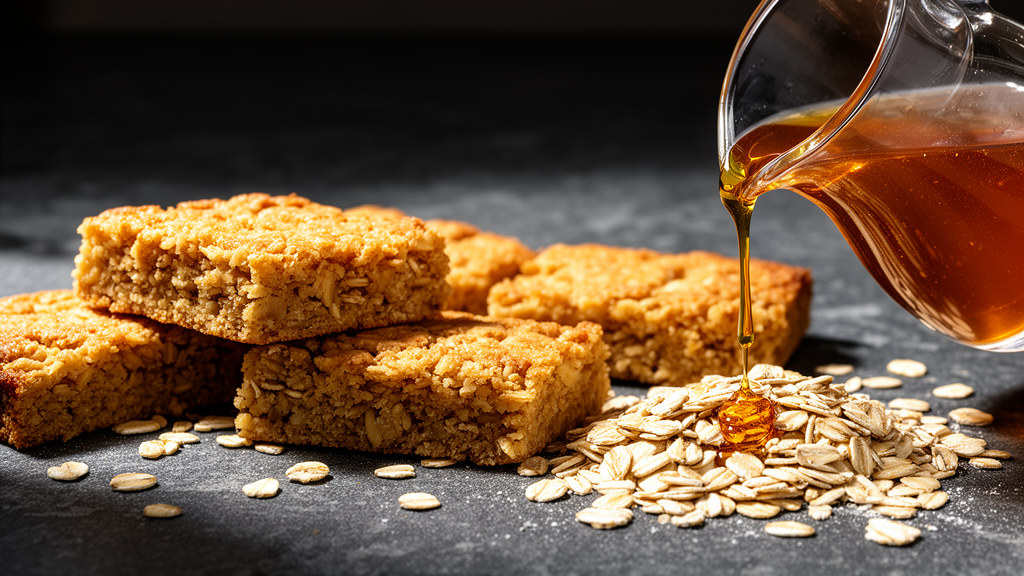
Formulating oat bars with allulose syrup dramatically elevates acrylamide formation beyond regulatory safety thresholds while softening texture and increasing antioxidant properties compared to honey or fructo-oligosaccharide formulations, according to a study published in Applied Biological Chemistry. Researchers evaluated how three sweetening syrups interact with traditional oven baking and modern air frying to alter the physicochemical characteristics and chemical safety of homemade cereal snacks. Across both cooking methods, oat bars formulated with allulose accumulated markedly higher acrylamide concentrations, reaching 1,339.74 ± 10.08 parts per billion following oven cooking and 1,152.05 ± 1.31 parts per billion after air frying. Conversely, oat bars prepared with honey and fructo-oligosaccharide syrup maintained substantially lower acrylamide levels that remained safely within established regulatory limits. The investigation demonstrated that syrup selection functions as a more decisive factor than the cooking method in governing both acrylamide generation and overall quality profiles in oat snack products.
Oats, botanically classified as Avena sativa, feature an extensive nutritional composition comprising complex carbohydrates, soluble dietary fibers, balanced proteins, lipids, phenolic compounds, vitamins, and minerals. Because fortified oat products offer significant physiological advantages, cereal bars have emerged as ubiquitous portable snacks and meal replacements worldwide. Driven by consumer convenience and wellness trends, the international market valuation for cereal bars is projected to expand from 12.89 billion dollars in 2023 to 23.13 billion dollars by 2032. Standard cereal bar formulations require liquid syrups to serve concurrently as cohesive binders and sweetening agents. Although natural bee honey represents a conventional ingredient for this purpose, heightened consumer interest in metabolic health has stimulated the adoption of alternative low-calorie sweeteners, particularly fructo-oligosaccharides and D-allulose. Fructo-oligosaccharides are indigestible carbohydrates prized for prebiotic, non-cariogenic, hypolipidemic, and low-calorie properties, whereas D-allulose is an ultralow-calorie ketohexose monosaccharide providing seventy percent of sucrose sweetness with only five percent of its caloric density.
Thermal preparation of cereal bars typically involves baking temperatures exceeding 120 degrees Celsius, conditions under which toxic reaction intermediates can arise through chemical browning cascades. Acrylamide, recognized as a potential human carcinogen, forms when free asparagine condenses with reducing sugars during high-temperature thermal processing. Because oats contain inherently higher concentrations of free asparagine than other cereal grains, oat-based matrices exhibit an enhanced vulnerability to acrylamide synthesis during domestic or industrial baking. To protect consumers, South Korea’s Ministry of Food and Drug Safety has established an advisory regulatory threshold of 1,000 micrograms per kilogram for acrylamide in cereal goods. However, the interactive influence of distinct syrup binders and hot-air cooking technologies on simultaneous acrylamide synthesis, non-enzymatic browning, and antioxidant retention had not previously been resolved within a single matrix.
To investigate these dynamics, researchers Sanghyeon Lee, MunYhung Jung, Suna Kim, Sunah Ban, and BoKyung Moon formulated standardized oat bar batches subjected to controlled thermal cooking. Each preparation contained fifteen grams of rolled oats obtained from Canadian Oats Milling, 1.5 grams of olive oil, 0.3 grams of vanilla extract, and six grams of a designated sweetener syrup. The experimental syrups comprised 100 percent sugar-fed honey, a commercial fructo-oligosaccharide syrup containing at least 55 grams of fructo-oligosaccharides per 100 grams, and an allulose syrup containing 99.16 percent liquid allulose with minor fractions of fructo-oligosaccharides, sugar derivatives, and stabilizers including pectin, xanthan gum, calcium lactate, and steviol glycosides. Following thorough blending, formulations were pressed into uniform molds and baked at 150 degrees Celsius for thirty minutes in either a preheated Philips HD9280/90 hot-air fryer or a Fujimak FCCM 6 convection oven. Baked bars were cooled for thirty minutes at 20 degrees Celsius, wrapped in aluminum foil, and frozen at minus 18 degrees Celsius until laboratory analysis.
Textural analysis of the cooled oat bars was performed at the BT Research Facility of Chung-Ang University using a TA.XTplus texture analyzer configured with a 40-millimeter support span, a 1.0-gram trigger threshold, and crosshead speeds of 2.0, 1.0, and 10.0 millimeters per second. Breaking force measurements across ten replicates demonstrated that syrup composition significantly dictated finished bar hardness at p < 0.001, whereas cooking method and interaction effects showed no statistical significance. Oat bars prepared with allulose syrup exhibited significantly lower breaking forces under both oven cooking and air frying, averaging 1,457.96 ± 130.59 grams and 1,559.81 ± 102.86 grams, respectively. Conversely, honey treatments generated the firmest bars, with breaking forces spanning 2,211.06 ± 168.17 to 2,313.74 ± 184.81 grams, while fructo-oligosaccharide formulations registered intermediate values. The observed hardness ranges for honey formulations aligned with comparative cereal bar literature reported by Samakradhamrongthai and colleagues, who documented breaking resistance between 2,004.10 and 3,560.59 grams for snack bars formulated with honey and corn syrup. Researchers attributed the softer structure of allulose bars to the sweetener’s hygroscopic nature and superior moisture retention, which prevented excessive matrix hardening during prolonged dry heating.
Quantification of acrylamide was executed using stable isotope dilution liquid chromatography coupled to tandem mass spectrometry. One gram of crushed bar was homogenized in nine milliliters of distilled water, enriched with one milliliter of carbon-13-labeled acrylamide internal standard at two micrograms per milliliter, and agitated on a mechanical shaker at 250 revolutions per minute for twenty minutes prior to centrifugation. The supernatant was clarified through a dual-cartridge solid-phase extraction system pairing Phenomenex Strata-X with Agilent Bond Elut AccuCAT columns. Chromatographic separation occurred on a Shimadzu HPLC platform connected to an MS8040 mass spectrometer using a Phenomenex Kinetex polar C18 column at 26 degrees Celsius under isocratic flow with 0.5 percent methanol and 0.1 percent acetic acid in water. Liquid chromatography operated at a flow rate of 0.3 milliliters per minute with an injection volume of 20 microliters, while the mass spectrometer performed multiple reaction monitoring under positive electrospray ionization at 5,000 volts. The validated procedure achieved an analytical determination coefficient of 0.9996, detection and quantitation limits of 0.89 and 2.97 parts per billion, and a satisfactory z-score of positive 0.6 in FAPAS proficiency testing.
While unheated rolled oats contained no detectable acrylamide, thermal processing induced substantial contaminant accumulation across all experimental groups. Statistical analysis confirmed that cooking method, syrup type, and their interaction exerted significant effects on acrylamide yield at p < 0.001. Allulose oat bars accumulated remarkably high acrylamide levels of 1,339.74 ± 10.08 parts per billion during oven cooking and 1,152.05 ± 1.31 parts per billion during air frying, surpassing the 1,000 micrograms per kilogram regulatory safety limit. In contrast, honey bars produced 430.49 ± 4.06 parts per billion in oven baking and 488.93 ± 6.51 parts per billion in air frying, while fructo-oligosaccharide formulations registered 512.48 ± 5.57 and 470.24 ± 4.02 parts per billion, respectively. Significant interaction terms indicated that cooking effects depended upon syrup chemistry: air frying decreased acrylamide formation in allulose bars relative to oven baking, but produced the opposite trend in honey formulations. The researchers highlighted that allulose’s reactive ketohexose structure accelerates condensation with asparagine, while honey’s amino acid constituents, including proline, may competitively attenuate acrylamide pathways.
Syrup selection also exerted a profound influence on moisture dynamics, product acidity, and surface color development. Finished bar moisture ranged from 0.61 ± 0.09 percent to 2.31 ± 0.17 percent, with allulose treatments maintaining significantly higher moisture across both cooking methods, whereas air-fried samples consistently exhibited lower moisture retention due to enhanced convective evaporation. Following thermal processing, oat bar pH declined from an initial 6.26 ± 0.01 in raw rolled oats to acidic values between 5.17 ± 0.01 and 5.48 ± 0.00, with allulose bars registering the lowest pH values under both oven cooking and air frying conditions as a result of organic acid generation during thermal sugar degradation. Colorimetric measurements recorded in CIELAB coordinates using a Konica Minolta CR-20 colorimeter demonstrated that allulose bars possessed significantly decreased lightness (L*) and yellowness (b*) values, indicating severe browning, whereas fructo-oligosaccharide bars remained noticeably lighter and yellower.
Saccharide profiling and spectrophotometric monitoring of Maillard reaction products confirmed pronounced chemical disparities driven by syrup composition. High-performance liquid chromatography using an Asahipak NH2P-50 4E column paired with a refractive index detector showed honey bars possessed the highest free glucose and sucrose concentrations, whereas allulose bars contained low glucose and sucrose alongside elevated fructose, reflecting thermal conversion during baking. Colorimetric dinitrosalicylic acid assays demonstrated that reducing sugars rose from 0.54 ± 0.02 grams of glucose equivalents per 100 grams in raw oats to 14.55 ± 0.22 in oven-cooked allulose bars and 15.19 ± 0.38 in air-fried fructo-oligosaccharide bars, caused by allulose reactivity and fructo-oligosaccharide thermal degradation above 100 degrees Celsius. In parallel, spectrophotometric absorbance at 280, 360, and 420 nanometers verified that early-stage Maillard intermediates predominated across all formulations, with allulose bars yielding the highest early-stage absorbance at 280 nanometers (p < 0.001) and maximum intermediate absorbance of 0.49 ± 0.06 at 360 nanometers.
Antioxidant assays revealed a dual functional effect, as the same browning reactions that generated acrylamide simultaneously elevated radical scavenging capacity and total polyphenol content. In DPPH radical scavenging tests, allulose bars demonstrated peak values of 0.66 ± 0.02 and 0.67 ± 0.01 milligrams of vitamin C equivalents per gram under oven cooking and air frying, compared to 0.15 ± 0.01 in unprocessed oats. Oven-cooked allulose bars likewise achieved superior ABTS radical scavenging capacity at 5.59 ± 0.11 milligrams of Trolox equivalents per gram and the highest total polyphenol concentration at 3.17 ± 0.37 milligrams of gallic acid equivalents per gram, mediated by the reducing properties of newly formed melanoidins. Despite these functional antioxidant gains, the findings emphasize a critical processing trade-off due to excessive acrylamide formation. The authors acknowledged key limitations, including the presence of commercial stabilizing additives, a single fixed baking condition of 150 degrees Celsius for thirty minutes, and static recipe ratios, concluding that rigorous parameter optimization is vital to balance chemical safety and nutritional quality in oat bar production.
Subject of Research: Acrylamide formation and physicochemical quality of oat bars sweetened with alternative syrups
Article Title: Effect of honey, allulose, and fructo-oligosaccharide syrups on the quality and acrylamide content of oat bars prepared by oven cooking and air frying
Article References: Lee, S., Jung, M., Kim, S., Ban, S., & Moon, B. (2026). Effect of honey, allulose, and fructo-oligosaccharide syrups on the quality and acrylamide content of oat bars prepared by oven cooking and air frying. Applied Biological Chemistry, 69(1), Article 50. https://doi.org/10.1186/s13765-026-01116-y
Image Credits: AI Generated
DOI: 10.1186/s13765-026-01116-y
Keywords: Acrylamide, Allulose, Oat Bars, Maillard Reaction, Food Safety, Air Frying, Fructo-oligosaccharides, Antioxidants, Effect, honey, fructo-oligosaccharide, syrups
News Source: Bethany Barker. (November 10, 2026). Allulose Syrup in Baked Oat Bars Elevates Acrylamide Formation Above Safety Limits. Scienmag.