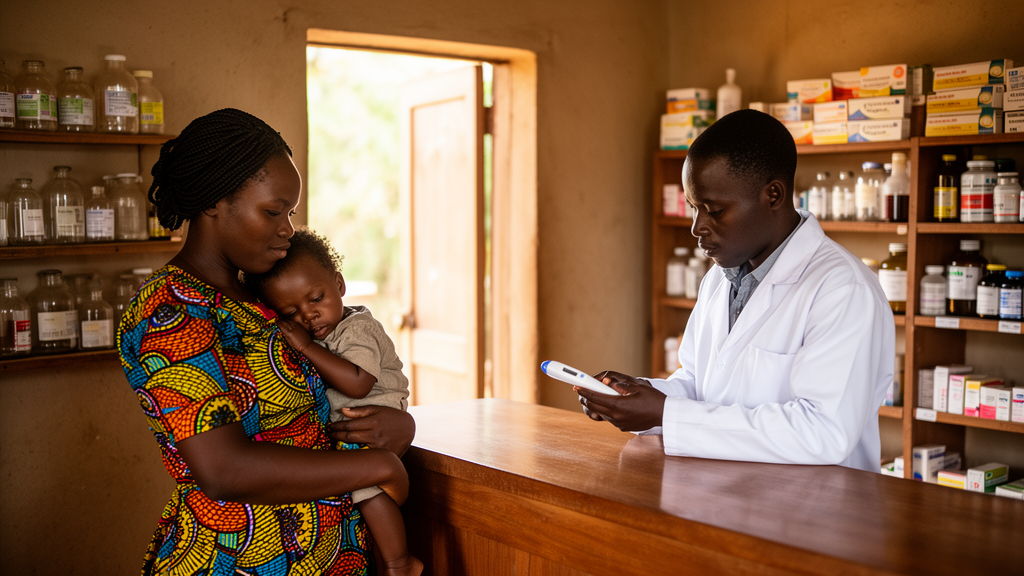
A study published in BMC Infectious Diseases reveals that private pharmacies in Kenya frequently serve as the sole point of care for children suffering from febrile illness. The findings indicate that for child fever cases presenting at pharmacies, the pharmacy visit often represents the entire episode of care.
The study utilized a cohort design to track the care-seeking decisions made by caregivers throughout a specific pediatric febrile illness episode. Data were collected from a sample of 39 private, stand-alone pharmacies located in malaria-endemic regions of Kenya. The researchers analyzed 239 febrile illness episodes, focusing on the characteristics of care-seeking decisions. The primary outcome was a categorical variable describing the trajectory of care, which included single visits at the pharmacy, visits followed by care elsewhere, or initial care elsewhere followed by a pharmacy visit. This design allowed for a detailed examination of how caregivers navigate the complex mix of providers available to them.
Among the caregivers who sought care at the sample pharmacies, 83.3% of child fever cases were managed entirely within a single visit at that specific pharmacy. In contrast, 7.9% of cases involved caregivers seeking care at another care location, such as a clinic, hospital, or pharmacy, and then seeking additional care at the sample pharmacy. Another 8.8% of cases involved caregivers who first visited the sample pharmacy and then sought subsequent care at a clinic or another pharmacy. Overall, 87% of child fever cases presenting in these pharmacies were managed entirely within the pharmacy system.
The study also explored factors associated with these care-seeking trajectories through exploratory analysis. Child age and the number of self-reported symptoms were found to be associated with the likelihood of managing the illness in a single pharmacy visit. Caregivers with infants were significantly less likely to manage pediatric febrile illness in a single pharmacy visit compared to those with older children. The analysis showed a reduction of 12.8 percentage points in the likelihood of a single visit for infants, with a 95% confidence interval ranging from -26.5 to 1.0. This suggests that the perceived severity or vulnerability of infants may prompt caregivers to seek additional care beyond the pharmacy.
Caregivers whose children had more self-reported symptoms were less likely to manage the illness in a single pharmacy visit. For each additional symptom, the likelihood of a single pharmacy visit decreased by 3.6 percentage points, with a 95% confidence interval of -6.8 to -0.5. These findings indicate that care pathways differed by markers of perceived need, with caregivers of infants and those reporting more symptoms less likely to seek care in a single pharmacy visit. The association between symptom count and care trajectory highlights the importance of symptom assessment in determining the need for referral.
The methods involved an in-person survey at the index pharmacy visit and a follow-up phone survey administered two weeks later. This approach allowed the researchers to capture the complete care-seeking journey for each febrile illness episode. The analysis used means comparisons and multinomial logistic regression with Lasso-selected covariates to identify significant predictors of care trajectories.
The study concludes that when pharmacies are used, they are often the only source of care for childhood fevers. The descriptive findings suggest that pharmacies should be better integrated into formal fever management systems. This integration should include particular attention to supporting pharmacists in recognizing severe cases and facilitating referrals, especially for infants and children with multiple symptoms.
This research contributes to the understanding of how caregivers navigate the complex landscape of healthcare providers in Kenya. It highlights the critical role of pharmacies in the initial management of pediatric febrile illness and the need for improved coordination between pharmacies and formal healthcare facilities.
Subject of Research: Care trajectories for pediatric febrile illness in private pharmacies in Kenya
Article Title: One stop shop? care trajectories for pediatric febrile illness episodes among caregivers who seek care at private pharmacies in Kenya
Article References: Dieci, M., Graetz, I., Nekesa, C., Vernon, J., Kayaro, N. I., McFarland, D., & Cummings, J. R. R. (2026). One stop shop? care trajectories for pediatric febrile illness episodes among caregivers who seek care at private pharmacies in Kenya. BMC Infectious Diseases. https://doi.org/10.1186/s12879-026-14410-3
Image Credits: AI Generated
DOI: 10.1186/s12879-026-14410-3
Keywords: pediatric fever, private pharmacies, Kenya, care-seeking behavior, malaria-endemic regions, healthcare access, childhood illness, referral systems, stop, shop, care, trajectories
News Source: Ophelia Keating. (November 10, 2026). Pharmacies Often Sole Care for Child Fevers in Kenya. Scienmag.