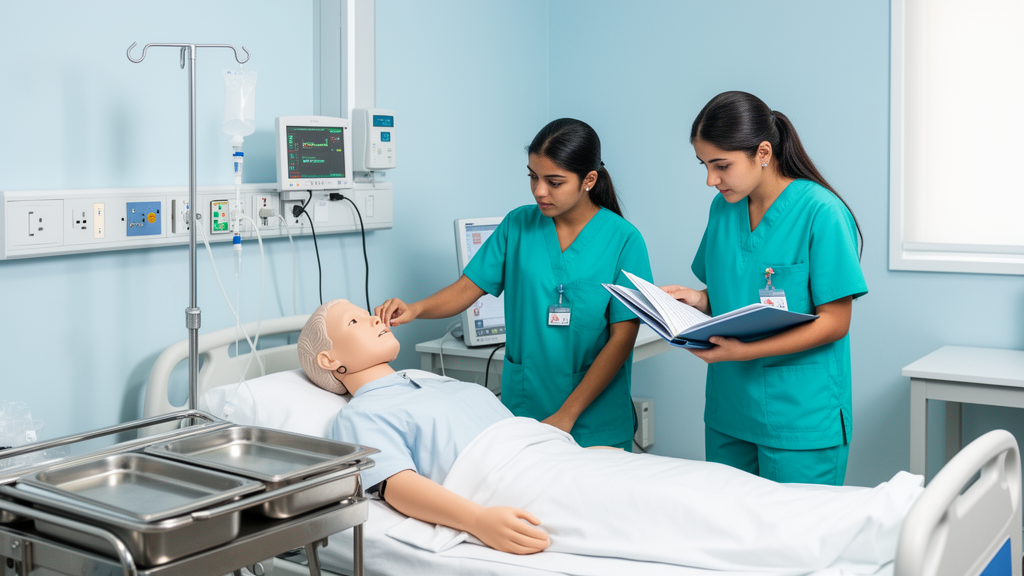
Nursing students in Metropolitan Lima, Peru, demonstrated a markedly asymmetrical cultural competence profile characterized by high self-assessed sensitivity alongside notable deficits in cultural knowledge and native language skills, according to a study published in BMC Nursing. The research, led by Juan M. Leyva-Moral and colleagues, utilized a two-stage sequential explanatory mixed-methods design to analyze how undergraduate nursing trainees conceptualize and experience cultural competence in clinical and educational contexts.
Cultural competence is recognized as a fundamental pillar within nursing for reducing health disparities and ensuring equitable patient care. However, the study authors highlighted that in multicultural nations such as Peru, significant gaps continue to persist regarding how higher education curricula articulate theoretical principles with actual operational competencies. The investigation specifically targeted university education in Lima to examine this relationship between institutional instruction and practical preparation.
The quantitative phase of the research was conducted across two private universities with distinct socioeconomic profiles in Metropolitan Lima, evaluating a sample of 560 nursing students drawn from a broader population of 3,424 individuals. Researchers collected quantitative data using the CCATool, analyzing the results through pooled descriptive statistics to establish an overall baseline profile and stratified non-parametric tests to assess institutional variations between the two participating academic centers.
Quantitative findings revealed that self-reported cultural knowledge recorded the lowest mean score among participants, sharply contrasting with high self-assessed scores in cultural sensitivity and awareness. In the qualitative phase, which explored student experiences through semi-structured interviews with nine participants, students demonstrated a proactive disposition to challenge institutional racism and validate local worldviews. Nevertheless, this self-perceived ethical empowerment clashed with persistent implicit clinical stereotypes and severe self-identified language barriers when communicating in native languages, prompting students to rely on individual empathy and intuition to compensate for formal training gaps.
The authors concluded that a critical dissonance exists between the strong ethical sensitivity expressed by nursing students and their technical and linguistic preparation. To resolve these gaps, the researchers emphasized that higher education institutions must urgently transition toward integrated, transversal, and intersectional curricula incorporating cultural mediation tools and formal instruction in native languages. The investigators also noted that future observational studies remain necessary to evaluate how self-reported ethical awareness translates into demonstrated clinical practice.
Subject of Research: Cultural competence among nursing students in Peru
Article Title: Cultural competence among nursing students in Peru: a sequential mixed methods study
Article References: Leyva-Moral, J. M., Moran, G., Gonzales Carhuajulca, D., Chero-Pacheco, V., Luján, J., Mendoza Chuchon, M. A., Valdivia Quispe, M. Y., & Navarro-Martínez, O. (2026). Cultural competence among nursing students in Peru: a sequential mixed methods study. BMC Nursing. https://doi.org/10.1186/s12912-026-05606-8
Image Credits: AI Generated
DOI: 10.1186/s12912-026-05606-8
Keywords: cultural competence, nursing education, nursing students, Peru, health disparities, mixed methods research, clinical training, language barriers, Cultural, competence, nursing, students
News Source: Ophelia Keating. (November 10, 2026). Peruvian Nursing Students Show Cultural Awareness but Gaps in Technical Knowledge. Scienmag.