Credit: UC San Diego Health
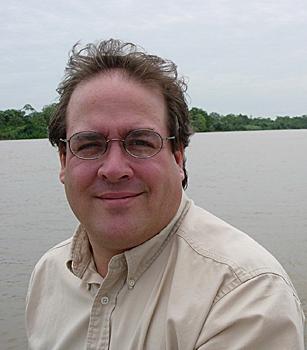
The Amazonian Center of Excellence for Malaria Research, headed by Joseph Vinetz, MD, professor of medicine and tropical disease specialist at University of California San Diego School of Medicine, will receive up to approximately $8.3 million over seven years from the National Institute of Allergy and Infectious Diseases (NIAID), part of the National Institutes of Health.
The Amazonia center is one of ten International Centers for Excellence in Malaria Research (ICEMR) programs established in 2010, comprising a global network of research centers in malaria-endemic settings, including Africa, Asia, the Pacific Islands and Latin America. The new grant builds upon efforts of the previous seven years in Amazonia.
Except for cases contracted elsewhere and brought here, malaria has largely been eliminated in the United States. In other parts of the world, however, the disease remains persistent. While progress has been made over the past decade in reducing the global disease burden from malaria, more than 3 billion people — almost half the world's population — remain at risk, primarily in parts of Africa, Asia and South America.
In 2015, the World Health Organization estimated there were more than 214 million new cases of malaria and approximately 429,000 deaths. The vast majority are children under the age of 5 or pregnant women. As yet, there is no vaccine and the cause of the disease — a group of parasitic microorganisms called Plasmodium sp. that are transmitted to humans by the bite of an infected mosquito — evolve constantly to resist drug treatments.
Vinetz said the role and impact of the Amazonian ICEMR has been significant, with the center collaborating extensively with American, Peruvian and Brazilian researchers and institutions, including Universidad Peruana Cayetano Heredia in Lima, Peru; University of Sao Paulo in Brazil; the Wadsworth Center at the New York State Health Department; Fundação Oswaldo Cruz-Fiocruz; Fundação Oswaldo Cruz-Rondônia and Fundação do Institute de Biociencias-UNESP-Bocutacu, all in Brazil; and the University of Massachusetts Medical School in Worcester, MA.
For example, researchers have worked to identify asymptomatically-infected people who do not display malarial symptoms or require treatment, but who can potentially and continually infect mosquitoes. This month, the Peruvian government announced a new "Malaria Zero 2017-2021" program, led by ICEMR investigators Alejandro Llanos-Cuentas and Dionicia Gamboa, both at the Universidad Peruana Cayetano Heredia.
In Brazil, ICEMR investigator Marcelo Ferreira of the University of Sao Paulo is a member of the Malaria Technical Advisory Group to the Pan American Health Organization, which provides regional guidance for malaria control efforts in South America.
Indeed, another UC San Diego effort, headed by Elizabeth A. Winzeler, PhD, professor in the School of Medicine's pediatric division of host-microbe systems and therapeutics, received a three-year, $4.7 million supplement grant from the Bill & Melinda Gates Foundation earlier this year to advance development of improved therapies for malaria eradication and elimination. Winzeler and an international research team are trying to develop new antimalarial compounds that are less likely to provoke resistance compared to existing drugs.
Vinetz and colleagues collaborate with the Winzeler group, in particular on drug discovery efforts for Plasmodium vivax based on work at the Peruvian study site.
###
Media Contact
Scott LaFee
[email protected]
858-249-0456
@UCSanDiego
http://www.ucsd.edu