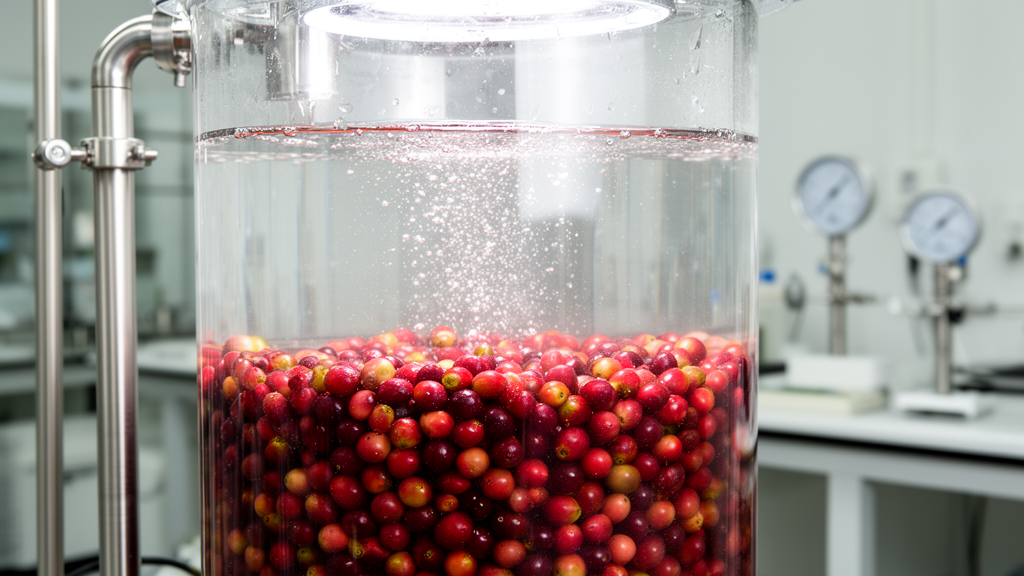
A systematic review and network analysis published in Discover Food reports that Arabica coffee fermentation has emerged as a promising avenue for generating bioactive compounds with potential functional food applications. The investigation, conducted by Arnida Mustafa and colleagues, synthesizes current peer-reviewed evidence regarding the diverse biochemical transformations that take place during post-harvest coffee processing. By examining the types of bioactive compounds generated or transformed during Arabica coffee fermentation, the researchers established an evidence-based synthesis of how microbial activity and processing parameters alter the chemical properties and potential functional applications of the coffee bean.
The primary aim of the systematic review and network analysis was to synthesize available scientific evidence across three distinct and interconnected areas of inquiry. Specifically, the authors sought to determine the specific types of bioactive compounds generated or transformed throughout Arabica coffee fermentation, examine how microbial communities and processing parameters influence compound formation, and assess the potential health-related functions and functional food applications associated with these resulting metabolites. Through this comprehensive framework, the review evaluates the complex interactions between microbial consortia, processing parameters, and metabolite formation during the handling of Arabica coffee.
To compile the research evidence, the investigators performed a comprehensive literature search in the Scopus database adhering strictly to bibliometric standards and PRISMA guidelines.
The bibliometric analysis revealed a steadily growing research trend within the scientific community, reflecting expanding global interest in Arabica coffee fermentation and functional metabolite production. Among participating countries, Brazil emerged as the clear global leader in this scientific field, demonstrating the highest overall level of scientific output.
Evidence synthesized in the review indicates that the fermentation process significantly modifies multiple classes of chemical constituents in Arabica coffee. Specifically, the collected data show major transformations across organic acids, polyphenols, caffeine, chlorogenic acids, and volatile compounds, with these biochemical modifications primarily mediated by lactic acid bacteria and yeasts.
Controlled fermentation strategies, specifically the use of starter inoculation and the precise regulation of processing temperature, were consistently associated with improved metabolite consistency across the reviewed literature. Furthermore, studies evaluated by the team demonstrated that these controlled fermentation interventions were consistently associated with enhanced sensory attributes in the resulting coffee.
In evaluating potential health-related functions, the review identified several studies that associate fermentation-derived coffee metabolites with antioxidant, anti-inflammatory, and neuroprotective potential, supporting their practical relevance in the development of functional foods. Despite these promising biological associations, the authors emphasized critical limitations in the current evidence base, pointing out that substantial heterogeneity in fermentation conditions across studies and limited clinical validation constrain direct health claims. Overall, the review synthesizes current knowledge on microbial-metabolite interactions in Arabica coffee fermentation and highlights strategic directions focused on improving process standardization and rigorous functional validation.
Subject of Research: Bioactive compound transformations and microbial dynamics in Arabica coffee fermentation
Article Title: Systematic review and network analysis of fermentation-derived bioactive compounds in Arabica coffee
Article References: Mustafa, A., Salengke, S., Laga, A., Bastian, F., Hasizah, A., Dirpan, A., Reta, R., Fausiah, A., Dewi, E. K., & Fadliah, M. (2026). Systematic review and network analysis of fermentation-derived bioactive compounds in Arabica coffee. Discover Food. https://doi.org/10.1007/s44187-026-01132-3
Image Credits: AI Generated
DOI: 10.1007/s44187-026-01132-3
Keywords: Arabica coffee, coffee fermentation, bioactive compounds, lactic acid bacteria, yeasts, systematic review, network analysis, functional food, Systematic, review, network, analysis
News Source: Alan Morgan. (November 10, 2026). Controlled Arabica Coffee Fermentation Modifies Key Bioactive Metabolites, Systematic Review Finds. Scienmag.