A study published in Behavioral and Brain Functions reports that combining the probiotic Lactobacillus rhamnosus GG (LGG) with high-intensity interval training (HIIT) improved memory function and metabolic markers in rats fed a high-fat diet. The research, led by Farshad Karami and colleagues from Tehran University of Medical Sciences, investigated whether this dual intervention could mitigate the cognitive and physiological deficits associated with diet-induced obesity. The findings suggest that targeting both the gut microbiome and physical activity may offer a multi-pathway approach to protecting brain health in metabolic disorders.
The study utilized 32 male Wistar rats, which were randomly assigned to four groups of eight animals each. All rats were fed a high-fat diet for 16 weeks to induce metabolic stress and cognitive impairment. The intervention groups received LGG, HIIT, or both, administered from the ninth to the sixteenth week of the study. The control group received only the high-fat diet and a phosphate-buffered saline vehicle. This design allowed the researchers to isolate the effects of each intervention and assess their combined impact on behavioral, electrophysiological, and biochemical outcomes.
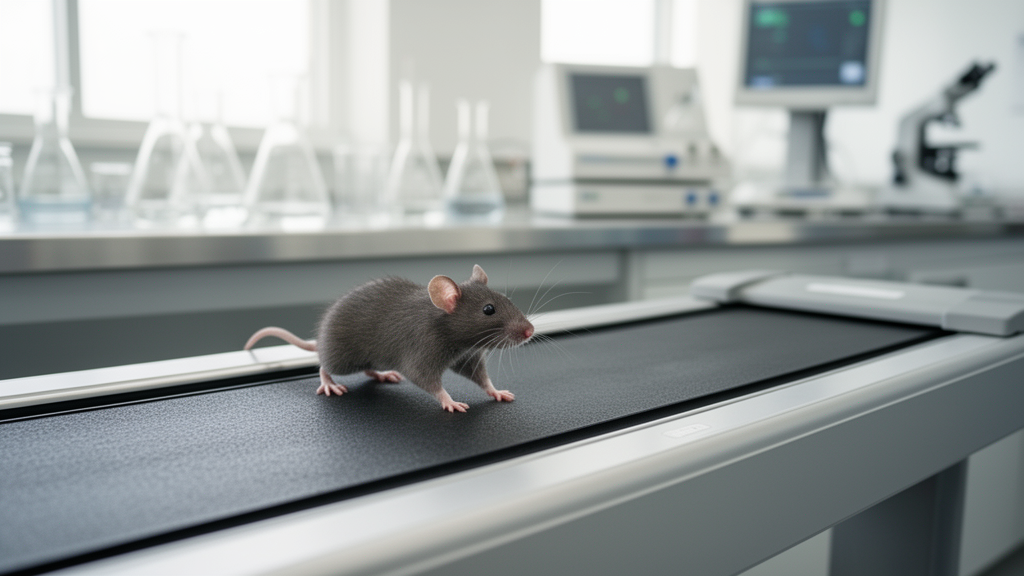
High-intensity interval training was performed on a motorized treadmill, with rats running at 100% of their individual maximal speed for two-minute intervals followed by two minutes of rest. This protocol was repeated for 15 intervals per session, four times a week. The probiotic LGG was administered orally via gavage at a dose of 1 × 10¹⁰ colony-forming units per rat daily. The researchers selected LGG for its documented psychobiotic properties and its ability to enhance gut barrier integrity, which is often compromised in high-fat diet models. Blinding was maintained throughout the study, with experimenters unaware of group allocation during behavioral and biochemical assessments.
Behavioral testing revealed that the high-fat diet significantly impaired working memory, as measured by the Y-maze task, where rats showed reduced spontaneous alternation and fewer arm entries compared to treatment groups. Both LGG and HIIT, either alone or in combination, significantly improved these working memory metrics. In the three-chamber sociability test, the high-fat diet group spent significantly more time investigating an empty cage than a conspecific rat, indicating impaired social motivation. In contrast, the group receiving both LGG and HIIT showed a significant preference for the stranger rat, suggesting that the combined intervention was most effective in restoring social behavior.
Electrophysiological recordings from the hippocampus provided further evidence of cognitive improvement. Long-term potentiation (LTP), a key mechanism underlying learning and memory, was significantly reduced in the high-fat diet group. However, LTP was restored in rats that received HIIT or the combination of HIIT and LGG. The study also measured paired-pulse facilitation, an indicator of short-term synaptic plasticity, which was impaired in the high-fat diet group but improved in the treatment groups. These electrophysiological changes suggest that the interventions helped preserve synaptic function in the dentate gyrus, a region of the hippocampus critical for memory formation.
Biochemical analyses showed that the high-fat diet led to increased serum levels of triglycerides, cholesterol, low-density lipoprotein (LDL), and leptin, while decreasing high-density lipoprotein (HDL). Both LGG and HIIT, alone or combined, significantly lowered these adverse lipid markers and leptin levels. Additionally, liver enzymes, including aspartate transaminase (AST), alanine transaminase (ALT), and alkaline phosphatase (ALP), were elevated in the high-fat diet group but normalized in the treatment groups. These metabolic improvements indicate that the interventions helped mitigate the systemic dyslipidemia and hepatic stress associated with high-fat diet consumption.
Oxidative stress markers in the hippocampus were also evaluated. The high-fat diet group exhibited significantly lower activities of the antioxidant enzymes superoxide dismutase (SOD) and catalase compared to the treatment groups. Both LGG and HIIT increased the levels of these enzymes, with the combined intervention showing particularly significant effects. The researchers noted a positive correlation between the improvement in working memory and the increase in hippocampal antioxidant enzyme activity, suggesting that reduced oxidative stress may contribute to the observed cognitive benefits. However, the study did not directly measure gut microbiota composition or inflammatory cytokines, limiting the ability to establish a direct causal link between gut health and brain function.
The authors propose that the combined intervention works through complementary mechanisms on the gut-brain axis. HIIT may enhance systemic metabolism and gut mucosal perfusion, creating a favorable environment for probiotic colonization. Simultaneously, LGG may strengthen the intestinal barrier, reducing the leakage of bacterial endotoxins into the bloodstream, which can trigger systemic inflammation and oxidative stress. This reduction in peripheral inflammatory drivers may, in turn, protect hippocampal neurons and support synaptic plasticity. The study highlights the potential of lifestyle and microbiome-based therapies as a strategy for preventing metabolic and cognitive disorders, although the findings are limited to a rodent model.
Limitations of the study include the use of only male rats, which limits the generalizability of the findings to female populations. The absence of a standard chow diet control group for the intervention arms also prevents a definitive conclusion on whether the treatments fully restore normal function or merely attenuate diet-induced damage. Furthermore, the correlational nature of the findings means that causality cannot be inferred from the data presented. The researchers emphasize that direct validation of the proposed gut-brain axis mechanisms, including microbiome sequencing and gut permeability assays, is necessary for future investigations.
This study provides a preclinical proof of concept that combining probiotic supplementation with structured exercise training may produce superior cognitive benefits compared to either intervention alone. The results support the rationale for future randomized controlled trials in human populations, particularly those at risk for obesity-associated cognitive impairment. While direct translation to humans requires caution due to differences in gut microbiota and exercise tolerance, the findings offer a promising direction for developing multi-modal interventions that address both metabolic and neurological aspects of diet-induced health decline.
Beyond general health indicators, the researchers tracked nutritional intake and weight progression throughout the sixteen-week experiment. Rats consumed either standard maintenance chow containing 12 percent of calories from fat or a high-fat diet providing 60 percent of calories from fat, with consumption monitored daily after the active dark cycle. Animals fed the high-fat regimen showed sustained increases in food consumption and body mass. Statistical analysis demonstrated that weight divergence emerged over time, with all three intervention groups displaying significant reductions in weight gain relative to the untreated high-fat cohort between weeks twelve and sixteen. Daily food consumption also dropped significantly after eleven weeks in both the interval training group and the combined probiotic-exercise group, whereas high-fat control animals maintained elevated intake.
The physical training protocol incorporated tailored exercise thresholds rather than uniform running speeds. Before the intervention, rats completed treadmill familiarization at five to ten meters per minute. Investigators then determined each animal’s baseline capacity through an incremental test starting at eight meters per minute and increasing by one meter per minute every two minutes until exhaustion. Training sessions comprised fifteen cycles alternating two minutes of running at full individual capacity with two minutes of complete rest. To accommodate adaptations, researchers retested maximal running capacity at five weeks and raised speeds by one meter per minute each week. Strict experimental standards also defined exclusion benchmarks, disqualifying any animal missing over four exercise sessions, losing more than twenty percent of initial body weight, or exhibiting unstable baseline electrophysiological signals.
Surgical and electrophysiological evaluations provided granular insight into hippocampal circuitry. Under urethane anesthesia, stimulating electrodes were positioned within the medial perforant pathway, while recording electrodes targeted the dentate gyrus granule cell layer to capture field potentials and population spike amplitudes. High-frequency conditioning delivered ten trains of ten pulses at 400 hertz to elicit potentiation. In evaluations of short-term synaptic plasticity, paired pulses delivered across intervals from 20 to 300 milliseconds revealed clear impairments in the high-fat diet group, which failed to enhance postsynaptic responses at brief intervals. Animals receiving the probiotic alone or alongside exercise demonstrated significantly restored paired-pulse ratios across all tested intervals, whereas exercise alone restored responses primarily at shorter intervals between 20 and 70 milliseconds.
The behavioral assessments also uncovered important distinctions between general sociability and social recognition memory. Although the combined intervention restored sociability in the initial three-chamber test phase, the subsequent discrimination phase told a more nuanced story. When presented with a familiar rat alongside a novel conspecific, all experimental cohorts displayed a slight behavioral tendency to investigate the novel animal, but this trend did not achieve statistical significance between groups. Statistical analysis indicated no significant main effect of treatment group or interaction between group and stimulus type, demonstrating that neither the probiotic nor the exercise regimen measurably altered novel conspecific recognition. The authors emphasized that these subtle behavioral variations warrant future replication using larger cohorts to clarify potential memory effects.
Correlation analyses further illuminated the relationships connecting behavior, neurophysiology, and systemic metabolism. Performance on the Y-maze alternation test correlated positively and significantly with hippocampal superoxide dismutase and catalase concentrations, reinforcing the link between antioxidant preservation and working memory. However, alternation scores showed no statistically significant correlation with electrophysiological potentiation measurements or circulating leptin concentrations. The investigators also acknowledged an overarching interpretive challenge regarding weight loss. Because substantial reductions in body weight inherently enhance insulin sensitivity, attenuate adipose inflammation, and decrease hepatic lipid deposition, it remains uncertain whether the observed benefits stem from the molecular actions of interval training and bacterial supplementation themselves or secondary improvements driven by weight reduction. The researchers noted that future pair-fed investigations will be necessary to resolve this question.
Subject of Research: Combined effects of probiotic Lactobacillus rhamnosus GG and high-intensity interval training on memory and metabolic parameters in high-fat diet-fed rats
Article Title: The combined effects of probiotic and high-intensity interval training on memory function in high fat diet-fed rats
Article References: Karami, F., Shabkhiz, F., Aadeli, S., Tamtaji, O. R., Aschner, M., Halimi, S., Fahanik Babaei, J., & Nabavizadeh, F. (2026). The combined effects of probiotic and high-intensity interval training on memory function in high fat diet-fed rats. Behavioral and Brain Functions, 22(1), Article 47. https://doi.org/10.1186/s12993-026-00347-9
Image Credits: AI Generated
DOI: 10.1186/s12993-026-00347-9
Keywords: probiotics, high-intensity interval training, memory function, high-fat diet, rats, hippocampal plasticity, oxidative stress, gut-brain axis, metabolic health, Behavioral and Brain Functions, combined, effects
News Source: Daisy Hatcher. (November 10, 2026). Probiotic Plus HIIT Improves Memory in Rats. Scienmag.