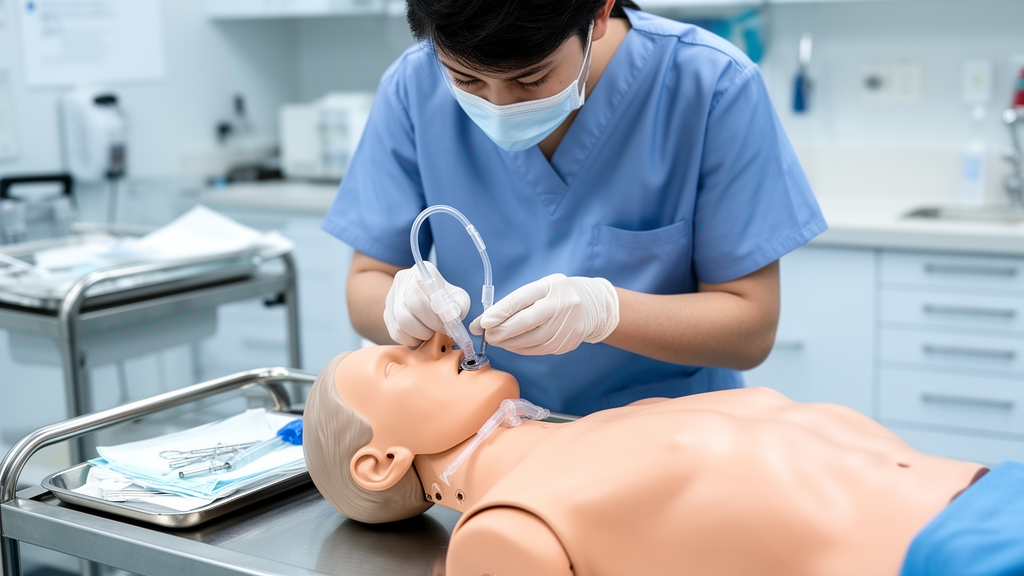
A randomized controlled study published in Supportive Care in Cancer found that simulation-based training was the most effective method for teaching tracheal suctioning skills to caregivers of patients with tracheostomies. The research, conducted by Yeliz Şapulu Alakan, Neriman Akansel, and Olgun Deniz, evaluated the impact of two distinct educational approaches—a mobile application and simulation-based training—against a control group receiving routine bedside instruction. The study aimed to enhance the supportive care process for individuals who have undergone tracheostomy due to head and neck cancers or various other clinical conditions, focusing specifically on the knowledge and practical skills required for safe tracheal suctioning.
The experimental study employed a pretest–posttest control group design to assess the efficacy of these teaching methods. A total of 77 primary caregivers were randomly assigned to one of three groups using block randomization during the study period. The participants were divided into a simulation group, a mobile application–based training group, and a control group. Although 11 participants subsequently withdrew from the study, 66 caregivers, with 22 individuals per group, completed the study and were included in the final analysis. The trial was registered with ClinicalTrials.gov under the identifier NCT05434442, with a registration date of November 30, 2023.
Data collection utilized a comprehensive set of instruments, including the Introductory Information Form, Tracheostomy Suctioning Knowledge Evaluation Form, Tracheostomy Suctioning Skill Evaluation Form, Evaluation Form of the Training Provided, and Result Evaluation Form. These tools allowed the researchers to measure both theoretical knowledge and practical competency at multiple time points. Data were collected at three distinct intervals: pre-intervention, immediately after the training session, and on the 30th day following the training. This longitudinal approach enabled the researchers to assess not only immediate learning gains but also the retention of skills and knowledge over a one-month period.
The intervention groups received specialized training tailored to their assigned method. In contrast, the mobile group utilized a developed application named ‘Trakaspirasyon’ to learn the procedure. The control group, serving as the baseline for comparison, received routine bedside training directly from healthcare professionals.
The results indicated that all assessment scores differed significantly between the three groups, with a p-value of 0.000. The simulation group achieved the highest scores in both knowledge and skill evaluations, followed by the mobile application group.
Furthermore, the study observed that improvements in knowledge and skills were greater at the 30-day follow-up compared to the immediate post-training assessment.
The authors concluded that both simulation-based and mobile application–based training significantly improved caregivers’ knowledge and skills in tracheal suctioning. While simulation was identified as the most effective method, the ‘Trakaspirasyon’ mobile application was noted as a scalable alternative.
Subject of Research: Comparison of simulation and mobile application training for caregiver tracheal suctioning skills
Article Title: Efficiency of different approaches in teaching tracheal suctioning procedure to caregivers of tracheostomy patients: randomized controlled study
Article References: Şapulu Alakan, Y., Akansel, N., & Deniz, O. (2026). Efficiency of different approaches in teaching tracheal suctioning procedure to caregivers of tracheostomy patients: randomized controlled study. Supportive Care in Cancer, 34(11), Article 1180. https://doi.org/10.1007/s00520-026-11424-0
Image Credits: AI Generated
DOI: 10.1007/s00520-026-11424-0
Keywords: tracheostomy, caregiver education, simulation training, mobile health, randomized controlled trial, supportive care, nursing education, home care, Efficiency, different, approaches, teaching
News Source: Nathaniel Bowman. (November 10, 2026). Simulation Beats Mobile Apps for Tracheal Suctioning Skills. Scienmag.