DenseNet201 achieved a top test accuracy of 61.2 percent with a 95 percent confidence interval of plus or minus 2.1 percent in a benchmark assessing five deep transfer learning architectures for grape leaf variety classification. These results are substantially below the 90 percent or higher practical deployment threshold reported for species-level classification. This indicates that fine-grained grape variety classification from leaves alone is fundamentally more challenging than previously recognized.
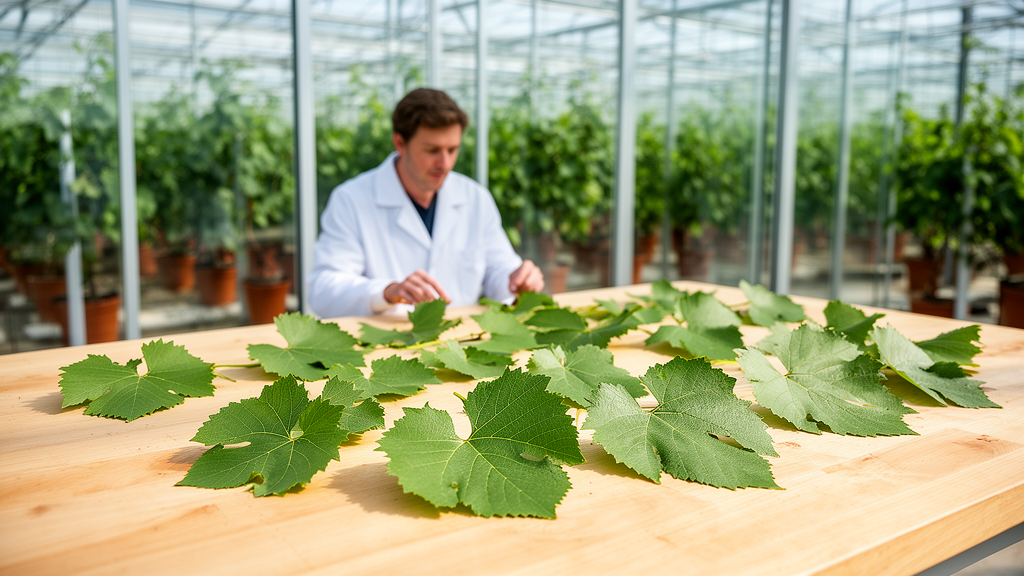
The research evaluated five prominent convolutional transfer learning architectures, comprising DenseNet201, Xception, InceptionV3, MobileNetV2, and InceptionResNetV2, on an image dataset assembled from agricultural fields. The full collection contained 8,000 field-collected photographs spanning eight distinct grape leaf varieties, establishing an even distribution of 1,000 images per variety class. Accurate identification of grape varieties from leaf images is critical for quality control, genetic resource management, and automated agricultural systems.
Unlike prior studies that report only validation accuracy, the authors implemented a rigorous evaluation protocol. To enforce experimental rigor, the investigation implemented a strict partitioning scheme that divided the 8,000 images into 70 percent for training, 15 percent for validation, and 15 percent for independent testing. The evaluation protocol also included five-fold cross-validation.
To address the uncertainty inherent in multi-criteria model selection, the framework incorporated a Fuzzy Decision by Opinion Score Method, abbreviated as FDOSM. The FDOSM framework integrated explicitly defined triangular membership functions and sensitivity analysis.
Following proper test-set evaluation across the partitioned data, DenseNet201 led the field with its 61.2 percent test accuracy, bounded by an uncertainty interval of plus or minus 2.1 percent at a 95 percent confidence level. Xception attained the second-highest performance with an accuracy of 57.8 percent plus or minus 1.9 percent, followed by InceptionV3 at 53.4 percent plus or minus 2.3 percent. MobileNetV2 and InceptionResNetV2 recorded the lowest scores among the benchmarked architectures, registering test accuracies of 51.6 percent plus or minus 2.0 percent and 50.9 percent plus or minus 2.2 percent, respectively.
To confirm the validity of performance differences between the five deep learning networks, the study conducted statistical comparisons using McNemar’s test adjusted with Bonferroni correction. The researchers additionally calculated bootstrap confidence intervals for all evaluated performance metrics to quantify estimation uncertainty. Alongside the empirical results, the authors established a fully reproducible benchmarking resource by providing public access to the underlying code and data split configurations.
The investigation concluded that the primary performance bottleneck limiting classification accuracy across all architectures was data availability rather than the choice of neural network architecture itself.
Subject of Research: Evaluation of transfer learning architectures for grape leaf variety classification
Article Title: FDOSM: a fuzzy multi-criteria evaluation framework for transfer learning in grape leaf variety classification
Article References: Jassim, M. A., Abd, D. H., & Omri, M. N. (2026). FDOSM: a fuzzy multi-criteria evaluation framework for transfer learning in grape leaf variety classification. Neural Computing and Applications, 38(21), Article 860. https://doi.org/10.1007/s00521-026-12552-8
Image Credits: AI Generated
DOI: 10.1007/s00521-026-12552-8
Keywords: grape leaf classification, transfer learning, DenseNet201, FDOSM, agricultural automation, computer vision, machine learning benchmark, plant variety identification, fuzzy, multi-criteria, evaluation, framework
News Source: Blake Davidson. (November 10, 2026). Grape Leaf Variety Classification Benchmark Reveals Major Deep Learning Performance Hurdles. Scienmag.