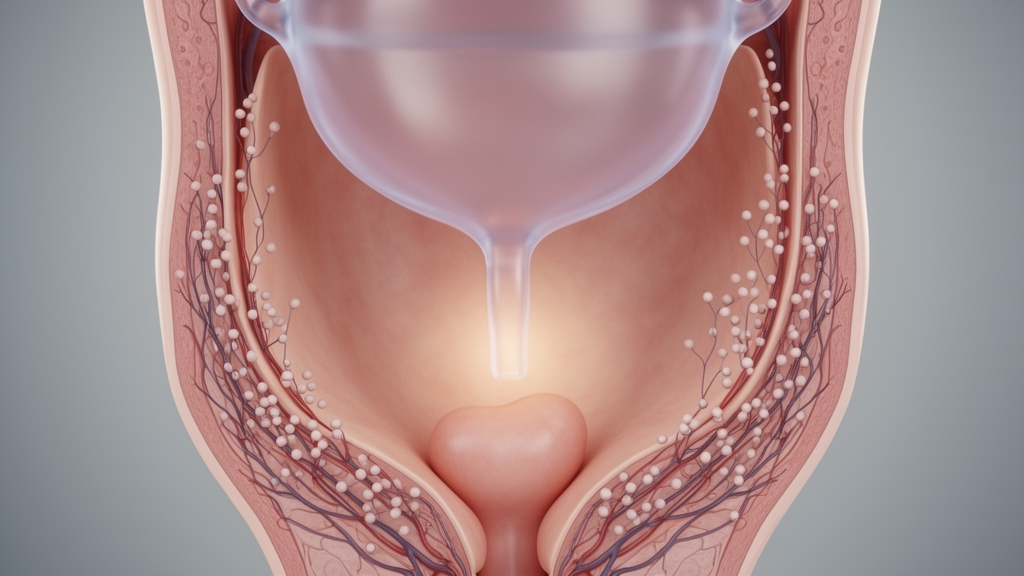
A case report published in CVIR Endovascular describes a rare complication following prostatic artery embolization (PAE), a minimally invasive procedure used to treat lower urinary tract symptoms caused by benign prostatic hyperplasia. In this specific instance, the adenomatous transition zone of the prostate spontaneously detached and sequestered itself within the bladder after the patient received treatment with Squid 12, a liquid embolic agent. The authors, including Quentin Sénéchal and colleagues, documented the event in a 68-year-old man who presented with severe symptoms refractory to standard medical therapy. This report highlights the potential for extensive tissue necrosis and detachment when using ethylene–vinyl alcohol copolymer (EVOH) based embolic agents, raising questions about the role of distal penetration in such outcomes.
The patient, who had no history of diabetes, smoking, or anticoagulant use, was referred for severe lower urinary tract symptoms that did not respond to alpha-blocker therapy and were accompanied by recurrent acute urinary retention. Diagnostic workup revealed a prostate volume of 56 cubic centimeters and an International Prostate Symptom Score (IPSS) of 26 out of 35, indicating severe symptom burden. Prostate-specific antigen (PSA) levels were elevated at 22 ng/mL, but multiparametric MRI showed no suspicious lesions, assigning a PI-RADS score of 2. However, the imaging did reveal marked intravesical protrusion of an enlarged median lobe, a anatomical feature identified as a risk factor for central gland detachment. Previous systematic biopsies had been negative for malignancy.
Bilateral prostatic artery embolization was performed using Squid 12, a liquid embolic agent known for its radiopacity, controlled delivery, and distal embolic penetration. During the procedure, a proximal EVOH plug was formed. The authors noted that no angiographic evidence of non-target embolization was detected, despite the presence of a distal pudendal anastomosis.
Complications began to manifest shortly after the procedure. Acute urinary retention occurred on day 2, followed by a urinary tract infection caused by Enterococcus faecalis. Over the following weeks, the patient developed persistent dysuria, recurrent urinary tract infections, exertional hematuria, and transient incontinence. These symptoms were initially managed as typical infectious and post-embolization complications, and cross-sectional imaging was not obtained during this interval.
At the three-month follow-up, magnetic resonance imaging revealed a dramatic change in the prostate’s anatomy. The median lobe had regressed, leaving a central cavitation that resembled a resection cavity. A large intravesical mass was visible, initially suspected to be a blood clot. Computed tomography urography provided further clarity, demonstrating a hyperdense intravesical lesion composed of devitalized adenomatous tissue. This mass contained dense material consistent with polymerized EVOH, confirming that the embolic agent had penetrated the tissue and remained embedded within the necrotic mass. Cystoscopy confirmed that the mass was a freely mobile necrotic structure corresponding to the en bloc detachment of the transition zone.
The management of this complication involved transurethral fragmentation and evacuation of the sequestered tissue. Histopathological analysis of the evacuated mass confirmed extensive ischemic necrosis with embedded embolic material and no evidence of malignancy. Following the evacuation, the patient’s symptoms resolved completely. Six months after the initial PAE procedure, the patient was free of urinary retention, recurrent infections, and hematuria. His IPSS score improved dramatically to 5 out of 35, indicating a return to mild symptom levels. The prostate volume had decreased to 15 cubic centimeters, representing a 73% reduction from the pre-procedural baseline.
The authors discuss the anatomical and procedural factors that may have contributed to this outcome. They note that near-total volume reduction with transition-zone sloughing has been reported previously after PAE, particularly in patients with prominent median lobe protrusion, which was present in this case. However, the sequestration of an entire transition zone containing identifiable polymerized EVOH had not, to their knowledge, been previously described. This raises the question of whether the distal penetration of the liquid embolic agent contributed to the extent of ischemic necrosis or accelerated tissue detachment. The authors emphasize that this cannot be established from a single case and that a comparative assessment across different embolic agents would be necessary to draw definitive conclusions.
This case underscores the importance of early cross-sectional imaging in patients who experience persistent or worsening lower urinary tract symptoms, recurrent infections, or hematuria after PAE. The authors suggest that such symptoms, especially in patients with significant median lobe protrusion, should prompt immediate investigation rather than presumptive treatment for post-embolization syndrome. Delayed diagnosis of tissue sequestration can prolong avoidable morbidity, as seen in this patient who experienced weeks of recurrent infections and hematuria before the mass was identified. The report serves as a cautionary tale for clinicians using liquid embolic agents, highlighting the need for vigilant follow-up and a low threshold for advanced imaging when post-procedural symptoms persist.
The use of Squid 12 and other EVOH-based agents in PAE continues to be explored for their potential to provide more controlled and distal embolization. The spontaneous intravesical sequestration described here is a rare but serious event that requires careful management.
Subject of Research: Complications of prostatic artery embolization with liquid embolic agents
Article Title: Spontaneous intravesical sequestration of the adenomatous transition zone after prostatic artery embolization with Squid 12
Article References: Sénéchal, Q., Grinholtz, D., Bravetti, M., Paulatto, L., & Laouisset, L. (2026). Spontaneous intravesical sequestration of the adenomatous transition zone after prostatic artery embolization with Squid 12. CVIR Endovascular, 9(1), Article 98. https://doi.org/10.1186/s42155-026-00757-w
Image Credits: AI Generated
DOI: 10.1186/s42155-026-00757-w
Keywords: prostatic artery embolization, Squid 12, EVOH, benign prostatic hyperplasia, intravesical sequestration, case report, lower urinary tract symptoms, median lobe protrusion, Spontaneous, intravesical, sequestration, adenomatous
News Source: Ophelia Keating. (November 10, 2026). Prostate Tissue Detaches Into Bladder After Embolization Treatment. Scienmag.