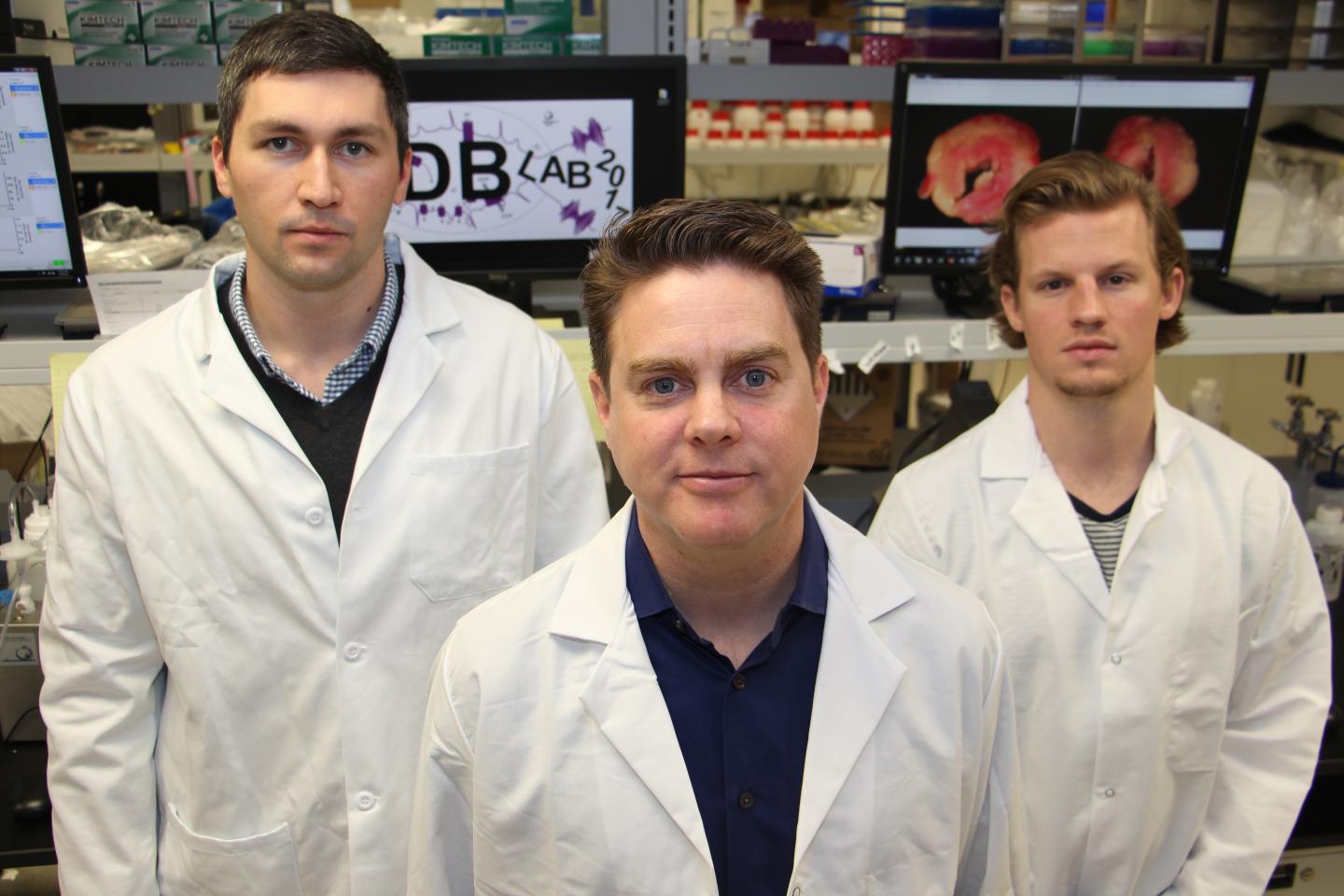
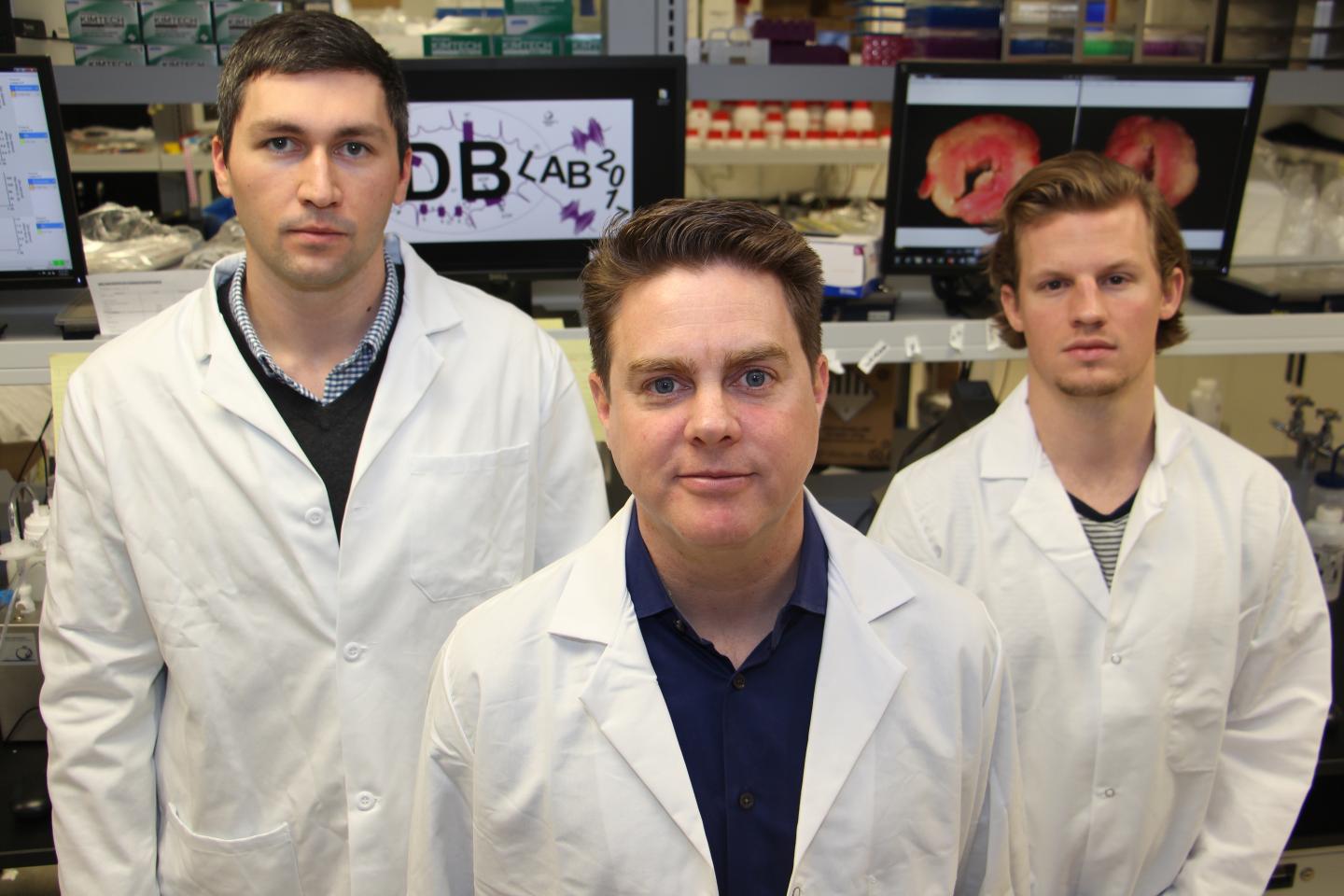
Credit: Virginia Tech College of Agriculture and Life Science
Researchers are one step closer to understanding heart disease at a microscopic level, a breakthrough that could influence future treatments for millions of people.
In a recent study, Virginia Tech researchers teamed up with cardiologists and heart therapy scientists from across the U.S. and Europe and found that dysfunction at the molecular level is present in heart failure. Understanding this abnormality could lead to new approaches for treating the No. 1. killer among men and women worldwide.
"There's significant potential to improve the lives of people who are suffering from heart disease," said David A. Brown, associate professor in the Department of Human Nutrition, Foods, and Exercise in the Virginia Tech College of Agriculture and Life Sciences. "The hope is we can restore heart cell function and ultimately improve treatments for people with ailing hearts."
Brown was first author of an article published in March 14 print edition of Nature Reviews Cardiology.
Heart disease is the leading cause of death among people around the world, and poses a significant economic burden that is projected to double over the next 20 years. Discovering new treatments for a condition with no good alternatives will have significant impact on individuals and the overall economy.
The research delves into energy production at the mitochondrial level. Mitochondria are the powerhouses inside each cell that make energy from food. As the heart is continuously pumping, it is one of the biggest users of energy in the human body. Accordingly, mitochondrial function is essential to support heart pumping 115,000 times per day, 365 days per year.
"Mitochondria generate energy and across many disease states mitochondria become dysfunctional," said Brown, who has been studying the heart for his entire career and is a member of the Faculty of Health Sciences and the Virginia Tech Center for Drug Discovery. "Since there are no therapies that directly improve mitochondrial function, we believe restoring cellular energy production can impact disease states."
The research found that in instances of heart disease, mitochondria aren't producing the same levels of energy as those in a healthy heart.
"Although the pathophysiology of heart failure is complex," the article states, "mitochondrial dysfunction seems to be an important target for therapy to improve cardiac function directly."
Brown's team's approach was to understand what causes dysfunction in energy production and expand the understanding of disease progression for medical professionals.
"If we can help the heart make energy better, there's the potential for new treatments," he said.
This type of dysfunction is common in failing human hearts. Brown and Virginia Tech Ph.D. students Justin Perry and Mitchell Allen looked at over 25 years of data and concluded that energy production in failing human heart is impaired across many different sub-types of heart failure.
But what has more interest to the general public is how this research could influence future treatment for heart disease. Understanding energy production at the cellular level can help researchers and industry partners develop new therapies, discover new compounds, and understand what happens when mitochondria become dysfunctional.
And it starts at a level so small, most medical professionals might not even think about it. But a better understanding of the molecular causes of impaired cellular energy production will continue to advance new treatments for heart disease.
###
Media Contact
Zeke Barlow
[email protected]
540-231-5417
@VTresearch
http://www.vtnews.vt.edu