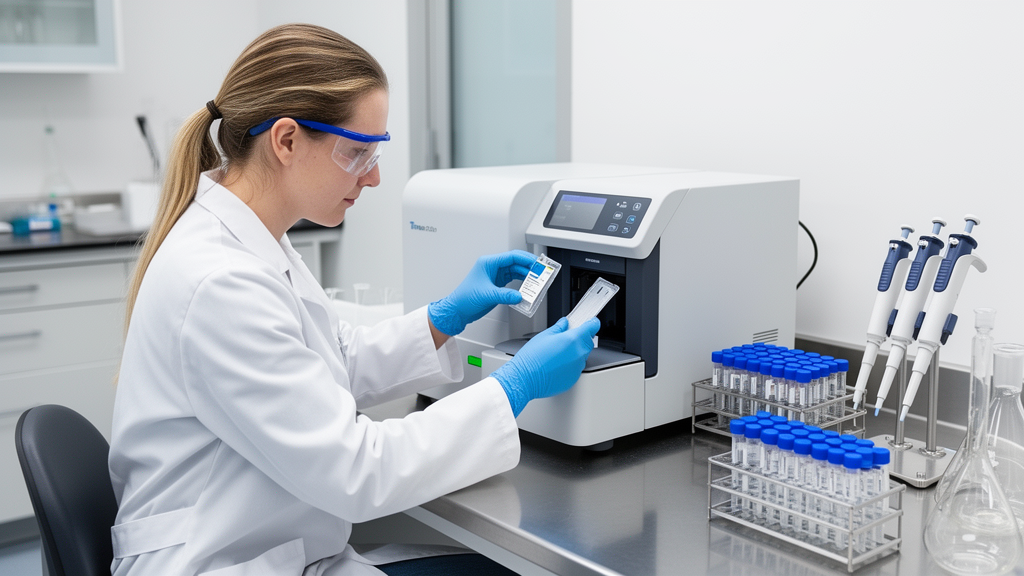
A modeling analysis indicates that health authorities can achieve ambitious tuberculosis diagnostic targets over three years using near-point-of-care nucleic acid amplification tests at approximately the same overall expenditure required to operate current testing systems for just one single year. By examining diagnostic cost trajectories across two hypothetical countries, investigators demonstrated that implementing newer, lower-cost near-point-of-care platforms as the initial diagnostic test yields substantial financial savings compared to established low-complexity automated nucleic acid amplification tests. The modeled strategies revealed that shifting to near-point-of-care molecular technologies can significantly lower budgetary burdens across varying testing trends and ambitious national case detection objectives.
The research focuses on the urgent global need to close the diagnostic gap, as the world remains far from achieving universal access to rapid tuberculosis testing aligned with the diagnostic standard established by the World Health Organization. Although World Health Organization-recommended molecular rapid diagnostics, including low-complexity automated nucleic acid amplification tests, have substantially improved tuberculosis detection worldwide, their broader scale-up has been severely constrained by high capital investments, ongoing maintenance requirements, and expensive consumable costs. Consequently, lower-cost near-point-of-care molecular options have recently emerged, presenting public health programs with an important opportunity to broaden testing coverage while mitigating the substantial financial demands associated with existing automated testing hardware.
To evaluate the precise budget impact of introducing these newer platforms as an initial diagnostic modality rather than relying on established molecular tools, researchers Pushpita Samina, Puneet Dewan, Chase Mertz, Mikashmi Kohli, and Madhukar Pai constructed a flexible cost calculator. The computational model was initially structured within Microsoft Excel, where all essential analytical parameters were arranged systematically in an input sheet that utilized standardized labeling conventions. Within the spreadsheet software, separate worksheets were constructed to formalize distinct diagnostic scenarios and perform the necessary economic calculations, ultimately generating a comprehensive overview worksheet that synthesized the outcomes across various diagnostic cost categories.
Following the completion of validation procedures for the initial spreadsheet model, the authors translated the entire computational tool into the R programming language, utilizing R version 2025.09.1 + 401. To ensure unrestricted international access for health planners and policymakers, the team packaged the executable model as an interactive Shiny web application designated as app.R, offering the tool for free global use. This software implementation allows users to simulate presumptive tuberculosis testing demands and contrast the operational costs of established low-complexity automated molecular diagnostics directly against the budget requirements of newer near-point-of-care test platforms.
The modeling demonstrated clear financial advantages when applied to two hypothetical national contexts evaluated across different testing projections. In hypothetical Country A, adopting near-point-of-care testing as the primary diagnostic generated cost savings of 56.4 percent under Scenario 1, which reflected current testing trends, and 60.5 percent under Scenario 2, which modeled ambitious diagnostic targets. In hypothetical Country B, the corresponding cost differences reached 44.2 percent in Scenario 1 and 59 percent in Scenario 2. The authors emphasized that because near-point-of-care molecular platforms reduce critical capital and equipment maintenance expenses, tuberculosis programs can test and detect more cases within their existing operational budgets, accelerating global progress toward universal rapid diagnosis.
Subject of Research: Cost comparison modeling of molecular tuberculosis diagnostic testing strategies
Article Title: An online, open-access, cost comparison tool for presumptive tuberculosis testing using low complexity, automated, nucleic acid amplification tests (LCaNAAT) versus near point-of-care (NPOCs) molecular tests
Article References: Samina, P., Dewan, P., Mertz, C., Kohli, M., & Pai, M. (2026). An online, open-access, cost comparison tool for presumptive tuberculosis testing using low complexity, automated, nucleic acid amplification tests (LCaNAAT) versus near point-of-care (NPOCs) molecular tests. PLOS Global Public Health, 6(11), e0006559. https://doi.org/10.1371/journal.pgph.0006559
Image Credits: AI Generated
DOI: 10.1371/journal.pgph.0006559
Keywords: tuberculosis, molecular diagnostics, cost comparison, diagnostic access, health economics, point-of-care testing, LCaNAAT, public health, online, open-access, cost, comparison
News Source: Ophelia Keating. (November 10, 2026). New Tool Evaluates Cost Differences in Molecular Tuberculosis Diagnostic Testing Strategies. Scienmag.