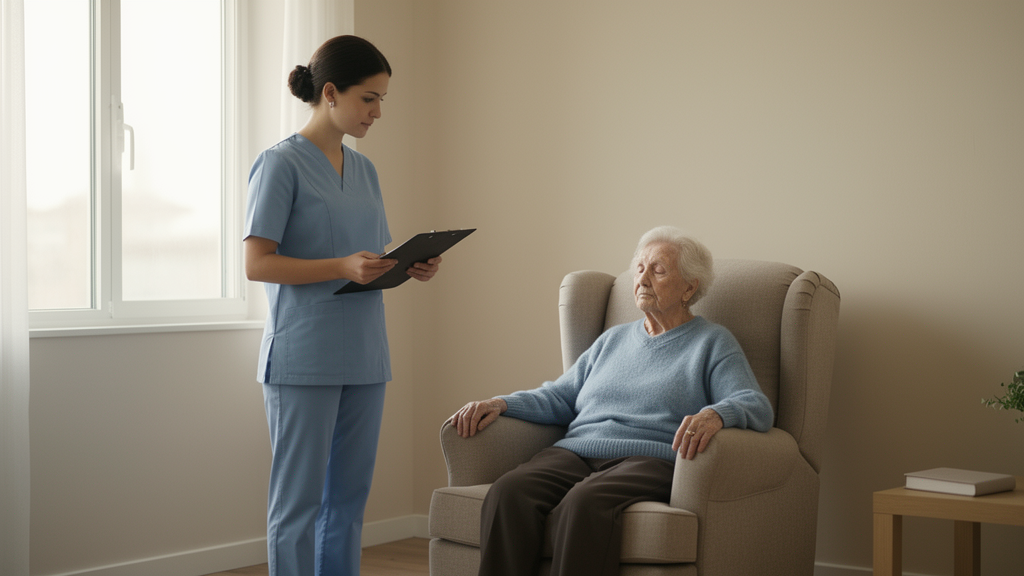
A recent qualitative interview study published in BMC Palliative Care examines the specific barriers and facilitators that influence how homecare staff recognize and discuss palliative care needs among clients.
The study was motivated by the observation that people with incurable illnesses may develop palliative care needs during the course of their disease. In the context of homecare, the individuals who spend the most time with clients are often the first to notice signs of deterioration. These roles include nurses, nurse assistants, welfare workers, and household assistants. However, prior to this research, it remained unclear which specific factors facilitate or hinder these professionals in fulfilling this critical role. The researchers therefore designed an interview study to explore these barriers and facilitators in depth.
The methodology involved a qualitative approach using semi-structured interviews. The study included eight group interviews and 11 individual interviews, encompassing a total of 44 participants from four different organizations. The sample consisted of 10 household assistants, 9 welfare workers, and 25 care workers, which included nurses and nurse assistants. The resulting transcripts were analyzed thematically to identify recurring patterns and distinct themes across the different professional groups.
Four main themes emerged from the analysis of the interview data. The first theme was knowledge. The findings indicated that nurses and nurse assistants generally have the medical knowledge necessary to recognize deterioration in clients. In contrast, most welfare workers and household assistants reported lacking this specific training. Despite these differences, all disciplines specifically reported a gap in their knowledge regarding palliative care, suggesting a universal need for further education in this area.
The second theme identified was time. The study found that nurses often lack the time to fully recognize and discuss deterioration with clients and their families. On the other hand, welfare workers and household assistants spend more time with clients, which facilitates their ability to recognize changes in condition. This observation highlights a paradox where those with less medical training may have better opportunities to notice subtle changes due to their longer interactions with clients, despite their knowledge gap.
The third theme focused on collaboration and communication. The research revealed that nurses, nurse assistants, and welfare workers have established channels to report their observations. However, household assistants were found to have limited opportunities to share their potentially valuable information with the rest of the care team.
The final theme emphasized the importance of relationships. All disciplines indicated that good relationships with clients and their relatives are essential for recognizing and discussing deterioration. These strong relationships help clients and relatives feel comfortable expressing their wishes and needs. The study concludes that what is perceived as a barrier for one discipline can be a facilitator for another, and vice versa. For example, the time constraints for nurses are a barrier, while the time spent by household assistants is a facilitator for noticing changes.
The authors suggest that palliative care education and stronger collaboration and communication between disciplines are essential to support homecare staff. By addressing the knowledge gaps and improving communication channels, homecare teams can better support clients in receiving the care they wish to receive. The study underscores the importance of creating a safe environment that brings together different perspectives, ensuring that all members of the care team can contribute to the recognition and discussion of palliative care needs.
Subject of Research: Barriers and facilitators for homecare staff in recognizing and discussing palliative care needs
Article Title: Barriers and facilitators for recognising and discussing palliative care needs of homecare clients: an interviews study among household assistants, welfare workers, nurses and nurse assistants
Article References: Witteveen, A. M. L., Pasman, H. R. W., & Onwuteaka-Philipsen, B. D. (2026). Barriers and facilitators for recognising and discussing palliative care needs of homecare clients: an interviews study among household assistants, welfare workers, nurses and nurse assistants. BMC Palliative Care. https://doi.org/10.1186/s12904-026-02322-7
Image Credits: AI Generated
DOI: 10.1186/s12904-026-02322-7
Keywords: palliative care, homecare, qualitative research, healthcare barriers, interdisciplinary collaboration, nursing, welfare workers, patient communication, Barriers, facilitators, recognising, discussing
News Source: Ophelia Keating. (November 10, 2026). Homecare Staff Face Barriers in Recognizing Palliative Care Needs. Scienmag.