Non-autistic adults assigned significantly lower empathy ratings to the spoken responses of autistic children compared to non-autistic children, a disparity that widened among perceivers with higher levels of autism knowledge. This finding emerged from a study published in the Journal of Autism and Developmental Disorders, which examined how non-autistic individuals interpret the reactions of autistic and non-autistic children. The research challenges the assumption that greater understanding of autism necessarily leads to more favorable or neutral perceptions of autistic communicative styles. Instead, the data suggest that knowledge grounded in a medical paradigm may reinforce evaluative biases against distinct empathetic expressions.
The study was motivated by the double empathy problem theory, which posits that interaction challenges between autistic and non-autistic individuals stem from differing expectations rather than a one-way deficit in empathy. While deficit-based models have historically characterized autistic individuals as lacking empathy, the double empathy framework asserts that empathy functions bidirectionally. The researchers aimed to test whether non-autistic perceivers, who largely establish societal standards for social communication, interpret the empathetic responses of autistic children differently from those of non-autistic children. This investigation sought to illuminate potential causes of interaction difficulties and the role of perceiver bias in stigmatization.
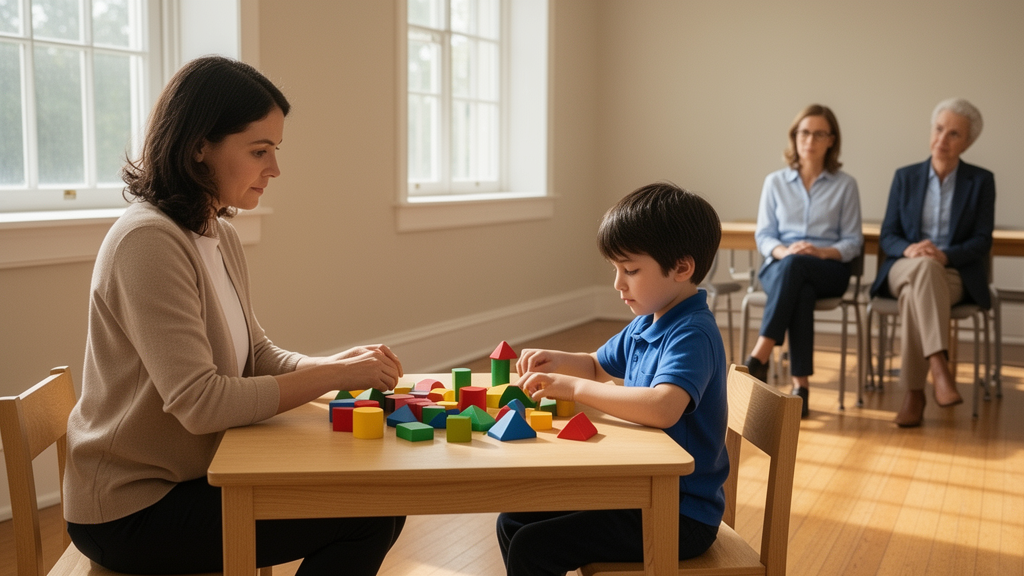
To conduct the study, the team recruited 82 Chinese children aged 48 to 114 months to serve as stimulus participants. Of these, 46 were diagnosed with autism and 36 were non-autistic. The children participated in a scenario-based task involving eight episodes designed to evoke four specific emotions: happiness, anger, sadness, and fear. In each scenario, two experimenters acted out an emotional situation, and the child was asked to answer three questions assessing cognitive empathy, affective empathy, and prosocial responses. The children’s verbal responses were transcribed to isolate speech content from visual and vocal cues, ensuring that the subsequent ratings focused solely on the substance of the communication.
The rating participants consisted of 61 non-autistic Cantonese-speaking university students aged 18 to 36. These adults were blinded to the clinical status of the children, meaning they did not know which transcripts belonged to autistic or non-autistic participants. The perceivers rated the children’s responses on a scale of 1 to 5, evaluating the child’s ability to understand emotions, empathize with those emotions, and suggest suitable prosocial responses. The study also measured the perceivers’ understanding of autism using the Autism Stigma and Knowledge Questionnaire, their autism-related traits via the Broad Autism Phenotype Questionnaire, and their prior interaction experiences with autistic individuals.
The analysis revealed that non-autistic perceivers gave lower ratings to the empathetic responses of autistic children than to those of non-autistic children. When no other variables were included in the model, the difference in marginal means was 0.21 points on the 5-point scale, with autistic children receiving an average rating of 2.78 and non-autistic children receiving 2.99. This difference remained statistically significant even after controlling for prior interaction experience, autistic traits, and autism knowledge. The effect size was small, with a Cohen’s d of 0.31, indicating that while the bias was consistent, the magnitude of the difference was modest.
Contrary to the initial hypothesis that greater autism knowledge would reduce the rating disparity, the findings showed the opposite trend. Perceivers with higher scores on the autism knowledge questionnaire demonstrated a more pronounced difference in their evaluations of autistic versus non-autistic responses. A Johnson–Neyman simple slope analysis indicated that as autism knowledge scores increased, the gap in ratings between the two groups also increased. At the lowest level of autism knowledge in the sample, no significant difference was observed between the ratings of autistic and non-autistic responses. However, with a one-standard-deviation increase in knowledge scores, the difference became statistically significant, with autistic responses rated significantly lower.
This knowledge-driven bias was specifically driven by the ratings of prosocial responses, rather than cognitive or affective empathy. When perceivers with high autism knowledge evaluated the suggestions autistic children made for how a friend should respond to an emotional situation, they rated these responses more unfavorably than the suggestions made by non-autistic children. For example, in a fear scenario, an autistic child might suggest that a friend turn on the light, a practical solution, whereas a non-autistic child might suggest offering verbal comfort. Non-autistic adults with higher medical-model knowledge tended to view the practical, non-conforming suggestions as inappropriate or deficient compared to the standard emotional reassurance offered by non-autistic children.
The researchers suggested that this pattern may stem from the nature of standard autism knowledge as measured by the questionnaire, which is deeply contextualized within a deficit-oriented medical paradigm. This paradigm focuses on diagnostic criteria, clinical etiology, and behavioral treatment, often framing autism as an internal dysfunction requiring remediation. Non-autistic observers who endorse these medical perspectives may be primed to view conventional, non-autistic social expressions as the normative benchmark. Consequently, when autistic individuals offer functional, practical solutions that deviate from these established majority standards, they may be pathologized as lacking empathy or social competence, despite the functional validity of their responses.
The study highlights the potential impact of these evaluative biases on the design of empathy measures and clinical assessments. Most existing empathy assessments, such as the Empathy Quotient and the Interpersonal Reactivity Index, were designed by and for non-autistic individuals. These standardized tools often neglect the diverse cognitive and neurological processes employed by autistic individuals, prioritizing adherence to conventional behavioral standards. As a result, the varied responses of autistic individuals may be categorized as abnormal, perpetuating the notion that they are devoid of empathy. This bias can introduce systematic errors into research and clinical practice, where non-autistic evaluators may assess autistic responses less positively than non-autistic ones.
The findings also have implications for clinical practice and diagnostic appraisal. Clinicians operating strictly within a deficit-oriented medical framework risk misinterpreting valid, non-conforming prosocial expressions as clinical deficits. The study suggests that professional training should expand beyond traditional diagnostic facts to incorporate neurodiversity-affirming concepts and the double empathy problem. By recognizing that social misunderstandings are bidirectional rather than inherently pathological, clinicians can better differentiate between functional social impairments and distinct, neurodivergent communicative styles. This shift could help mitigate the bias that leads to the misinterpretation of autistic individuals’ empathetic capacities.
Several limitations constrain the generalizability of these findings. The stimulus sample included autistic children who were slightly older on average than the non-autistic children, although the researchers argued that this age discrepancy was unlikely to drive the results, as older age typically correlates with higher socio-cognitive maturity. The findings are based on the judgments of non-autistic perceivers regarding a specific sample of 46 autistic children and may not generalize to the entire autistic population due to its heterogeneity. Additionally, the ratings were based solely on transcripts of spoken responses, so the results may not apply to other communication modalities such as visual or vocal cues. It remains uncertain whether adult perceivers would still rate autistic children lower if their clinical status were disclosed.
Despite these limitations, the study provides evidence that non-autistic adults’ evaluations of empathy are influenced by their understanding of autism. The results indicate that traditional diagnostic education, which emphasizes behavioral conformity and medical deficits, may not be sufficient to foster genuine acceptance of diverse social presentations. Instead, the findings align with the double empathy problem theory, suggesting that interactional breakdowns emerge at the interface of divergent cognitive and social expectations. Future educational and clinical paradigms may need to focus on teaching communicative flexibility and mutual adaptability, rather than enforcing adherence to non-autistic standards, to reduce evaluative disparities between autistic and non-autistic communicators.
Subject of Research: The impact of non-autistic perceivers' autism knowledge on the evaluation of empathetic responses from autistic and non-autistic children.
Article Title: Do Autistic Children Have Empathy? Perspectives From Non-Autistic Perceivers and the Role of Their Understanding About Autism
Article References: So, W.-C., & Li, X.-H. (2026). Do Autistic Children Have Empathy? Perspectives From Non-Autistic Perceivers and the Role of Their Understanding About Autism. Journal of Autism and Developmental Disorders. https://doi.org/10.1007/s10803-026-07594-9
Image Credits: AI Generated
DOI: 10.1007/s10803-026-07594-9
Keywords: autism, empathy, double empathy problem, perception, social communication, medical model, neurodiversity, clinical assessment, cognitive empathy, prosocial behavior, Autistic, Children
News Source: Ophelia Keating. (November 10, 2026). Autism Knowledge Widens Empathy Rating Gap for Autistic Children. Scienmag.