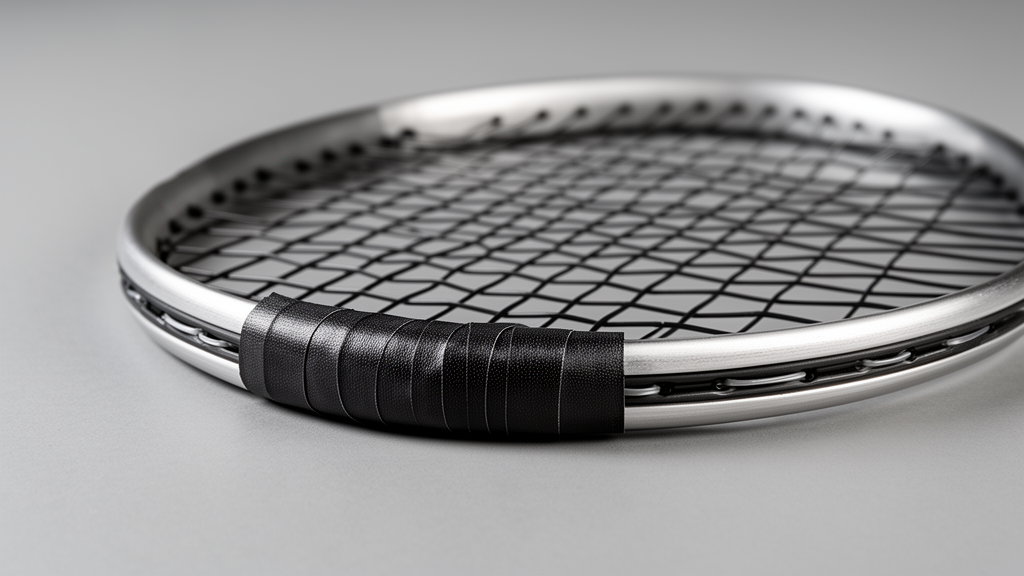
Tennis racket frame customization is a common practice among players, often involving the addition of weighted tape to specific locations on the frame. This modification is typically performed to fine-tune the moments of inertia and the balance point of the racket to match a player’s preference. However, the effect of this added mass on the vibrotactile response at the handle has remained underexplored in scientific literature. A new study published in Sports Engineering examines how adding varying amounts of mass to tennis rackets influences their vibration and shock characteristics. The research provides a detailed analysis of how these customizations affect the physical properties of the racket and the resulting sensations experienced by the player during impact.
The study, conducted by Adeline N. Ripberger and Jan-Anders Mansson, utilized a set of four commercially available rackets to represent a range of balance points from head-heavy to head-light. The rackets were selected to reflect the diversity of options available to athletes, with balance points ranging from six points head-heavy to eight points head-light. To ensure consistency and remove confounding variables, all rackets were strung with Head Synthetic Gut at a fixed pull tension of 25 kg. The researchers applied lead tape to the frames in three specific configurations: at the top (12 o’clock position), at the sides (3 and 9 o’clock positions), and at all locations simultaneously. The amounts of tape added were 5, 10, and 20 grams, representing quantities more typical of player usage than the larger masses used in previous academic studies.
The experimental methodology involved measuring the transverse and polar moments of inertia, commonly known as swingweight and twistweight, respectively. The researchers used a setup where the racket was suspended by a string and prompted to oscillate, recording the time to complete ten periods to estimate the period. This process was repeated three times for each configuration to ensure accuracy. Additionally, the team conducted experimental modal analysis to examine the vibration response at the handle. A single-axis accelerometer was mounted on the racket, and a roving hammer was used to strike 97 specific locations across the stringbed. Each location was struck three times for every racket configuration, with data sampled at a rate of 3.2 kHz to record impact force and acceleration.
The primary outcome of adding mass to the top of the frame was a significant increase in swingweight. For the most head-heavy racket, adding 20 grams of tape resulted in a 22% increase in swingweight and a 4 cm shift in the balance point towards the top of the frame. In contrast, the most head-light racket showed a lower increase of 18% in swingweight under the same conditions. The study found that the initial balance point of the racket determines how much weighted tape is necessary to cause a specific shift in the moments of inertia. This finding underscores the importance of considering the frame’s existing balance when determining the amount of tape required for a desired effect.
Adding tape to the sides of the frame produced a significant increase in twistweight, with less pronounced changes in balance point and swingweight. The most head-heavy racket experienced a 50% increase in twistweight when 20 grams of tape were added to the sides. This effect was more consistent across different racket balances compared to the changes in swingweight. The researchers noted that the tape added to the sides is located near the widest part of the frame, which is furthest from the central axis about which twistweight is measured. This positioning makes the effect on twistweight the most substantial in this configuration.
The study also investigated the effect of weighted tape on the vibration response and the location of the sweetspot. The sweetspot is defined as the location of minimum vibration, specifically the node of the first bending mode. The researchers found that adding mass to the top of the frame resulted in an upward shift in the location of minimum vibration. The extent of this shift was greatest in the most head-heavy racket, where an approximately three-string shift was observed with 20 grams of added mass. Conversely, the most head-light racket showed a smaller shift of one and a half strings under the same conditions. This result highlights the role that racket balance point plays in the effectiveness of weighted tape customization.
In the case of adding tape to the sides, little appreciable difference was observed in the location of minimum vibration. In some instances, such as with the most head-light racket and 20 grams of added mass, a downward shift was noted. This downward shift can be attributed to the additional mass extending below the location of the node line. The researchers also examined the Sweet Area, defined as the area of the stringbed where the Shock Ratio is less than one. Across all test rackets, the Sweet Area increased with the addition of 20 grams of tape at the sides. However, the additional area was most often located at laterally off-center positions near the edge of the stringbed, which are not favorable for impact due to the torques generated at the wrist.
The Shock Ratio, calculated as the ratio of the force at the handle to the applied impact force, was used to assess the jarring force experienced at the hand. The study found that with any added mass, an increase in the Sweet Area was observed. However, the locations of reduced Shock Ratio were not biomechanically favorable for impact. This suggests that the assertion that an expanded sweetspot can be obtained by adding tape to the sides requires further consideration. The researchers emphasized that while the Sweet Area may increase, the practical benefit to the player is limited if the sweet spots are located in areas that are difficult to target during play.
The results of this study reflect the need for more nuanced advice for tennis players regarding the utility and effectiveness of weighted tape customizations. The findings indicate that the initial balance point of the racket is a critical factor in determining the impact of added mass. Players should be aware that the same amount of tape can produce different results depending on the specific racket they are using. The study also highlights the importance of considering biomechanical aspects, joint loading, and associated injury risk when customizing rackets, although these factors were beyond the scope of the current investigation.
Future research could explore the temporal vibration and rate of decay, which may also change with added mass. The study’s focus on the locations of minimum Shock Ratio and vibration nodes provides valuable insights into the relationship between racket customization and player sensation. By bridging the gap between online resource recommendations and previous academic studies, this work offers a more realistic assessment of the effects of weighted tape. The findings contribute to a better understanding of how players can optimize their equipment for performance and comfort, while also acknowledging the limitations and complexities involved in such customizations.
The study was designed to bridge a significant gap in the existing literature regarding racket customization. Previous academic investigations typically utilized much larger masses, ranging from 25 to 54 grams, to observe measurable changes in racket properties. In contrast, online resources and common player practices often recommend adding only 0.5 to 3 grams of tape. By testing quantities of 5, 10, and 20 grams, the researchers aimed to evaluate effects more representative of typical player usage. This approach allows for a more realistic assessment of how small mass additions influence the physical behavior of the racket, moving beyond the extreme modifications seen in earlier laboratory studies.
The experimental setup included specific controls to isolate the effects of the added mass. All four rackets were strung with Head Synthetic Gut at a fixed pull tension of 25 kg, ensuring that string properties did not confound the results. The tape used was 0.64 cm wide lead tape, cut into 12.7 cm strips that weighed approximately 1.25 grams each. These strips were applied in parallel pairs, with each pair weighing about 2.5 grams. This standardized application method allowed the researchers to precisely control the total mass added to each configuration, ensuring that the observed changes in vibration and shock were directly attributable to the weighted tape rather than variations in application technique.
The study also addressed the limitations of the analytical models used to predict racket behavior. While the measured trends in balance point and moments of inertia aligned with previous findings, the extent of the changes differed from predictions made using analytical expressions defined by Cross. The discrepancies were larger in this study, with differences up to 2.1 cm for the balance point and 22.5 kg·cm² for swingweight, compared to smaller differences in earlier work. The authors suggested that these larger discrepancies might be due to human error in the simple timing method used to measure oscillation periods or the fact that the two-segment model may not fit modern racket designs as accurately as it did for the rackets tested in 2001. This highlights the complexity of predicting racket dynamics using simplified mathematical models.
Perceptual thresholds for players were also considered in the interpretation of the results. Previous work by Brody indicated that skilled tennis players can differentiate between swingweight differences of 2.5% and twistweight differences of 5%. The study found that adding 5 grams of tape at the top only resulted in a discernible change in swingweight for the two most head-heavy rackets. Similarly, adding 5 grams at the sides produced a perceptible increase in twistweight for only two of the four rackets. This suggests that the small amounts of tape commonly recommended by online resources may not produce changes that are easily detectable by players, implying that significantly more mass might be necessary to achieve a noticeable difference in feel or performance.
The research also noted that the Sweet Area calculations were sensitive to the thresholding method used. Because the Shock Ratio Profile can have many values close to one, small variations in the measured Shock Ratio values led to large fluctuations in the calculated Sweet Area. This variability made it difficult to rely solely on the absolute values of the Sweet Area for comparison. Instead, the researchers focused on the specific locations within the stringbed that were deemed sweet or otherwise. This approach provided a more robust way to assess the practical implications of the added mass, focusing on where the reduced shock was actually located rather than just the total area affected.
Subject of Research: Does adding weighted tape effect tennis racket vibration and shock?
Article Title: Does adding weighted tape effect tennis racket vibration and shock?
Article References: Ripberger, A. N., & Mansson, J.-A. (2026). Does adding weighted tape effect tennis racket vibration and shock?. Sports Engineering, 29(2), Article 45. https://doi.org/10.1007/s12283-026-00580-5
Image Credits: AI Generated
DOI: 10.1007/s12283-026-00580-5
Keywords: Does, adding, weighted, tape, effect, tennis, racket, vibration, shock, scientific research
News Source: Denise Maddox. (November 10, 2026). Weighted Tape Shifts Tennis Racket Vibration Nodes. Scienmag.