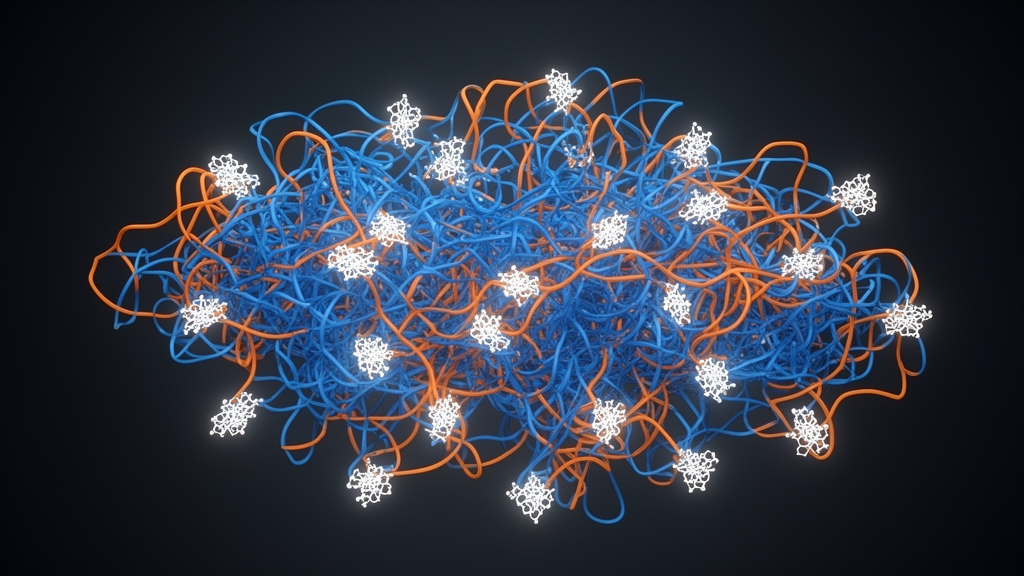
Researchers have developed a computational framework to prioritize specific alternative splicing events in the autism spectrum disorder (ASD) cortex, identifying 18 high-priority candidates for experimental validation. Published in Frontiers in Genetics, the study integrates 34,025 published cortical splicing tests with regional directionality, regulatory context, and reconstructed coding consequences. The primary objective was to connect disease-associated RNA measurements to explicit transcript consequences, providing a traceable route from statistical observation to testable molecular hypotheses. This approach addresses a recurring practical problem in transcriptomics: selecting which splice events warrant targeted measurement when multiple-testing corrections leave no event-level discoveries at the transcriptome-wide level.
The study utilized the cortex and cerebellum resource established by Parikshak et al. (2016) as its primary discovery resource. The cortical cohort comprised 106 samples from 59 donors, including 26 individuals with ASD and 33 controls, sampled from Brodmann area 9 and temporal cortex. The cerebellar vermis cohort included 48 samples from 48 donors, with 22 individuals with ASD and 26 controls. Notably, 46 of the 48 cerebellar donors also contributed cortical tissue, creating a shared-donor design that allows for directly harmonizable regional comparisons within the same source study. This design constraint is critical for interpreting the results, as it measures same-cohort coherence rather than independent replication.
An effect-size-informed rule was applied to the 34,025 cortical events to identify exploratory candidates. The rule required a nominal cortical P value less than 0.01 and an absolute change in percent-spliced-in (ΔPSI) greater than 0.05. This selection process identified 278 exploratory candidates, comprising 228 skipped-exon events, 24 alternative 3′ splice-site events, 14 mutually exclusive exon events, and 12 alternative 5′ splice-site events. Importantly, no cortical event met the transcriptome-wide false-discovery-rate (FDR) significance threshold of 0.05, with the minimum FDR observed being 0.1969. The 278-event set was retained in all subsequent analyses, with analysis-specific eligibility recorded separately to distinguish absent measurements from observed negative results.
Regional concordance analysis revealed structured directionality among the candidates. Among the 267 candidates with evaluable direction in both cortex and cerebellum, 183 were concordant, representing a 68.5% agreement rate. This was compared to a background of 26,915 non-candidate events, of which 14,405 were concordant, or 53.5%. The odds ratio for concordance was 1.89, indicating a 15.0 percentage-point excess in the candidate set. Continuous evidence scores extended this pattern, with Spearman correlations of 0.067 to 0.080 between cortical evidence strength and regional concordance. However, the authors emphasize that this association reflects the shared-donor design and does not establish independent disease replication.
Regulatory context was assessed using RNA-binding protein data, with a focus on RBFOX2. At the primary ±500-bp window, 78 of the 278 candidates overlapped ENCODE RBFOX2 peaks, compared to 24.9% of the eligible background. The adjusted model yielded an odds ratio of 1.94, but this association was model-dependent, with within-gene and binding-permutation tests failing to reach significance. To extend the assessment to a neural context, the team analyzed RBFOX2 eCLIP data from healthy iPSC-derived motor-neuron lines. These separate datasets showed adjusted odds ratios of 2.16 and 2.13, both with q-values of 0.0059. These findings place the nominated cortical events within experimentally observed human neural binding contexts, though they do not measure ASD-associated cortical occupancy directly.
Coding-branch reconstruction was used to translate the event list into specific transcript hypotheses. The analysis classified 92 of the 148 coding-overlap events as in-frame changes, while distinguishing transcript-dependent consequences. A notable example is the PKM gene, where a mutually exclusive exon exchange preserved protein length while substituting 22 amino acids. This sequence-resolved interpretation changes the experimental question from detecting transcript loss to measuring protein-sequence effects. The framework nominated 18 events under the complete-coding-model scope, including 13 retained under a stricter scope that accounts for transcript-model uncertainty. The difference between the two panels is traced to five coding nominations affected by transcript-model scope, providing a clear test of transcript-context resolution.
External validation attempts did not establish FDR-corrected replication. Analyses of the GSE102741 dataset and the PNAS superior-temporal-gyrus resource showed sparse external direction in the final panel. The primary gene-adjusted models for the PNAS resource yielded q-values of 0.059 for bulk tissue and 0.133 for laser-capture neurons. While some events showed the same inclusion direction as the original cortical effect, the donor non-overlap could not be verified, and the preparations came from a single study. Consequently, the external analyses describe source coverage and direction rather than independent replication. The authors note that these results identify the exact measurements that future isoform-resolved cohorts need to extend.
The study also evaluated SRRM4 perturbation resources to resolve event-specific responses. Baseline-adjusted neural SRRM4 comparisons were nonsignificant, with the original seven-day q-value of 0.022 not remaining below 0.05 in the baseline-adjusted eight-test family. However, a conserved SLC25A25 event connected the human cortical effect to effects in mouse SRRM4 single-knockout cortex and hippocampus. This source-specific example highlights the importance of context-dependent response profiling. The human experiments support the need for event-specific, cell-context-aware follow-up, rather than describing the full candidate set as a confirmed neural SRRM4 program.
Fetal long-read observations provided a transcript-level basis for assay development. Both branches of the nominated events were observed in 12 of the 18 complete-scope candidates and 11 of the 18 in the released single-cell catalog. These observations support the existence of the relevant transcript branches in non-ASD developmental tissue. However, catalog-level detection does not establish that both branches coexist within the same cell, nor does it validate ASD-associated direction or protein effects. The historical assay-design resource retained in the study provides structural information for junction-specific quantitative PCR and minigene assays, but these designs require event-specific validation for the current panel.
The resulting resource connects each nomination to a defined regulatory or coding rationale and an identifiable transcript structure. The 18 higher-priority events include one dual nomination (GEMIN6), nine regulatory nominations, and eight coding nominations. Each event is linked to a specific experimental question, such as testing splice regulation for GEMIN6 or measuring an equal-length exon exchange for PKM. The framework preserves the distinction between association, prediction, and causation, ensuring that the evidence layers remain separately inspectable. This specificity allows researchers to select follow-up experiments that address the evidence attached to each event, rather than treating a composite label as a general measure of disease certainty.
The study highlights the limitations of using nominal P values as sufficient evidence of disease relevance in population-scale splice variation. By preserving the original cortical event set and assessing its structured regional direction, the team provides a focused basis for isoform-resolved experimental studies. The resource is designed to be extended with new binding experiments, external cohorts, or transcript references without silently changing the role of earlier evidence. This modular approach supports the development of a calibrated prioritization model in the future, based on the prospective evaluation of the heuristic tiers presented in this study.
The nomination rules used in this study are heuristic rather than calibrated probabilities of disease involvement. The authors explicitly state that the framework has not been trained or prospectively evaluated against experimental outcomes. This distinction is important because the 18 higher-priority events and 13 strict-scope events represent experimental nominations based on specific evidence routes, not confirmed causal mechanisms. The regulatory route required overlap with RBFOX2 peaks within a 500-bp window and a frozen disease-support annotation, while the coding route required a resolved frameshift or predicted nonsense-mediated decay signal under a specified transcript model. Events meeting both criteria were classified as dual, such as GEMIN6, which combines regulatory qualification with a predicted non-NMD frameshift. This structure allows researchers to distinguish between events nominated for regulatory sensitivity and those nominated for specific coding consequences, ensuring that follow-up experiments address the precise evidence attached to each event.
Transcript reference choice significantly affects the interpretation of coding consequences. The study evaluated annotation agreement across GENCODE v33, GENCODE v44, and RefSeq references. Complete-scope agreement between GENCODE v33 and v44 was 90.3%, but agreement with RefSeq was lower, at 76.8% and 67.2% respectively. These differences highlight why the resource maintains reference-specific flags and common-evaluable denominators. For example, the PKM exon exchange is classified as isoform-dependent in the full aggregation because other compatible models are considered, even though the specific illustrated branches show equal protein lengths. This transparency prevents the collapse of complex transcript structures into a single annotation-stability percentage, allowing users to see how interpretation depends on the chosen reference and model scope.
The shared-donor design of the Parikshak et al. (2016) resource imposes specific limits on regional inference. Because 46 of the 48 cerebellar donors also contributed cortical tissue, the observed concordance between cortex and cerebellum measures same-cohort coherence rather than independent replication. The authors conducted a model-conditional working-null analysis to assess how preserving cross-region donor multipliers affects the concordance statistic. This analysis showed that the treatment of donor pairing influences the null distribution, with the preserve arm yielding a P value of 3/1,001 and the break arm yielding 1/1,001. While the observed statistic remained in the upper tail, the authors caution that this result addresses a specified overlap mechanism and does not quantify or remove every donor-specific, cellular, or technical source of concordance. Consequently, the regional structure is interpreted as informative within the cohort design, but independent disease replication requires external cohorts with verified donor independence.
Positional motif analysis identified a downstream sequence pattern compatible with RBFOX-family regulation. The strongest descriptive motif pattern occurred in the first 100 nucleotides of the downstream intron, with pooled event-level odds ratios of 2.49 for UGCAUG and 1.70 for GCAUG. A formal gene-summary permutation test for downstream UGCAUG yielded a P value of 0.003996 and a q value of 0.027972. However, a matched-pair analysis using propensity scoring resulted in a nonsignificant exact McNemar P value of 0.136046. This combination of a positive gene-summary test and a nonsignificant matched-pair test illustrates the complexity of interpreting sequence-specific hypotheses. The motif evidence provides a concrete basis for testing sequence dependence in minigene assays, but it does not distinguish RBFOX2 from other family members that may recognize the same sequence. The authors emphasize that binding and motif measurements guide construct choice without being treated as direct measurements of regulatory activity in ASD cortex.
Subject of Research: Computational prioritization of alternative splicing events in autism spectrum disorder cortex
Article Title: Cross-regional and transcript-level prioritization of alternative-splicing events in autism cortex
Article References: Zhou, X., Liu, Y., Yi, X., & Lian, A. (2026). Cross-regional and transcript-level prioritization of alternative-splicing events in autism cortex. Frontiers in Genetics, 17, Article 1958808. https://doi.org/10.3389/fgene.2026.1958808
Image Credits: AI Generated
DOI: 10.3389/fgene.2026.1958808
Keywords: autism spectrum disorder, alternative splicing, cortical transcriptome, RBFOX2, SRRM4, nonsense-mediated decay, transcript isoforms, computational genomics, Cross-regional, transcript-level, prioritization, alternative-splicing
News Source: Drew Townsend. (November 10, 2026). Autism Splicing Study Yields 18 Experimental Candidates. Scienmag.