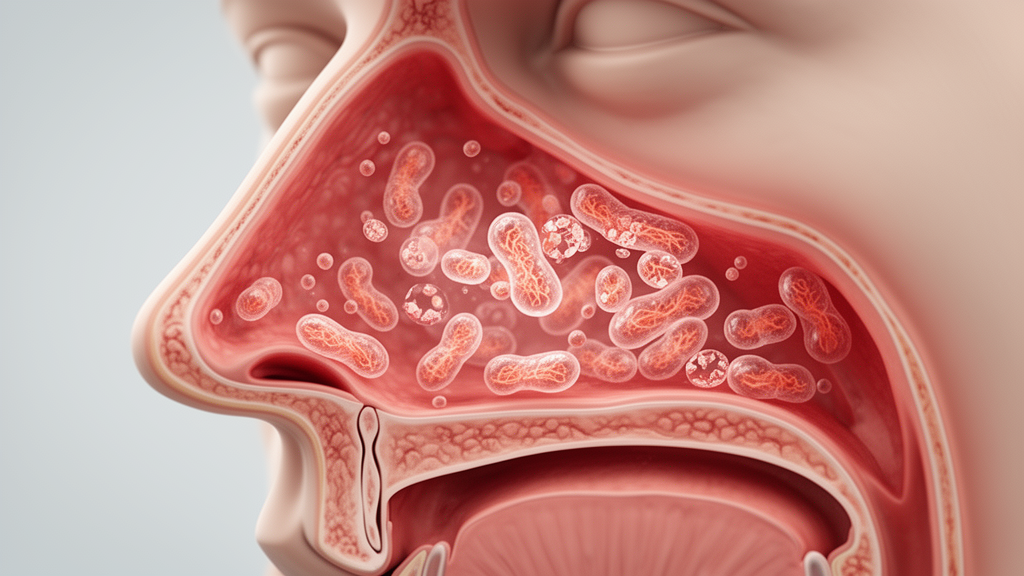
Chronic rhinosinusitis, a persistent inflammatory disorder affecting approximately 8% of the global population, is increasingly linked to fundamental defects in cellular energy production. A comprehensive narrative review published in Immunity, Inflammation and Disease synthesizes current experimental and clinical evidence to demonstrate that mitochondrial homeostasis is a central driver of the disease’s pathogenesis. The study identifies a self-perpetuating cycle in which environmental triggers and genetic factors damage the mitochondria of sinonasal epithelial cells, leading to sustained oxidative stress and chronic inflammation that further impairs mitochondrial integrity.
Mitochondria are double-membrane organelles that serve as the primary source of cellular energy through the production of adenosine triphosphate (ATP). Beyond energy generation, they regulate innate immunity, oxidative stress responses, and inflammatory signaling. In the context of chronic rhinosinusitis, the review highlights that these organelles are not merely passive victims of inflammation but active participants in the disease’s progression. Disruptions in mitochondrial dynamics, including abnormal fusion and fission, and the accumulation of reactive oxygen species (ROS) create a feed-forward loop that prevents the mucosal tissue from returning to a state of homeostasis.
The review examines how specific pathogenic factors directly compromise mitochondrial function in the nasal epithelium. Staphylococcus aureus, a common bacterial contributor to the disease, releases enterotoxin B (SEB), which acts as a superantigen to activate immune responses. SEB exposure has been shown to alter mitochondrial morphology and respiratory function in epithelial cells derived from patients with nasal polyps. Specifically, SEB inhibits Complex V of the electron transport chain, the enzyme responsible for ATP synthesis, while simultaneously upregulating upstream complexes. This bioenergetic mismatch leads to the accumulation of protons and the excessive generation of mitochondrial ROS, which damages mitochondrial DNA and disrupts the tight junctions that maintain the epithelial barrier.
Other microbial triggers, including Pseudomonas aeruginosa and Aspergillus species, also target mitochondrial pathways. P. aeruginosa utilizes flagellin-dependent signaling to induce mitochondrial calcium imbalance and oxidative stress, activating the NLRP3 inflammasome and promoting the release of pro-inflammatory cytokines. Similarly, Aspergillus proteases enhance the release of mitochondrial ROS, which impairs the electron transport chain and downregulates key regulators of mitochondrial biogenesis, such as PGC-1α. These findings suggest that the diverse range of environmental exposures associated with chronic rhinosinusitis converges on a common mechanism of mitochondrial injury.
Viral infections represent another significant category of mitochondrial disruptors. For instance, SARS-CoV-2 has been shown to directly inhibit Complex I of the electron transport chain and suppress ATP synthase expression. These viral-induced mitochondrial defects contribute to the persistent inflammatory responses observed in the sinonasal mucosa, highlighting the role of respiratory viruses in initiating or exacerbating the disease through metabolic pathways.
Lifestyle and environmental risk factors also play a role in disrupting mitochondrial homeostasis. The review identifies tobacco use, high alcohol consumption, and obesity as significant risk factors for chronic rhinosinusitis that are associated with mitochondrial dysfunction. Tobacco smoke can directly impair mitochondrial biogenesis and induce mutations in mitochondrial DNA, while obesity-induced systemic inflammation generates ROS that damage mitochondrial membranes and proteins. Furthermore, aging is linked to the accumulation of somatic mitochondrial mutations and impaired mitophagy, the process by which cells remove damaged mitochondria, thereby increasing the prevalence of nasal polyps in older populations.
The interplay between inflammation and mitochondrial dysfunction is characterized by a vicious cycle that amplifies tissue damage. Inflammatory cytokines, such as IL-4 and IL-13, can directly inhibit mitochondrial metabolism and promote the production of ROS. This oxidative stress, in turn, activates signaling pathways like NF-κB and MAPK, which drive the transcription of further pro-inflammatory cytokines. The release of mitochondrial DNA into the cytosol acts as a danger signal, activating the cGAS/STING pathway and the NLRP3 inflammasome, which sustains the immune response and prevents the resolution of inflammation.
These mitochondrial abnormalities manifest in the characteristic histopathological changes of chronic rhinosinusitis. The disruption of tight junction proteins, such as ZO-1 and occludin, by ROS leads to increased epithelial permeability and barrier dysfunction. Mitochondrial energy depletion also impairs mucociliary clearance, as the coordinated movement of cilia is an ATP-dependent process. Additionally, mitochondrial dysfunction contributes to various forms of regulated cell death, including apoptosis and ferroptosis, which further compromise the integrity of the sinonasal mucosa and promote tissue remodeling.
Genetic and epigenetic factors also influence mitochondrial vulnerability in chronic rhinosinusitis. Mutations in the CFTR gene, which cause cystic fibrosis, have been shown to increase the susceptibility of epithelial mitochondria to damage from P. aeruginosa infection. Conversely, the upregulation of the ALOX15 gene in patients with nasal polyps is associated with direct mitochondrial damage and the release of cytochrome c, a key mediator of apoptosis. These genetic insights provide a framework for understanding why certain individuals are more prone to developing the disease and how their cellular responses to environmental triggers may be uniquely compromised.
Therapeutic strategies targeting mitochondrial dysfunction and oxidative stress are currently under investigation. Mitochondria-targeted antioxidants, such as MitoQ and MitoTEMPO, have shown promise in preclinical models by reducing mitochondrial ROS and protecting epithelial cells from toxin-induced damage. Activators of the Nrf2 pathway, including the dietary compound sulforaphane, have also been shown to stabilize the epithelial barrier and reduce eosinophil accumulation in models of allergic rhinosinusitis. These findings suggest that restoring mitochondrial homeostasis could be a viable approach to managing the disease.
Despite these promising preclinical results, the clinical translation of mitochondria-targeted therapies faces several challenges. The optimal delivery route for sinonasal application remains undefined, and patient selection based on oxidative stress biomarkers is needed to identify those most likely to benefit. The review emphasizes that while mitochondrial dysfunction is a central feature of chronic rhinosinusitis, current evidence is insufficient to explain nasal polyp formation solely through metabolic pathways. Further research is required to clarify the specific mitochondrial mechanisms that distinguish different phenotypes of the disease and to assess the safety and efficacy of metabolic interventions in human patients.
The systematic search underpinning the review gathered literature published up to November 2025 across PubMed, MEDLINE, Web of Science, and ScienceDirect to synthesize mechanistic evidence regarding mitochondrial biology in chronic rhinosinusitis. Beyond conceptual models, direct examinations of patient sinus specimens reveal concrete structural and molecular abnormalities within the nasal mucosa. Ultrastructural evaluations using transmission electron microscopy demonstrate that mitochondria in nasal polyps exhibit marked deformities, including reduced physical dimensions, abnormal vacuolization, and floating organelles detached from normal cellular architecture. These morphological flaws coincide with diminished levels of the protective antioxidant manganese superoxide dismutase alongside elevated dynamin-related protein 1 and enhanced endoplasmic reticulum tethering. Complementary machine-learning analyses of sinonasal tissue have further distinguished patients with polyps by identifying consistent downregulation across five distinct mitochondrial genes, specifically ALDH1L1, BCKDHB, CBR3, HMGCS2, and OXR1.
A striking finding highlighted in the synthesis is the divergent mitochondrial response between structural epithelial cells and invading immune cells within type 2 inflammatory environments. While chronic oxidative exposure depletes epithelial energy systems and promotes apoptotic breakdown, eosinophils undergo substantial metabolic activation. Experimental airway models demonstrate that inflammatory eosinophils expand their mitochondrial mass and reshape their inner membrane cristae, transitioning from simple lamellar folds to a dense, mixed lamellar and tubular architecture. This morphological restructuring bolsters oxidative phosphorylation capacity, supplying the abundant energy necessary to sustain intense secretory activity. Interleukin-5 and granulocyte-macrophage colony-stimulating factor drive this bioenergetic surge through intracellular signaling cascades involving STAT5 and PI3K/Akt pathways. Concurrently, interleukin-5 prevents programmed cell death in circulating eosinophils by suppressing the mitochondrial translocation of the pro-apoptotic Bax protein, thereby prolonging inflammatory cell survival in diseased nasal passages.
Environmental allergens and bacterial toxins exert direct molecular harm on electron transport proteins and structural barriers. Exposure to airborne pollen particles impairs mitochondrial respiratory complexes I and III through pollen-derived oxidases that selectively oxidize iron-sulfur and core protein subunits, including NDUFS1, NDUFS2, UQCRC1, and UQCRC2. Similarly, house dust mites suppress the key biogenesis regulator PGC-1α through protease-activated receptor signaling while accelerating mitochondrial fragmentation via dynamic fission proteins. Bacterial virulence compounds further amplify this disruption; Staphylococcus aureus alpha-toxin provokes an immediate surge in intracellular calcium that precipitates permeability transition pore opening and direct ATP leakage, precipitating ciliary stasis. On the endothelial boundary, bacterial lipopolysaccharide accelerates the enzymatic degradation of the protective surface glycocalyx and weakens intercellular junctions through myosin light chain phosphorylation. The resulting plasma extravasation elevates intramucosal fibrin accumulation ten- to twentyfold over healthy baseline levels, forming hydrated matrices that fuel polyp expansion.
Epidemiological investigations detailed in the review further illuminate how systemic physiological stressors and sleep impairments interface with mitochondrial decline to drive sinus pathology. A decade-long prospective study tracking 5,145 individuals without baseline nasal complaints found that chronic sleep disturbances independently predict disease onset, with early morning awakening conferring a more than threefold risk and daytime sleepiness nearly doubling vulnerability. Individuals reporting three concurrent insomnia symptoms exhibited a fivefold increase in incidence, a susceptibility linked to reduced nocturnal melatonin secretion and depleted mitochondrial DNA copy numbers. Beyond sleep deficits, abrupt ambient temperature spikes elevate symptom exacerbation odds by 11% across a two-week lag period, paralleling cellular experiments where acute thermal stress impairs mitochondrial respiration and adenosine triphosphate production. Additionally, in aspirin-exacerbated respiratory disease, elevated acylcarnitine levels in alveolar macrophages reveal impaired mitochondrial fatty-acid oxidation, underscoring systemic metabolic vulnerability.
Subject of Research: The Role of Mitochondrial Homeostasis in the Pathogenesis of Chronic Rhinosinusitis
Article Title: The Role of Mitochondrial Homeostasis in the Pathogenesis of Chronic Rhinosinusitis
Article References: Ghalehbaghi, B., Fallahpour, M., Nabavi, M., Jalessi, M., Ghanbari, H., Khayer, N., & Taghizadeh‐Hesary, F. (2026). The Role of Mitochondrial Homeostasis in the Pathogenesis of Chronic Rhinosinusitis. Immunity, Inflammation and Disease, 14(11), Article e70579. https://doi.org/10.1002/iid3.70579
Image Credits: AI Generated
DOI: 10.1002/iid3.70579
Keywords: Role, Mitochondrial, Homeostasis, Pathogenesis, Chronic, Rhinosinusitis, scientific research
News Source: Ophelia Keating. (November 10, 2026). Mitochondrial Dysfunction Drives Chronic Rhinosinusitis Inflammation. Scienmag.