• HOME
  • NEWS
  • EXPLORE
    • CAREER
      • Companies
      • Jobs
    • EVENTS
    • iGEM
      • News
      • Team
    • PHOTOS
    • VIDEO
    • WIKI
  • BLOG
  • COMMUNITY
    • FACEBOOK
    • INSTAGRAM
    • TWITTER
Friday, June 26, 2026
BIOENGINEER.ORG
No Result
View All Result
  • Login
  • HOME
  • NEWS
  • EXPLORE
    • CAREER
      • Companies
      • Jobs
        • Lecturer
        • PhD Studentship
        • Postdoc
        • Research Assistant
    • EVENTS
    • iGEM
      • News
      • Team
    • PHOTOS
    • VIDEO
    • WIKI
  • BLOG
  • COMMUNITY
    • FACEBOOK
    • INSTAGRAM
    • TWITTER
  • HOME
  • NEWS
  • EXPLORE
    • CAREER
      • Companies
      • Jobs
        • Lecturer
        • PhD Studentship
        • Postdoc
        • Research Assistant
    • EVENTS
    • iGEM
      • News
      • Team
    • PHOTOS
    • VIDEO
    • WIKI
  • BLOG
  • COMMUNITY
    • FACEBOOK
    • INSTAGRAM
    • TWITTER
No Result
View All Result
Bioengineer.org
No Result
View All Result
Home Headlines

Malaria study shows how multiple infections make disease worse

Bioengineer.org by Bioengineer.org
January 19, 2018
in Headlines, Health, Science News
Reading Time: 2 mins read
0
Share on FacebookShare on TwitterShare on LinkedinShare on RedditShare on Telegram

malaria

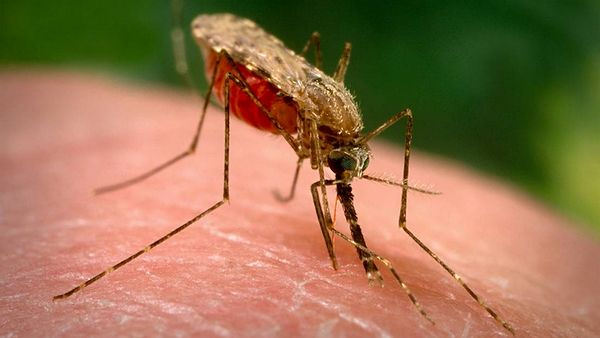
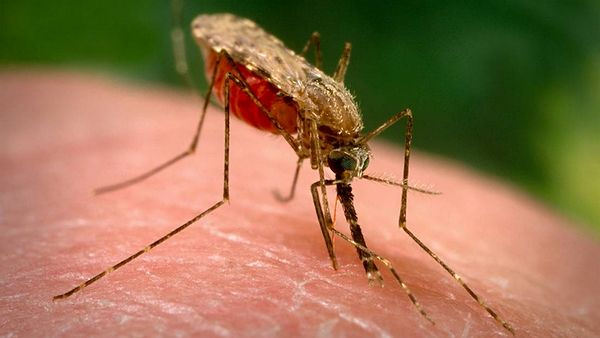
Scientists have discovered why infections with two types of malaria parasite lead to greater health risks – because one species helps the other to thrive.

They sought to understand what happens when the two most common malaria parasites cause infection at the same time, as they are known to attack the body in different ways.

Researchers found that one type of parasite leads to the second species being provided with more of the resources it needs to prosper.

In people, a parasite known as P. falciparum infects red blood cells of all ages, while another – P. vivax – attacks only young red blood cells.

A new study in mice with equivalent malaria parasites showed that the body’s response to the first infection produces more of the type of red blood cell that the second parasite needs.

In response to the first infection, millions of red blood cells are destroyed. The body responds by replenishing these cells. These fresh cells quickly become infected by the second type of parasite, making the infection worse, the team says.

The finding could explain why infections with both P. falciparum and P. vivax in people often have worse outcomes for patients than single infections, researchers say.

Until recently, it was unclear how two parasite species interacted during co-infections.

The study, published in the journal Ecology Letters, was carried out in collaboration with the University of Toronto. It was funded by the Biotechnology and Biological Sciences Research Council, Natural Environment Research Council, the Wellcome Trust, Fundação para a Ciência e a Tecnologia, Natural Sciences and Engineering Research Council of Canada and the Human Frontiers Science Program.

Professor Sarah Reece, of the University of Edinburgh’s School of Biological Sciences, said: “Immune responses are assumed to determine the outcome of interactions between parasite species but our study clearly shows that resources can be more important. Our findings also challenge ideas that one species will outcompete the other, which explains why infections involving two parasite species can pose a greater health risk to patients.”

###

Media Contact

Catriona Kelly
[email protected]
44-131-651-4401
@edinunimedia

http://www.ed.ac.uk

Share12Tweet8Share2ShareShareShare2

Related Posts

Tracking Lanthanide-Labeled Microplastics in Plants

June 25, 2026

POSTECH Researchers Slash Cost of Reconstituted Cell-Free Systems by 95%

June 25, 2026

AI and Physics Collaborate to Design Advanced Hydrogen Storage Materials

June 25, 2026

Natural Hallucinogens: Evolution’s Ecological Tools, Not Mere Chemical Byproducts

June 25, 2026
Please login to join discussion

POPULAR NEWS

  • Saying Goodbye to PGY-6: Pediatric Fellowship Realities

    103 shares
    Share 41 Tweet 26
  • Multi-Hospital Study Reveals Long Covid Burden Is Twice as High as Current Estimates

    92 shares
    Share 36 Tweet 23
  • Detection of EDCs in Breast Milk and Infant Urine Up to Six Months Highlights Early Exposure Risks

    77 shares
    Share 31 Tweet 19
  • New Drug Candidate Developed at McMaster Shows Potential for Treating Brain Cancer

    58 shares
    Share 23 Tweet 15

About

We bring you the latest biotechnology news from best research centers and universities around the world. Check our website.

Follow us

Recent News

Tracking Lanthanide-Labeled Microplastics in Plants

POSTECH Researchers Slash Cost of Reconstituted Cell-Free Systems by 95%

AI and Physics Collaborate to Design Advanced Hydrogen Storage Materials

Subscribe to Blog via Email

Success! An email was just sent to confirm your subscription. Please find the email now and click 'Confirm' to start subscribing.

Join 82 other subscribers
  • Contact Us

Bioengineer.org © Copyright 2023 All Rights Reserved.

Welcome Back!

Login to your account below

Forgotten Password?

Retrieve your password

Please enter your username or email address to reset your password.

Log In
No Result
View All Result
  • Homepages
    • Home Page 1
    • Home Page 2
  • News
  • National
  • Business
  • Health
  • Lifestyle
  • Science

Bioengineer.org © Copyright 2023 All Rights Reserved.