A structured, supervised prenatal group exercise program completed with high adherence significantly reduced postpartum weight retention up to one year following delivery, according to findings from a randomized clinical trial published in Frontiers in Global Women’s Health. The investigation assessed whether regular moderate-intensity physical activity maintained throughout pregnancy could mitigate excessive weight retention across the first postpartum year.
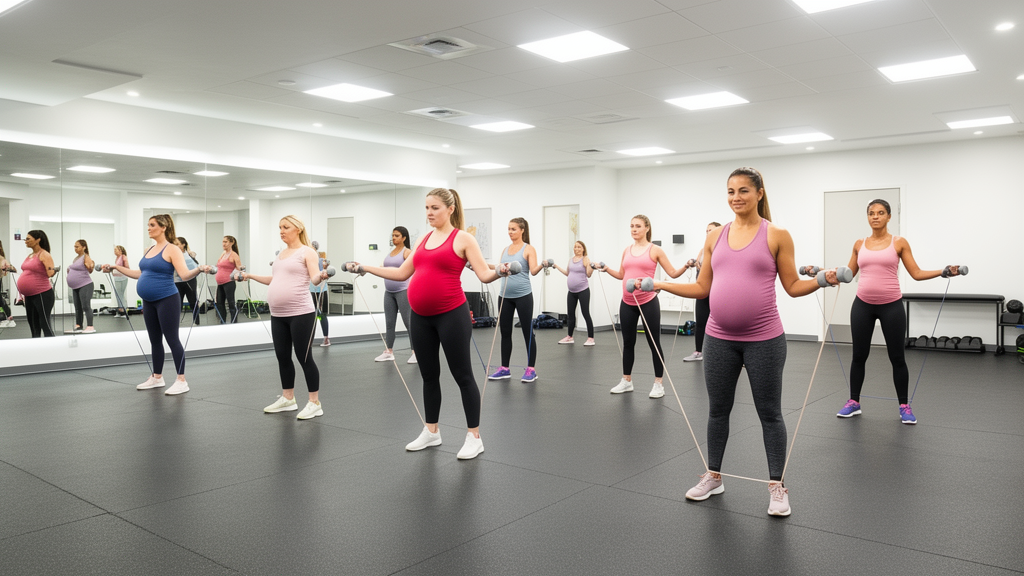
The clinical trial, registered under identifier NCT04563065, prospectively evaluated 350 pregnant women without obstetric contraindications. Participants were randomly allocated to either an exercise intervention group or a standard-care control group. The intervention protocol prescribed three 60-minute group sessions per week, commencing between the 8th and 15th weeks of gestation and continuing until delivery between weeks 38 and 40.
Maternal weight along with delivery characteristics and neonatal anthropometric metrics were prospectively recorded through patient hospital charts. Within the intervention cohort, participants attained an overall exercise adherence rate of 72.13 percent. Total gestational weight gain during the pregnancy period did not differ significantly between the 150 women evaluated in the exercise group and the 142 women in the control group (p > 0.05), with researchers noting that participants in both study arms gained weight within appropriate parameters.
Despite comparable gestational weight gains before delivery, women assigned to the exercise program exhibited significantly lower weight retention in the early postpartum stages. At one month after delivery, the exercise group showed significantly lower weight retention than the control group (67.0 ± 10.87 kg vs. 71.08 ± 13.64 kg; p = 0.009). At two months after delivery, the exercise group showed significantly lower weight retention than the control group (66.03 ± 10.50 kg vs. 69.33 ± 13.78 kg; p = 0.04).
Lower postpartum weight retention remained statistically significant across long-term follow-up assessments at 10 months (p = 0.001) and 12 months (p = 0.005) after childbirth. A repeated-measures analysis confirmed a statistically significant group-by-time interaction effect for postpartum weight trajectories between the study groups (p < 0.001), characterized by marked between-group divergence at 10 months (p = 0.002) and 12 months (p = 0.007).
The physical training regimen did not adversely influence secondary clinical or fetal outcomes. No statistically significant differences emerged between the exercise and control cohorts regarding delivery mode, episiotomy rates, perineal tear incidence, gestational age at delivery, neonatal birth weight, neonatal length, head circumference, or abdominal circumference (all p > 0.05). The authors concluded that supervised prenatal group exercise provides a viable framework to overcome common barriers to physical activity such as safety concerns and social support needs while promoting postpartum recovery.
Excessive weight gain during pregnancy has traditionally been associated with several health problems affecting the mother, fetus, and newborn. Postpartum weight retention frequently emerges as a direct consequence of this gestational accumulation, posing a significant physical challenge for women and remaining potentially associated with various health issues.
Subject of Research: Prenatal group exercise and postpartum weight retention
Article Title: A supervised prenatal group exercise program with high adherence reduces postpartum weight retention: a randomized clinical trial
Article References: Zhang, D., Sánchez-Polán, M., Díaz-Blanco, Á., Brik, M., Hernando, P., Nagpal, T. S., Gil, J., & Barakat, R. (2026). A supervised prenatal group exercise program with high adherence reduces postpartum weight retention: a randomized clinical trial. Frontiers in Global Women's Health, 7, Article 1991516. https://doi.org/10.3389/fgwh.2026.1991516
Image Credits: AI Generated
DOI: 10.3389/fgwh.2026.1991516
Keywords: prenatal exercise, postpartum weight retention, gestational weight gain, maternal health, randomized clinical trial, pregnancy fitness, neonatal outcomes, supervised, prenatal, group, exercise, program
News Source: Ophelia Keating. (November 9, 2026). Supervised Prenatal Group Exercise Reduces Postpartum Weight Retention in Clinical Trial. Scienmag.