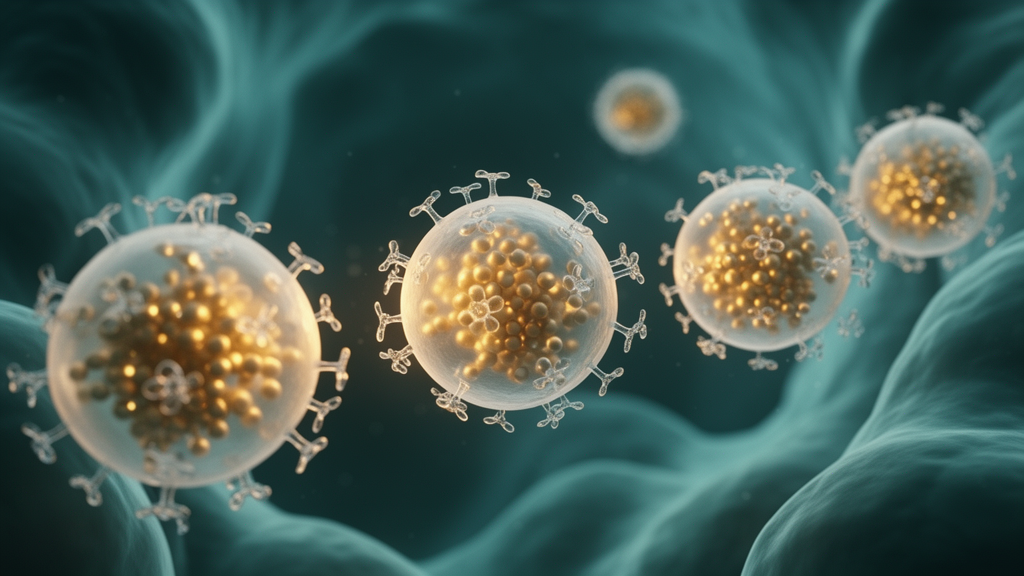
The study, published in Discover Pharmaceutical Sciences, demonstrates that encapsulating RHT in polycaprolactone microspheres and coating them with transferrin significantly improves drug absorption in Wistar rats. This approach addresses the critical pharmacokinetic challenges associated with RHT, including its high aqueous solubility, rapid systemic elimination, and susceptibility to pre-systemic metabolism and gastric degradation.
The primary objective of the research was to formulate transferrin-targeted microspheres that could overcome the limitations of conventional oral administration of RHT. RHT is classified as a Biopharmaceutics Classification System (BCS) Class I drug, characterized by high solubility and high permeability. However, its extreme aqueous solubility leads to rapid excretion from the body, while extensive pre-systemic metabolism and gastric degradation further reduce its therapeutic efficacy. By loading RHT into a microsphere scaffold, the researchers aimed to prevent hepatic metabolism and increase the drug’s bioavailability, thereby improving its potential for managing Alzheimer’s disease.
The microspheres were synthesized using the solvent injection method, a technique favored for its ability to produce spherical particles with controlled release properties. The hydrophobic core of the microspheres was constructed from polycaprolactone (PCL), a biodegradable synthetic polymer known for its slow degradation and significant permeability. Polyvinyl alcohol (PVA) was used as a stabilizer to increase the viscosity of the external phase and prevent aggregation during fabrication, while poloxamer 407 served as a surfactant to promote the dissolution of the microspheres. The process involved dissolving PCL in chloroform and RHT in methanol, then instilling this organic phase into an aqueous phase containing PVA and poloxamer 407 using a homogenizer at 10,000 rpm.
To optimize the formulation, the team employed a Quality by Design (QbD) approach using Box Behnken Design (BBD). This systematic method allowed them to evaluate the effects of three independent variables—PCL weight, PVA concentration, and stirring rate—on three critical quality attributes: particle size, uniformity, and entrapment efficiency (EE%). The optimization process identified an ideal formulation with a particle size of 3.054 µm, a uniformity value of 0.266, and an entrapment efficiency of 86.51%. These parameters were validated through experimental batches, confirming a high degree of closeness between predicted and observed values, which demonstrated the successful implementation of the BBD for RHT-microsphere optimization.
A key innovation in this study is the physical coating of the microspheres with transferrin, an endogenous protein involved in iron transport. Transferrin receptors (TfR) are widely expressed on the surface of intestinal endothelial cells and are involved in clathrin-mediated endocytosis. By coating the microspheres with transferrin, the researchers aimed to enhance the selectivity of the carrier and facilitate its uptake across the intestinal barrier. The coating was achieved through electrostatic attraction, where positively charged transferrin molecules bound to the negatively charged surface of the microspheres, which carried a negative charge due to the acetate groups of PVA. This coating was confirmed using scanning electron microscopy (SEM) with energy dispersive X-ray (EDX) analysis, which detected the presence of iron in the coated microspheres, and a BSA protein assay, which quantified the transferrin coating at 67.10%.
In-vitro drug release studies revealed that the microspheres exhibited a sustained release pattern compared to the free drug. While the free RHT showed a rapid release of 43.25% within the first hour, the microsphere formulations demonstrated controlled release over 24 hours. Kinetic analysis indicated that the drug release from the microspheres followed the Higuchi model, suggesting a diffusion-controlled mechanism.
The in-vivo pharmacokinetic study was conducted in Wistar rats to evaluate the oral bioavailability of the free drug, uncoated microspheres (UC-MS), and transferrin-coated microspheres (C-MS). The results showed that C-MS significantly enhanced the absorption of RHT compared to both the free drug and UC-MS. The maximum plasma concentration (Cmax) for C-MS was 316.58 µg/mL, compared to 235.34 µg/mL for UC-MS and 149.41 µg/mL for the free drug. Furthermore, the area under the concentration-time curve (AUC0–∞) for C-MS was 206.35 µg h/mL, substantially higher than the 120.88 µg h/mL for UC-MS and 36.17 µg h/mL for the free drug. These findings suggest that transferrin coating enhances intestinal absorption via clathrin-mediated endocytosis, leading to increased systemic exposure of the drug.
Ex-vivo intestinal uptake studies further supported the mechanism of enhanced absorption. Using the non-everted gut sac method, the cumulative percentage permeability of C-MS was found to be 80.92%, which was significantly higher than the 60.26% for UC-MS and 31.14% for the free drug. The free drug, being highly water-soluble, was washed out from the absorption site, resulting in lower permeation. In contrast, the transferrin-coated microspheres interacted with transferrin receptors on intestinal enterocytes, facilitating their transport from the mucosal layer to the muscular layer.
Stability studies in simulated gastrointestinal fluids and plasma indicated that the microspheres remained stable under physiological conditions. There were only minute variations in particle size, uniformity, and entrapment efficiency across different pH levels. The zeta potential of the coated microspheres increased with pH due to the ionization of PVA, but no major impact on the overall stability of the formulation was observed.
The study highlights the potential of transferrin-coated microspheres as a promising strategy for improving the oral delivery of RHT in Alzheimer’s disease therapy.
The authors emphasize that the significant increment in the bioavailability of RHT noted for the transferrin-coated microspheres suggests their potential utility for the management of Alzheimer’s disease. The combination of sustained release, enhanced intestinal permeation, and improved systemic exposure represents a comprehensive solution to the challenges associated with oral administration of RHT.
By leveraging the targeting capabilities of transferrin and the sustained release properties of polycaprolactone microspheres, the researchers have created a formulation that significantly enhances the bioavailability of RHT.
Subject of Research: Oral delivery of transferrin coated rivastigmine microspheres for Alzheimer’s disease therapy
Article Title: Oral delivery of transferrin coated rivastigmine microspheres for Alzheimer’s disease therapy
Article References: Khaire, O., Ahirwar, K., Singh, A., Shukla, R., & Flora, S. J. S. (2025). Oral delivery of transferrin coated rivastigmine microspheres for Alzheimer’s disease therapy. Discover Pharmaceutical Sciences, 1(1), Article 17. https://doi.org/10.1007/s44395-025-00014-4
Image Credits: AI Generated
DOI: 10.1007/s44395-025-00014-4
Keywords: Oral, delivery, transferrin, coated, rivastigmine, microspheres, Alzheimer, disease, therapy, scientific research
News Source: Ophelia Keating. (November 9, 2026). Transferrin-Coated Microspheres Boost Rivastigmine Absorption in Rat Model. Scienmag.