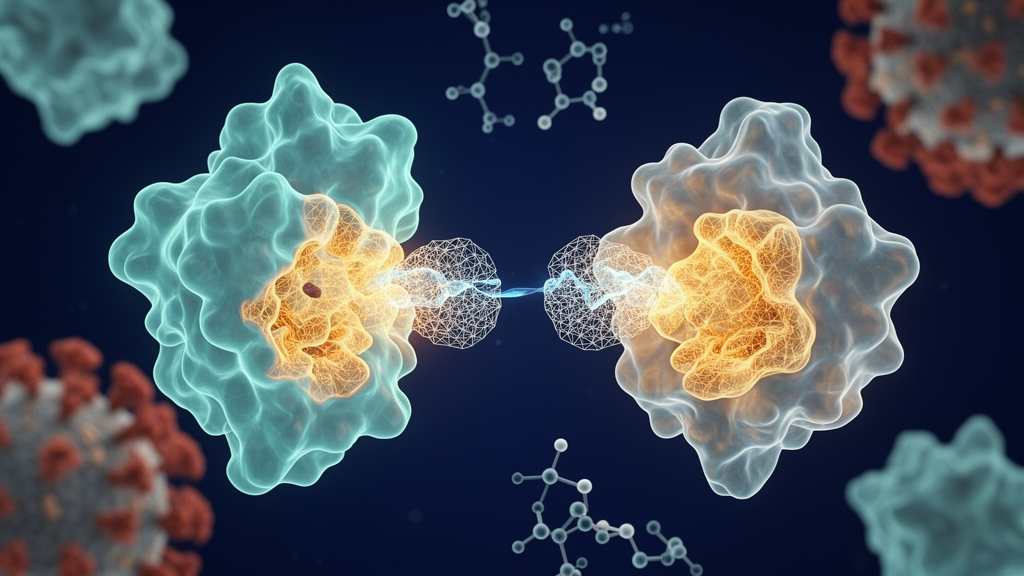
In silico affinity profiling can differentiate consensus vaccine candidates for hepatitis C virus where standard genetic distance and static structural similarity fail to provide discrimination, according to a computational investigation focusing on viral envelope glycoprotein 2 antigens. The research examined whether computational docking workflows could evaluate candidate sequences derived through distinct algorithms, assessing both genotypic and pan-genotypic constructs.
The motivation for refining candidate selection methods centers on international public health objectives established by the World Health Organization, which has targeted the eradication of hepatitis C by 2030. That goal remains unattainable without the development and deployment of an effective prophylactic vaccine.
While consensus sequence generation combined with layering offers a viable theoretical framework for designing vaccines against highly variable pathogens like hepatitis C virus, the methodology produces a substantial number of candidate sequences. Profiling the binding affinity of candidate antigens to monoclonal antibodies via in silico computational techniques was therefore evaluated to help reduce the volume of candidates requiring experimental in vivo testing.
To determine the differentiating capability of this in silico affinity profiling strategy, the investigators analyzed four specific candidate sequences derived from the viral envelope glycoprotein 2 protein. The study evaluated two previously reported genotypic consensus sequences, designated NOTC1 and NOTC2, alongside two newly generated pan-genotypic sequences, termed L1-CON and L2-CON. Each of these consensus sequences was produced using distinct consensus generation algorithmic approaches, enabling the researchers to test whether computational affinity profiling could distinguish antigens generated by different computational methodologies.
The investigative team developed three-dimensional structural models for each consensus sequence utilizing homology modelling techniques. To account for dynamic conformational behavior, these modeled structures were simulated within a canonical ensemble, allowing the researchers to derive average three-dimensional conformations. These resulting average structures were subsequently utilized as computational inputs for comprehensive antigen–antibody docking studies, which were conducted against all reported antibody structures known to bind to each respective epitope within the hepatitis C virus E2 envelope protein.
The molecular docking analyses yielded clear discriminatory results across the evaluated candidates, particularly within epitope II of the E2 protein. Furthermore, NOTC1 displayed lower binding energies when compared against the J-2a sequence, with a significance level of p = 0.0132. The authors observed that these computational docking energy profiles were consistent with the previously reported in vivo performance of the antigens.
Significantly, the discrimination established through in silico affinity profiling could not be replicated using conventional comparative metrics. When the candidates were evaluated by measuring genetic distance from the common ancestor of Genotype 1, the analysis failed to reproduce the differentiation observed in the docking simulations. Similarly, measuring structural similarity between the computational protein models and crystallographed antigen structures failed to differentiate the candidates, demonstrating that neither genetic distance nor structural resemblance reflected the functional docking differences.
These findings underscore the predictive value of the proposed in silico affinity profiling pipeline as an initial assessment tool for vaccine candidates, offering a computational mechanism to prioritize promising candidates before advancing them to resource-intensive in vivo experimental pipelines.
Subject of Research: Computational affinity profiling of hepatitis C virus E2 consensus vaccine antigens
Article Title: In Silico affinity profiling differentiates consensus vaccine sequences where genetic and structural similarity fail: a case study on HCV E2 genotypic and pan-genotypic antigens
Article References: Mohabati, R., Teimoori-Toolabi, L., Azadmanesh, K., Roohvand, F., & Mohajel, N. (2026). In Silico affinity profiling differentiates consensus vaccine sequences where genetic and structural similarity fail: a case study on HCV E2 genotypic and pan-genotypic antigens. BMC Immunology. https://doi.org/10.1186/s12865-026-00884-y
Image Credits: AI Generated
DOI: 10.1186/s12865-026-00884-y
Keywords: Hepatitis C Virus, HCV E2 Antigen, In Silico Affinity Profiling, Consensus Sequences, Vaccine Candidates, Molecular Docking, Epitope II, Structural Modeling, Silico, affinity, profiling, differentiates
News Source: Kristina Jarvis. (November 9, 2026). In Silico Affinity Profiling Differentiates Hepatitis C Virus Vaccine Candidates. Scienmag.