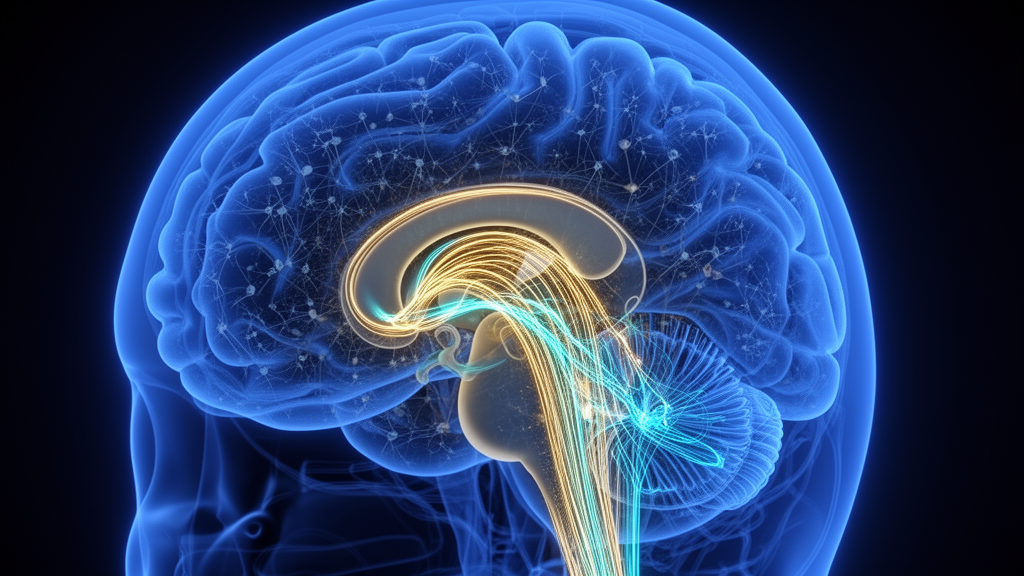
Multivariate neural representations in the human hippocampus track both auditory and visual scenes, demonstrating that the structure supports sensory processing beyond the visual modality as well as multisensory integration. Researchers Omri Raccah, Aryan Agarwal, Yannan Zhu, and Nicholas B. Turk-Browne investigated how the human hippocampus contributes to sensory processing outside vision and facilitates the multisensory integration of visual information with other sensory modalities, uncovering marked functional specialization and lateralization across its longitudinal axis.
Although the hippocampus receives convergent input from multiple sensory systems, sensory processing within the human structure has been studied almost exclusively through vision. To evaluate how the hippocampus processes information across sensory modalities, the research team exposed participants to multiple repetitions of short naturalistic movie clips. Each clip was presented in four distinct formats: auditory-only, visual-only, congruent audiovisual, and incongruent audiovisual presentations where audio and video originated from different movies.
Using high-resolution functional magnetic resonance imaging, the investigators measured univariate activation and multivariate representations across the longitudinal axis and subfields of the human hippocampus. While univariate analyses detected only visual responses across hippocampal subregions, showing no activation for auditory stimuli and no benefit of congruent stimuli, multivariate analyses revealed robust representations of both auditory and visual scenes. These analytical differences highlight sensory representations that standard univariate measures overlooked.
Functional measurements revealed clear regional specialization along the longitudinal axis of the hippocampus during stimulus presentation. In the posterior hippocampus, multivariate analyses demonstrated enhanced pattern similarity for congruent stimuli relative to unisensory stimuli, an effect observed especially in the left hemisphere that demonstrates multisensory facilitation. This localized facilitation confirms that posterior hippocampal subregions actively integrate congruent visual and auditory inputs rather than processing visual streams in isolation.
Meanwhile, the anterior hippocampus showed crossmodal decoding between auditory and visual versions of the same movie clip, an effect driven by the right hemisphere that suggests a more abstract representation. Finally, whole-brain searchlight analyses revealed parallel effects in cortical regions known to support multisensory integration. Together, these experimental findings advance scientific understanding of auditory and multisensory coding in the human hippocampus, revealing distinct specialization and hemispheric lateralization along its longitudinal axis.
Subject of Research: Auditory coding and multisensory integration in the human hippocampus
Article Title: The human hippocampus supports auditory coding and multisensory integration
Article References: Raccah, O., Agarwal, A., Zhu, Y., & Turk-Browne, N. B. (2026). The human hippocampus supports auditory coding and multisensory integration. PLOS Biology, 24(11), e3004012. https://doi.org/10.1371/journal.pbio.3004012
Image Credits: AI Generated
DOI: 10.1371/journal.pbio.3004012
Keywords: hippocampus, auditory coding, multisensory integration, fMRI, multivariate analysis, neuroscience, sensory processing, brain mapping, human, supports, auditory, coding
News Source: Cassandra Pierce. (November 9, 2026). Human Hippocampus Supports Auditory Processing and Multisensory Integration Beyond Vision. Scienmag.