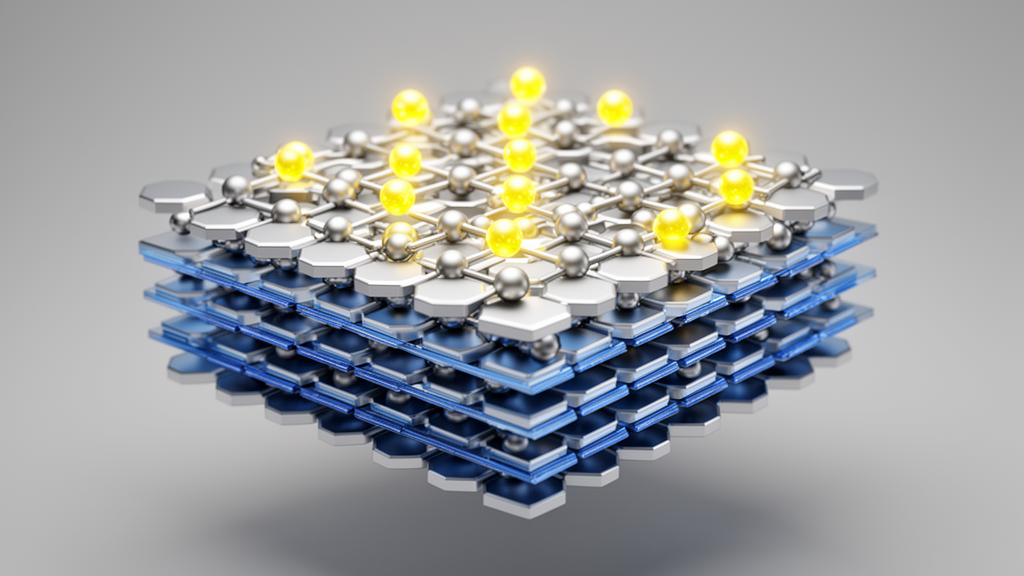
The study, published on 31 October 2026, addresses the limitations of current supercapacitor technology, which often suffers from low energy density. Specifically, the team focused on overcoming the issues of severe nanosheet stacking and poor intrinsic conductivity that typically restrict the practical electrochemical application of NiCo-LDH materials.
The researchers fabricated hollow polyhedral NiCo-LDH using a self-templated ion-exchange strategy. This process utilized zeolitic imidazolate framework-67 (ZIF-67) as a metal-organic framework precursor. Following the formation of the hollow structure, the researchers applied a facile hydrothermal treatment to achieve controllable sulfur doping. This approach allowed for systematic investigation of the structural modulation and electrochemical enhancement mechanisms induced by the addition of sulfur to the material.
The mechanism behind the performance improvement involves the decomposition of the sulfur source during the hydrothermal treatment. This decomposition generates active etchant species that mildly corrode the layered double hydroxide matrix. This corrosion process thins the nanosheets and creates hierarchical interconnected pores. The resulting structural changes enlarge the specific surface area of the material, which in turn accelerates the transport of electrolyte ions within the electrode.
Beyond structural changes, sulfur doping triggers partial reduction of high-valence cobalt and nickel ions, specifically Co3+ and Ni3+. This reduction enriches the material with low-valence redox-active sites. The presence of these additional active sites reduces charge-transfer resistance and enhances the kinetics of Faradaic reactions.
The electrochemical performance of the optimized electrode, designated as NC-3S, was evaluated under specific conditions. At a current density of 1 A g−1, the NC-3S electrode exhibited a specific capacity of 194.4 mAh g−1, which is equivalent to 1399.6 F g−1. This capacity exceeds that of undoped NiCo-LDH by 35.6%, demonstrating a significant improvement in charge storage capability. The quantitative kinetic analysis further indicated that at a scan rate of 50 mV s−1, the surface capacitive contribution ratio rose from 78% for pristine NiCo-LDH to 88% for the sulfur-doped NC-3S material.
To assess practical application potential, the researchers assembled an asymmetric supercapacitor using the NC-3S electrode and activated carbon, labeled as NC-3S//AC. At a power density of 375 W kg−1, this device reached a maximum energy density of 53.98 Wh kg−1. This result highlights the potential of the sulfur-doping strategy to produce supercapacitors with high performance characteristics suitable for energy storage applications.
The study demonstrates that sulfur doping synergistically optimizes both the electronic structure and the hierarchical microstructure of MOF-derived NiCo-LDH. By providing a facile anion-doping strategy, the work offers a pathway for developing supercapacitors with enhanced faradaic kinetics and high energy density. The findings suggest that careful control of the doping process can effectively mitigate the conductivity and stacking issues inherent in layered double hydroxide materials.
This research contributes to the broader field of energy materials by offering a detailed mechanism for how anion doping can improve electrochemical performance.
Subject of Research: Sulfur doping of NiCo-LDH for supercapacitors
Article Title: Controllable sulfur doping of ZIF-67-derived hollow NiCo-LDH for asymmetric supercapacitors with enhanced faradaic kinetics and high energy density
Article References: Zhang, J., Liang, Y., Zhang, J., Hou, J., Tan, Q., & Fan, X. (2026). Controllable sulfur doping of ZIF-67-derived hollow NiCo-LDH for asymmetric supercapacitors with enhanced faradaic kinetics and high energy density. Journal of Materials Science. https://doi.org/10.1007/s10853-026-14008-9
Image Credits: AI Generated
DOI: 10.1007/s10853-026-14008-9
Keywords: supercapacitors, NiCo-LDH, sulfur doping, ZIF-67, energy storage, electrochemistry, faradaic kinetics, asymmetric supercapacitors, Controllable, sulfur, doping, ZIF-67-derived
News Source: Denise Maddox. (November 9, 2026). Sulfur-Doped NiCo-LDH Boosts Supercapacitor Energy Density. Scienmag.