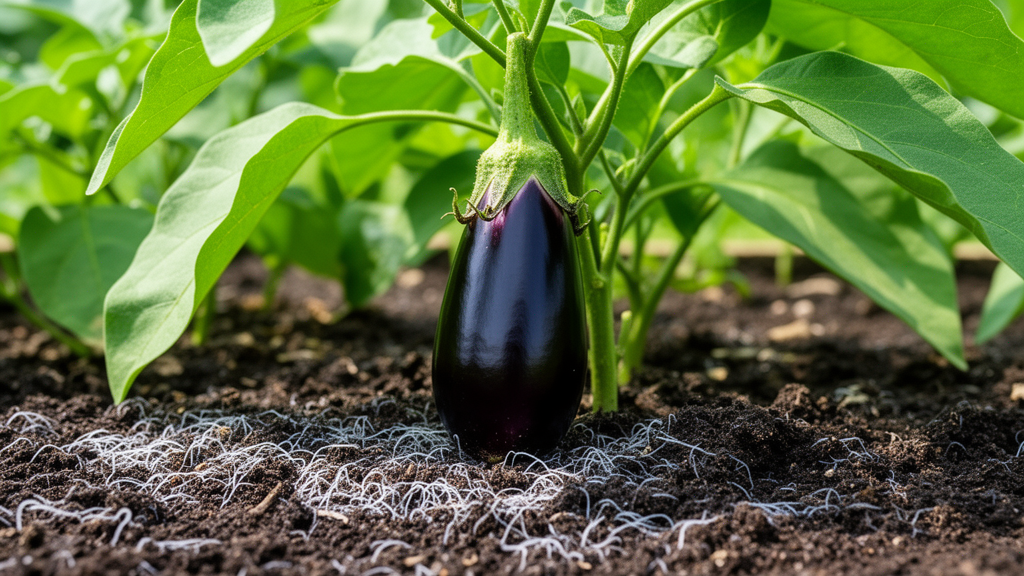
A field experiment conducted at Sylhet Agricultural University in Bangladesh has demonstrated that integrating Trichoderma-based organic inputs with a reduced dose of chemical fertilizer can enhance the growth, yield, and fruit quality of brinjal, also known as eggplant. The study, published in Discover Plants, evaluated whether tricho-compost and tricho-leachate could maintain crop performance when the recommended mineral fertilizer dose was decreased. The findings suggest that a partial reduction in chemical fertilizer, specifically to 75% of the recommended dose, offers a practical balance between productivity and input efficiency, whereas complete omission of mineral fertilizer resulted in significantly lower performance.
The control treatment, designated as T1, involved the application of 100% of the recommended dose of chemical fertilizer without any Trichoderma-based inputs. The remaining four treatments combined 10 tonnes per hectare of tricho-compost and 20 milliliters per liter of tricho-leachate with varying levels of chemical fertilizer: 100% (T2), 75% (T3), 50% (T4), and 0% (T5) of the recommended dose. This experimental setup allowed the researchers to quantify the trade-off between fertilizer saving and crop performance under controlled field conditions.
Brinjal is a significant solanaceous vegetable in South and Southeast Asia, providing dietary fiber, vitamins, and antioxidant compounds such as phenolics and anthocyanins. In Bangladesh, the crop is economically vital for smallholder farmers, yet productivity is often constrained by declining soil organic matter and inefficient fertilizer management. The study aimed to address the reliance on chemical fertilizers, which can contribute to soil degradation and environmental contamination if used excessively. By integrating organic and biological inputs, the researchers sought to explore integrated nutrient management strategies that might improve soil structure and rhizosphere functioning while sustaining crop yields.
The results indicated that the treatment combining full chemical fertilizer with tricho-compost and tricho-leachate (T2) produced the highest overall performance. This treatment yielded 25.76 tonnes per hectare, which was 17.5% higher than the control group that received only the full dose of chemical fertilizer. T2 also maximized vegetative growth parameters, including plant height, leaf number, and branch number. At 60 days after transplanting, plants in the T2 treatment reached a height of 55.66 cm, significantly taller than the control plants, which measured 41.34 cm. The superior vegetative development in T2 suggests that the combined inputs created a favorable nutritional environment during both vegetative and reproductive stages.
Crucially, the treatment with 75% of the recommended chemical fertilizer dose (T3) demonstrated a strong compromise between productivity and fertilizer reduction. T3 yielded 23.55 tonnes per hectare, which was 7.4% higher than the control group, despite using 25% less chemical fertilizer. This treatment also showed significant improvements in fruit quality metrics. Compared to the control, T3 increased total phenolic content by 19.7%, total flavonoid content by 18.5%, antioxidant activity by 13.0%, and anthocyanin content by 25.0%. These biochemical enhancements indicate that reducing fertilizer by a quarter, while adding Trichoderma-based inputs, can improve the nutritional and antioxidant profile of the fruit.
The study also measured physiological indicators such as SPAD values, which serve as an indirect measure of leaf chlorophyll content and nitrogen status. T2 produced the highest SPAD value of 66.30, representing a 17.3% increase over the control. T3 and T4 also showed increases in SPAD values of 10.9% and 5.3%, respectively, compared to the control. Root length was another key parameter, with T2 exhibiting the longest roots at 35.87 cm, a 26.0% increase over the control. The researchers noted that longer roots may increase the volume of soil explored for water and nutrients, potentially contributing to the observed growth advantages in the integrated treatments.
Fruit infestation by pests or diseases was also lower in the integrated treatments. The T2 treatment had the lowest number of infested fruits, which was 39.7% below the control. T3 and T4 reduced infestation by 26.0% and 16.4%, respectively. However, the researchers cautioned that the experiment did not identify the specific causal organisms or quantify disease pressure. Therefore, the reduction in infestation cannot be attributed solely to Trichoderma-mediated disease suppression but may also result from improved plant vigor or changes in plant nutrition. The study emphasized that these mechanisms were not directly examined and should be considered as plausible explanations supported by previous literature rather than confirmed processes.
The treatment with 50% chemical fertilizer (T4) maintained a yield statistically comparable to the control, at 22.14 tonnes per hectare versus 21.92 tonnes per hectare. However, the quality advantages in T4 were smaller than those observed in T3. The treatment with no chemical fertilizer (T5) performed the poorest, indicating that tricho-compost and tricho-leachate alone could not fully meet the mineral nutrient requirements of brinjal under the conditions of this experiment. This finding underscores the importance of mineral fertilizer in high-yielding vegetable systems, even when organic and biological amendments are present.
Statistical analysis using Tukey’s honestly significant difference test revealed that T2 was significantly superior to all other treatments in terms of yield and most growth parameters. T3 was significantly lower than T2 but higher than the control, while T1 and T4 were statistically similar for total yield. The correlation analysis showed strong positive relationships between yield parameters and fruit quality attributes, such as fruit number, individual fruit weight, and total fruit weight per plant. These correlations suggest that improvements in yield components are often associated with enhancements in fruit quality, which may have implications for selecting superior management strategies.
The researchers highlighted several limitations of the study, noting that it was conducted at a single location during one season with three replications. Factors such as soil microbial communities, Trichoderma colonization, soil enzyme activity, and nutrient mineralization were not directly measured. Therefore, the mechanisms behind the observed responses remain inferential. The study recommends that multi-location and multi-season trials be conducted to validate these findings before broad recommendation. Additionally, economic analysis and direct measurements of soil and plant nutrient dynamics are necessary to fully understand the cost-benefit ratio of these integrated nutrient management strategies.
Despite these limitations, the study provides valuable insights into the potential of integrated nutrient management in brinjal production. The findings suggest that partial substitution of mineral fertilizer with Trichoderma-based inputs can be a viable strategy for improving crop performance and fruit quality. The optimal balance appears to be at 75% of the recommended fertilizer dose, which offers a practical approach for farmers seeking to reduce chemical inputs while maintaining high yields.
In conclusion, the study demonstrates that combining tricho-compost and tricho-leachate with a reduced dose of chemical fertilizer can significantly enhance brinjal growth, yield, and fruit quality. The 75% fertilizer reduction treatment emerged as the most practical option, offering a balance between productivity and input efficiency. These findings support the idea that integrated nutrient management can be a key component of sustainable brinjal production, provided that further validation across different environments and seasons is conducted. The research underscores the potential of biological inputs to support crop performance while reducing reliance on synthetic fertilizers.
Subject of Research: Integration of tricho-compost and tricho-leachate with reduced chemical fertilizer to enhance growth, yield and fruit quality of brinjal
Article Title: Integration of tricho-compost and tricho-leachate with reduced chemical fertilizer to enhance growth, yield and fruit quality of brinjal
Article References: Srabon, S. D., Rakib, M. J. I., Nath, D. D., Das, A. C., Islam, M. S., Islam, M. S., Mondal, M. F., Akhter, D., & Debnath, B. (2026). Integration of tricho-compost and tricho-leachate with reduced chemical fertilizer to enhance growth, yield and fruit quality of brinjal. Discover Plants, 3(1), Article 527. https://doi.org/10.1007/s44372-026-00917-1
Image Credits: AI Generated
DOI: 10.1007/s44372-026-00917-1
Keywords: Integration, tricho-compost, tricho-leachate, reduced, chemical, fertilizer, enhance, growth, yield, fruit, quality, brinjal
News Source: Drew Townsend. (November 8, 2026). Trichoderma Inputs Boost Brinjal Yield With Reduced Fertilizer. Scienmag.