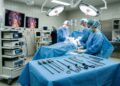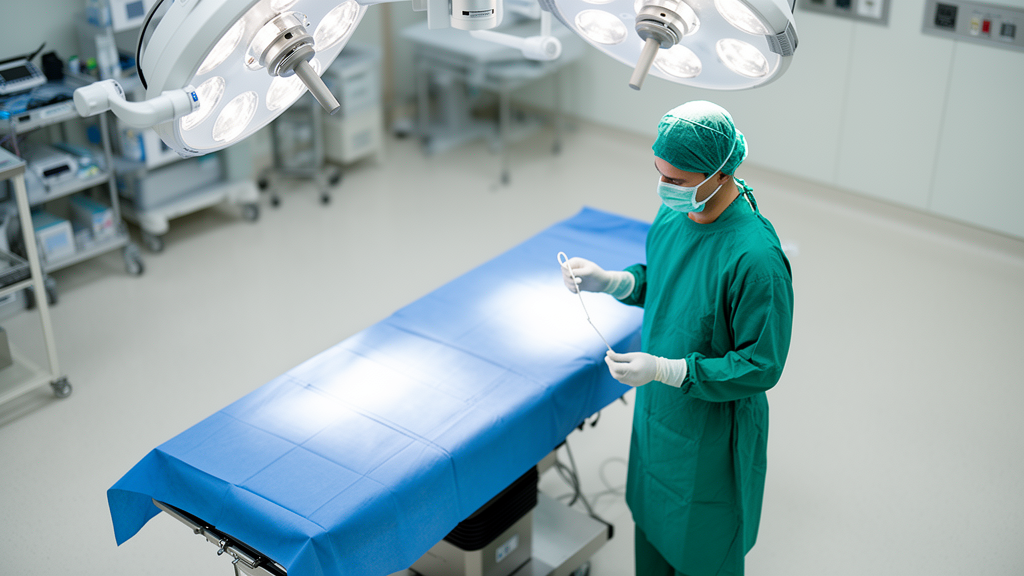
In operating suites, bacterial contamination measured in colony-forming units does not correlate with Staphylococcus aureus transmission across anesthesia work areas, according to a prospective microbiological investigation. While higher surface bioburden increases the probability of isolating S. aureus, the actual transfer of the pathogen between surfaces, clinicians, and patients operates independently of total bacterial density. Published in Anesthesiology and Perioperative Science by researchers from the University of Iowa, the study examined 1,016 swab samples harvested during 81 cesarean delivery operations performed in a single operating room during the summer of 2025. These findings indicate that while monitoring colony-forming units provides actionable feedback on the physical execution of cleaning protocols, aggregate bioburden counts cannot serve as an indirect surrogate for assessing S. aureus transmission or determining anesthesia providers’ contribution to postoperative healthcare-associated infections.
In surgical settings, the anesthesia work area encompasses the patient’s nasopharynx and skin, provider hands, anesthesia machine dials, medication carts, and intravenous lumens used for drug administration. Prior research cited by the authors revealed that surgical site infection rates stood at 2.0 percent in cases without S. aureus transmission through anesthesia work areas. However, infection incidence reached 11 percent when transmitted S. aureus strains were susceptible to prophylactic antibiotics, and climbed to 18 percent when transmission involved antibiotic-resistant strains. Intraoperative transmission was linked to approximately 62 percent of observed surgical site infections.
Because comprehensive surveillance involving bacterial speciation and isolate matching requires extensive laboratory infrastructure and processing, hospitals sought simpler surrogates to evaluate intraoperative infection risks. Tracking transmission traditionally required culturing numerous reservoirs at surgery start and end, isolating colonies, and running biochemical profiles to determine whether identical strains moved across sites. In contrast, quantifying colony-forming units requires basic agar plating and simple colony counting, potentially halving sampling burdens if monitoring were confined to case completion when surfaces are most contaminated. Investigators theorized that if S. aureus were consistently present whenever environmental bacteria reached substantial numbers, aggregate bioburden might function as an effective screening tool. Furthermore, prior retrospective research had shown that surfaces harboring at least 100 colony-forming units isolated S. aureus in 6.3 percent of samples, compared to 0.8 percent among cleaner surfaces. Nevertheless, the mathematical relationship linking total bacterial numbers to confirmed transmission events had never been prospectively measured.
To establish these microbiological relationships under controlled clinical conditions, the investigators structured a quality improvement study at the University of Iowa, focusing exclusively on elective cesarean deliveries conducted within a single operating room. The University of Iowa Institutional Review Board determined on December 4, 2024, that the protocol did not meet human subjects research criteria, coordinating with the local Obstetrics Quality and Safety Committee. Sampling took place across 50 regular workdays between May 27 and August 29, 2025, capturing 81 surgical cases and 31 pairs of consecutive cases performed on the same operating day. The vast majority of specimens were harvested by a medical student co-author across 43 workdays and 68 cases. In accordance with quality improvement confidentiality standards, patient identities, provider identifiers, and clinical demographics were omitted, with specimens tracked solely through barcodes and collection dates.
The protocol evaluated up to 15 distinct reservoirs per case, using specialized collection kits to ensure standardized swab technique. Environmental reservoirs included the anesthesia machine’s adjustable pressure-limiting valve and agent dial, swabbed together over under 100 square centimeters at case start and end. Because cesarean deliveries relied on spinal anesthesia and providers might touch the machine less frequently, investigators also sampled the digital surface of the drug infusion pump and the electronic health record computer mouse at case start and end. Provider hand contamination was quantified before and after each procedure using a modified glove juice method, wherein the practitioner’s dominant hand was massaged inside a sterile bag containing 50 milliliters of balanced electrolyte solution for one minute up to the wrist. Patient reservoirs included bilateral anterior nares, bilateral axillae, and inguinal creases sampled at baseline and case completion, while the external surface of the primary disinfectable intravenous stopcock was swabbed at case end.
Laboratory processing utilized serial dilutions to avoid the analytical bottleneck of plates classified as too numerous to count. Practitioner hand washings were centrifuged for 15 minutes at 4,500 revolutions per minute, resuspended in sterile water, diluted to 1:10,000, and inoculated across sheep blood agar, mannitol salt, bile esculin azide, and MacConkey agar plates. Environmental and patient samples were serially diluted to 1:1,000, while stopcock samples were diluted to 1:100. Agar plates were incubated aerobically at 36 degrees Celsius, with colony-forming units enumerated from blood agar after 24 hours and adjusted by dilution factors. Presumptive staphylococcal colonies on mannitol salt agar underwent confirmatory testing including Gram-staining, fermentation, catalase, oxidase, indole, and slide coagulase assays. Confirmed S. aureus isolates were then plated onto methicillin-inoculated media to evaluate antibiotic resistance. Intraoperative transmission was formally defined as detecting matching S. aureus isolates with identical antibiotic resistance profiles across two or more distinct reservoirs within the same operating room on the same day.
To ensure rigorous transmission classification, patient sites testing positive at case completion were considered transmission events only if baseline swabs from the patient’s nose, axilla, and groin were all negative at surgery start. Out of 1,215 possible reservoir swabs across the 81 cases, the team gathered 1,016 samples. S. aureus was detected in 52 of these 1,016 samples, representing a sample prevalence of 5.1 percent. Statistical analysis confirmed that reservoirs harboring greater colony counts displayed a significantly higher probability of S. aureus detection (P = 0.0063), yielding an area under the receiver operating characteristic curve of 0.628 with a 95 percent confidence interval from 0.557 to 0.700. However, S. aureus was strictly restricted to contaminated surfaces: among 159 reservoir samples yielding fewer than 100 colony-forming units, zero S. aureus isolates were detected. Every sample positive for S. aureus maintained at least 500 colony-forming units, and all positive environmental samples had counts of 5,000 or greater.
Among the 310 environmental samples analyzed, the mean bacterial burden was 9.21 times 10 to the seventh colony-forming units, with percentiles of 0.80, 5.10, and 12.30 times 10 to the seventh colonies. S. aureus was identified in nine of the 290 environmental samples with at least 100 colony-forming units, but appeared in none of the 20 samples below that threshold. Using successive dilutions, the team calculated the ratio of total colonies to S. aureus isolates for each case. Using cluster-robust jackknife estimation, the overall ratio across the anesthesia workspace reached 2.50 billion colonies per single S. aureus isolate, with a standard error of 0.53 billion and a 95 percent confidence interval between 1.44 billion and 3.56 billion. To illustrate this disparity, the combined 2023 population of Europe and Africa relative to one individual stood at 2.29 billion to one, underscoring the extreme dilution of pathogens within environmental flora.
Despite the link between high bacterial counts and individual pathogen isolation, statistical analysis revealed no correlation between surface colony-forming units and confirmed intraoperative S. aureus transmission. Across all 15 evaluated reservoirs, unadjusted one-sided Wilcoxon-Mann-Whitney tests yielded P-values of 0.058 or greater, and all Holm-Bonferroni adjusted P-values exceeded 0.99. In fact, 11 of 15 reservoirs showed higher observed contamination among cases without transmission. For example, patient groin swabs at case start exhibited significantly higher colony counts in cases without transmission (unadjusted two-sided P = 0.012 across 53 cases). The pooled mean probability that higher colony counts accompanied transmission was 0.453 with a standard error of 0.036, producing a 95 percent confidence interval of 0.38 to 0.52 that fully encompassed the null value of 0.50. Furthermore, simple detection of S. aureus failed to indicate transmission: out of 28 surgical cases where isolates were detected, 10 lacked any transmission, representing an overall false-positive rate of 36 percent.
These findings carry substantial operational implications for infection control programs and perioperative quality assurance. Because S. aureus constitutes less than one in two billion organisms in contaminated operating environments, non-specific cleaning indicators like adenosine triphosphate bioluminescence or protein residue assays cannot reliably gauge pathogen presence or transmission risk. The authors emphasized that feedback on colony-forming units remains valuable, but only as a direct measure of whether basic cleaning tasks—such as wiping anesthesia carts, applying patient chlorhexidine, and using disinfecting caps—are being executed effectively. Hospital leaders seeking to determine whether anesthesia providers contribute to surgical site infections in high-infection operating rooms cannot rely on colony counts or rapid organism detection as diagnostic shortcuts; instead, active transmission tracking across pairs of cases remains necessary. By establishing that surface cleanliness metrics reflect hygiene compliance rather than pathogen transmission, the study clarifies how anesthesia departments should interpret microbiological data to prevent postoperative infections.
Subject of Research: Anesthesia work area bacterial contamination and Staphylococcus aureus transmission dynamics
Article Title: Relationships in anesthesia work areas between contamination measured as colony-forming units, Staphylococcus aureus detection, and S. aureus transmission
Article References: Bhushan, A., Dexter, F., Brindeiro, C., Loftus, R. W., & Ituk, U. (2026). Relationships in anesthesia work areas between contamination measured as colony-forming units, Staphylococcus aureus detection, and S. aureus transmission. Anesthesiology and Perioperative Science, 4(1), Article 22. https://doi.org/10.1007/s44254-026-00169-y
Image Credits: AI Generated
DOI: 10.1007/s44254-026-00169-y
Keywords: anesthesia, bacterial contamination, Staphylococcus aureus, pathogen transmission, operating room, infection prevention, surgical site infections, microbiology, Relationships, work, areas, between
News Source: Kristina Jarvis. (November 8, 2026). Operating Room Bacterial Counts Fail to Predict Staphylococcal Pathogen Transmission. Scienmag.