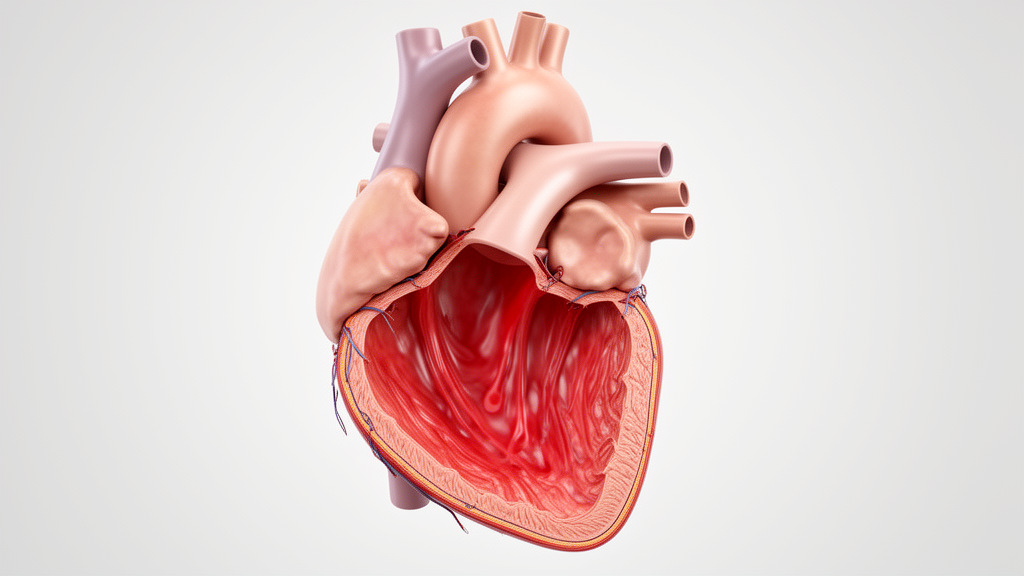
A clinical study evaluating patients undergoing physiological supine bicycle exercise stress echocardiography has revealed that left ventricular cavity dilatation occurs in approximately 5.1 percent of individuals, with underlying obstructive coronary artery disease accounting for only about half of these occurrences. Conducted at Wythenshawe Hospital in Manchester, United Kingdom, the retrospective investigation examined consecutive patient records to characterise individuals who develop an abnormal left ventricular response during exercise, defined by an increase in end-systolic cavity size alongside a reduction in left ventricular ejection fraction. While exercise stress testing is routinely performed to detect coronary artery disease, the emergence of transient ventricular enlargement during stress has historically been poorly understood, particularly among patients who exhibit no obstructive lesions upon subsequent angiographic assessment.
Under normal physiological circumstances, healthy myocardium responds to physical exertion through a pronounced reduction in left ventricular cavity dimensions accompanied by a contractile reserve increase in left ventricular ejection fraction of at least ten percent to satisfy heightened tissue oxygen demands. When left ventricular cavity enlargement or a drop in ejection fraction occurs instead, clinicians typically consider multivessel coronary ischemia as the primary differential diagnosis, given that widespread territorial ischemia can impair global myocardial shortening. However, past clinical observations have noted that transient hypokinesis, cavity enlargement, and systolic impairment can also emerge in individuals whose coronary vasculature shows no significant flow-limiting narrowing, prompting researchers to seek detailed clinical and hemodynamic explanations for these divergent pathways.
To rigorously explore this phenomenon, the research team retrospectively screened 653 consecutive patients who underwent supine bicycle exercise stress echocardiography between March 2022 and April 2024 according to indications established by national clinical guidelines. The investigators applied predefined exclusion criteria to eliminate potential confounding pathologies, excluding patients with moderate or severe valvular heart disease, prior percutaneous coronary intervention, coronary artery bypass grafting, documented myocardial infarction, a known history of coronary artery disease, established cardiac arrhythmias, preexisting heart failure, or premature test termination. Following these screening exclusions, 330 stress test reports were analyzed in detail, identifying thirty-three individuals with exercise-induced cavity dilatation, twenty-nine of whom had complete datasets suitable for comprehensive clinical evaluation.
The procedural protocol employed a calibrated World Health Organization bike ergometer and a commercial ultrasound system, requiring participants to withhold beta-blockers and non-dihydropyridine beta-blockers for forty-eight hours prior to examination. Supine bicycle testing was selected because it permits continuous echocardiographic imaging during active pedaling, contrasting with treadmill modalities where imaging is acquired immediately post-exercise. Workload commenced at twenty-five watts and progressed at a constant cadence between fifty and sixty revolutions per minute until diagnostic endpoints were met. Test termination criteria encompassed severe dyspnoea, intolerable leg fatigue, severe chest pain, significant regional wall motion abnormalities, dangerous arrhythmias, or extreme hypertensive reactions marked by systolic pressures surpassing 220 millimeters of mercury or diastolic pressures exceeding 120 millimeters of mercury, with patients otherwise exercising to exhaustion.
Serial cardiovascular parameters and comprehensive baseline two-dimensional echocardiographic views were captured at rest, during initial low-level workload, at peak physical exertion, and throughout the recovery phase. Baseline examinations assessed left and right ventricular dimensions, global and regional systolic function, aortic root dimensions, and aortic valve opening, while contrast agent administration was planned if two or more segments proved uninterpretable. An experienced senior echocardiographer with extensive expertise visually evaluated the left ventricular cavity and systolic response at peak exertion. Blood pressure and continuous three-channel electrocardiographic rhythm tracings tracked heart rate, while the rate-pressure product was calculated by multiplying heart rate by systolic blood pressure to indirectly quantify myocardial work and oxygen consumption.
Among the twenty-nine fully evaluated patients with cavity dilatation, whose average age was 61.4 years with 48.3 percent female representation and a mean body mass index of 27.8, subsequent anatomical evaluations demonstrated obstructive coronary artery disease, defined as at least fifty percent stenosis in a major epicardial vessel, in fifteen individuals, representing 51.7 percent of the cohort. Of these obstructive disease cases, sixty percent were subsequently referred for clinical revascularization via surgical bypass grafting or percutaneous intervention. The remaining fourteen patients, representing 48.3 percent of the cohort, exhibited either normal coronary vessels or non-flow-limiting lesions with fifty percent or less stenosis on computed tomography coronary angiography or invasive catheterization, yet still displayed transient ventricular dilatation.
Comparative analyses between the obstructive coronary group and the nonobstructive coronary group revealed distinct physiological profiles despite similar baseline risk factor distributions, including smoking status, hypertension, dyslipidemia, diabetes, and affective history. Patients with nonobstructive arteries were predominantly female at 64.3 percent and exhibited significantly greater hemodynamic surges from baseline to peak exertion. Their peak diastolic blood pressure reached an average of 109 millimeters of mercury compared to 96 millimeters of mercury in the obstructive group, while their rate-pressure product averaged 28,623 compared to 23,649 in the coronary disease group, reflecting a substantially higher peak workload. Furthermore, while the obstructive disease group demonstrated an increased observed rate of severe chest pain at peak exercise, reaching 53.3 percent compared to 14.3 percent, the nonobstructive cohort displayed a trend toward exertional dyspnoea, reported by 35.7 percent compared to only 6.7 percent of obstructive patients.
A critical secondary analysis compared the twelve nonobstructive patients who exhibited an exaggerated hypertensive response and cavity dilatation against an independent control cohort of thirty-seven patients who demonstrated an equivalent hypertensive response to exercise but maintained normal left ventricular systolic contraction. This evaluation revealed no statistically significant differences in clinical characteristics or routine stress test variables between the two hypertensive groups. The investigators emphasized that while exaggerated afterload and oxygen demand mismatch can cause transient ventricular enlargement in susceptible individuals, the majority of hypertensive responders preserve normal chamber dimensions, indicating that cavity enlargement in nonobstructive patients identifies a distinctive physiological phenotype rather than a simple false-positive exercise test.
Discussing the underlying mechanisms, the authors highlighted that coronary microvascular dysfunction, impaired arteriolar vasodilation, and subclinical diastolic abnormalities represent plausible drivers of maladaptive remodeling during stress, particularly among female patients experiencing hormonal shifts. While older literature suggested that an exertional diastolic pressure rise of fifteen millimeters of mercury signaled epicardial coronary disease, the present study observed the opposite pattern, where nonobstructive patients experienced the greatest diastolic pressure surges, likely reflecting impaired active ventricular relaxation and elevated ventricular filling pressures akin to heart failure with preserved ejection fraction. The authors also noted that neurohormonal factors and catecholamine fluctuations linked to anxiety could foster microvascular spasm, though psychological diagnoses did not differ significantly between the studied subgroups.
The authors outlined important study limitations, including the retrospective single-center design, the modest sample sizes inherent to an uncommon clinical phenomenon, and the reliance on qualitative visual assessment of cavity size and ejection fraction rather than quantitative volumetric modeling, which was omitted due to feasibility constraints during high-workload bicycle acquisition. Symptom reporting was also subject to operator variability, and long-term longitudinal prognostic tracking was unavailable in this initial cross-sectional analysis. Concluding their report, the authors noted that transient ventricular cavity dilatation during supine bicycle testing affects one in twenty patients, and stressed that while half reflect obstructive coronary disease needing anatomical workup, the remaining half represent a nonobstructive, predominantly female cohort with exaggerated hemodynamic surges and microvascular alterations requiring expanded dedicated mechanistic research.
Subject of Research: Prevalence and physiological mechanisms of left ventricular cavity dilatation during supine bicycle exercise stress echocardiography
Article Title: Transient cavity dilatation during supine exercise bicycle stress testing: mechanistic insights
Article References: Elliott, B. L., Flynn, J. C., Macnab, A., Stout, M., Pearce, K., & Dobson, L. E. (2026). Transient cavity dilatation during supine exercise bicycle stress testing: mechanistic insights. Echo Research & Practice, 13(1), Article 7. https://doi.org/10.1186/s44156-026-00105-7
Image Credits: AI Generated
DOI: 10.1186/s44156-026-00105-7
Keywords: Stress echocardiography, Supine bicycle exercise, Cavity dilatation, Coronary artery disease, Nonobstructive coronary arteries, Hemodynamics, Diastolic blood pressure, Cardiovascular research, Transient, cavity, dilatation, during
News Source: Ophelia Keating. (November 8, 2026). Study Uncovers Mechanisms Behind Left Ventricular Cavity Dilatation During Exercise Echocardiography. Scienmag.