• HOME
  • NEWS
  • EXPLORE
    • CAREER
      • Companies
      • Jobs
    • EVENTS
    • iGEM
      • News
      • Team
    • PHOTOS
    • VIDEO
    • WIKI
  • BLOG
  • COMMUNITY
    • FACEBOOK
    • INSTAGRAM
    • TWITTER
Tuesday, November 17, 2026
BIOENGINEER.ORG
No Result
View All Result
  • Login
  • HOME
  • NEWS
  • EXPLORE
    • CAREER
      • Companies
      • Jobs
        • Lecturer
        • PhD Studentship
        • Postdoc
        • Research Assistant
    • EVENTS
    • iGEM
      • News
      • Team
    • PHOTOS
    • VIDEO
    • WIKI
  • BLOG
  • COMMUNITY
    • FACEBOOK
    • INSTAGRAM
    • TWITTER
No Result
View All Result
Bioengineer.org
No Result
View All Result
Home NEWS Science News Health

Cross-Sectional Study Links Small Dense LDL Cholesterol to Hyperuricemia Risk

by
November 8, 2026
in Health
Reading Time: 2 mins read
0
Cross-Sectional Study Links Small Dense LDL Cholesterol to Hyperuricemia Risk

Cross-Sectional Study Links Small Dense LDL Cholesterol to Hyperuricemia Risk

Share on FacebookShare on TwitterShare on LinkedinShare on RedditShare on Telegram

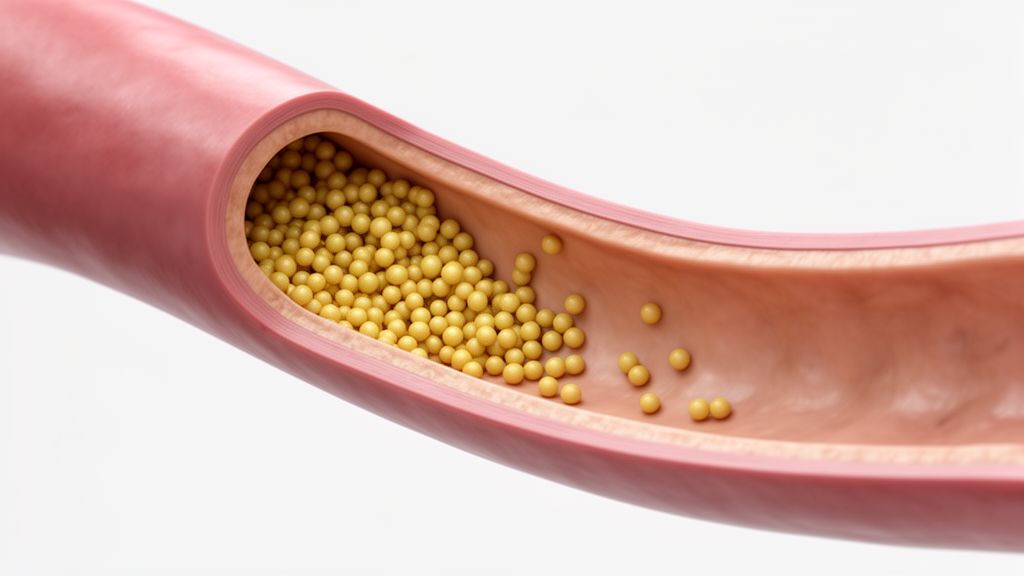
In a single-center cross-sectional study of physical examination participants, researchers found that small dense low-density lipoprotein cholesterol (sdLDL-C) was independently associated with hyperuricemia in a linear dose–response pattern. Published in BMC Endocrine Disorders by LingXia Xu, SiYu Wang, and Bing Cheng, the investigation examined the relationship between the lipid biomarker and hyperuricemia while developing a predictive nomogram model. While sdLDL-C is recognized as a cardio-cerebrovascular risk marker and lipid metabolism disorders are known to have a complex association with hyperuricemia, the independent correlation between sdLDL-C and hyperuricemia had remained unclarified.

The study was conducted among physical examination participants at Shulan (Hangzhou) Hospital between January 2024 and January 2025, enrolling a total of 650 participants. Among the cohort, 198 individuals (30.5%) were identified with hyperuricemia and compared with the non-hyperuricemia group. Baseline comparisons demonstrated that participants with hyperuricemia had a higher proportion of men, higher body mass index (BMI), elevated triglyceride and sdLDL-C levels, and lower high-density lipoprotein cholesterol (HDL-C) levels (all P < 0.05).

To evaluate independent associations, candidate covariates pre-specified on clinical knowledge were fitted into hierarchically nested multivariable logistic regression models. In the fully adjusted multivariable model, elevated sdLDL-C was independently associated with hyperuricemia (odds ratio [OR] = 2.827, 95% CI: 1.607–4.972, P < 0.001). Additional independent covariates included hypertension (OR = 1.921, 95% CI: 1.213–3.042, P = 0.005), BMI (OR = 1.077, 95% CI: 1.005–1.155, P = 0.036), age (OR = 0.973, 95% CI: 0.950–0.996, P = 0.020), and serum creatinine (OR = 1.046, 95% CI: 1.027–1.066, P < 0.001). Restricted cubic spline analysis supported a linear dose–response relationship between sdLDL-C and hyperuricemia, with a P-value for overall association of 0.002 and a P-value for non-linearity of 0.639.

The researchers constructed a risk nomogram incorporating sdLDL-C, which achieved an area under the receiver operating characteristic curve (AUC) of 0.788 (95% CI: 0.751–0.826), a sensitivity of 78.8%, and a specificity of 68.1%. Model assessment and internal validation also utilized calibration, decision curve analysis, and 1000 bootstrap resamples with optimism correction. Calibration was adequate with a Hosmer–Lemeshow P-value of 0.328, while the bootstrap-corrected AUC was 0.781 and the bootstrap-corrected calibration slope was 0.962. The authors concluded that the nomogram demonstrated adequate discrimination and calibration, indicating potential utility as an auxiliary tool for hyperuricemia risk prediction and preliminary cardiometabolic risk assessment in the general population within the scope of this single-center cohort.

Subject of Research: Association of small dense LDL cholesterol with hyperuricemia and nomogram development

Article Title: Analysis of the association between small dense low-density lipoprotein cholesterol and hyperuricemia and development of a nomogram model

Article References: Xu, L., Wang, S., & Cheng, B. (2026). Analysis of the association between small dense low-density lipoprotein cholesterol and hyperuricemia and development of a nomogram model. BMC Endocrine Disorders. https://doi.org/10.1186/s12902-026-02702-3

Image Credits: AI Generated

DOI: 10.1186/s12902-026-02702-3

Keywords: hyperuricemia, small dense LDL cholesterol, sdLDL-C, lipid metabolism, nomogram model, cross-sectional study, cardiometabolic risk, biomarkers, Analysis, association, between, small

News Source: Ophelia Keating. (November 8, 2026). Cross-Sectional Study Links Small Dense LDL Cholesterol to Hyperuricemia Risk. Scienmag.


Tags: analysisAssociationbetweenbiomarkerscardiometabolic riskCross-sectional Studyhyperuricemialipid metabolismnomogram modelsdLDL-Csmallsmall dense LDL cholesterol
Share12Tweet7Share2ShareShareShare1

Related Posts

Four Key Clinical Factors Associated With Heart Injury in Gastrointestinal Bleeding

Four Key Clinical Factors Associated With Heart Injury in Gastrointestinal Bleeding

November 17, 2026
Specialized EBI3-High Dendritic Cell Subset Identified in Rheumatoid Arthritis Synovial Fluid

Specialized EBI3-High Dendritic Cell Subset Identified in Rheumatoid Arthritis Synovial Fluid

November 17, 2026

Early Tildrakizumab Treatment Predicts Complete Psoriasis Clearance in Five-Year Italian Study

November 17, 2026

Obsessive-Compulsive Disorder Patients Show Altered Emotional Processing and Oculomotor Control Patterns

November 17, 2026

POPULAR NEWS

  • Four Key Clinical Factors Associated With Heart Injury in Gastrointestinal Bleeding

    Four Key Clinical Factors Associated With Heart Injury in Gastrointestinal Bleeding

    29 shares
    Share 12 Tweet 7
  • Nanjing Hospital Study Finds 19.2 Percent HPV Positivity Among 39,335 Women

    29 shares
    Share 12 Tweet 7
  • Specialized EBI3-High Dendritic Cell Subset Identified in Rheumatoid Arthritis Synovial Fluid

    29 shares
    Share 12 Tweet 7
  • Early Tildrakizumab Treatment Predicts Complete Psoriasis Clearance in Five-Year Italian Study

    29 shares
    Share 12 Tweet 7

About

We bring you the latest biotechnology news from best research centers and universities around the world. Check our website.

Follow us

Recent News

Four Key Clinical Factors Associated With Heart Injury in Gastrointestinal Bleeding

Nanjing Hospital Study Finds 19.2 Percent HPV Positivity Among 39,335 Women

Specialized EBI3-High Dendritic Cell Subset Identified in Rheumatoid Arthritis Synovial Fluid

Subscribe to Blog via Email

Enter your email address to subscribe to this blog and receive notifications of new posts by email.

Join 88 other subscribers
  • Contact Us

Bioengineer.org © Copyright 2023 All Rights Reserved.

Welcome Back!

Login to your account below

Forgotten Password?

Retrieve your password

Please enter your username or email address to reset your password.

Log In
No Result
View All Result
  • Homepages
    • Home Page 1
    • Home Page 2
  • News
  • National
  • Business
  • Health
  • Lifestyle
  • Science

Bioengineer.org © Copyright 2023 All Rights Reserved.